
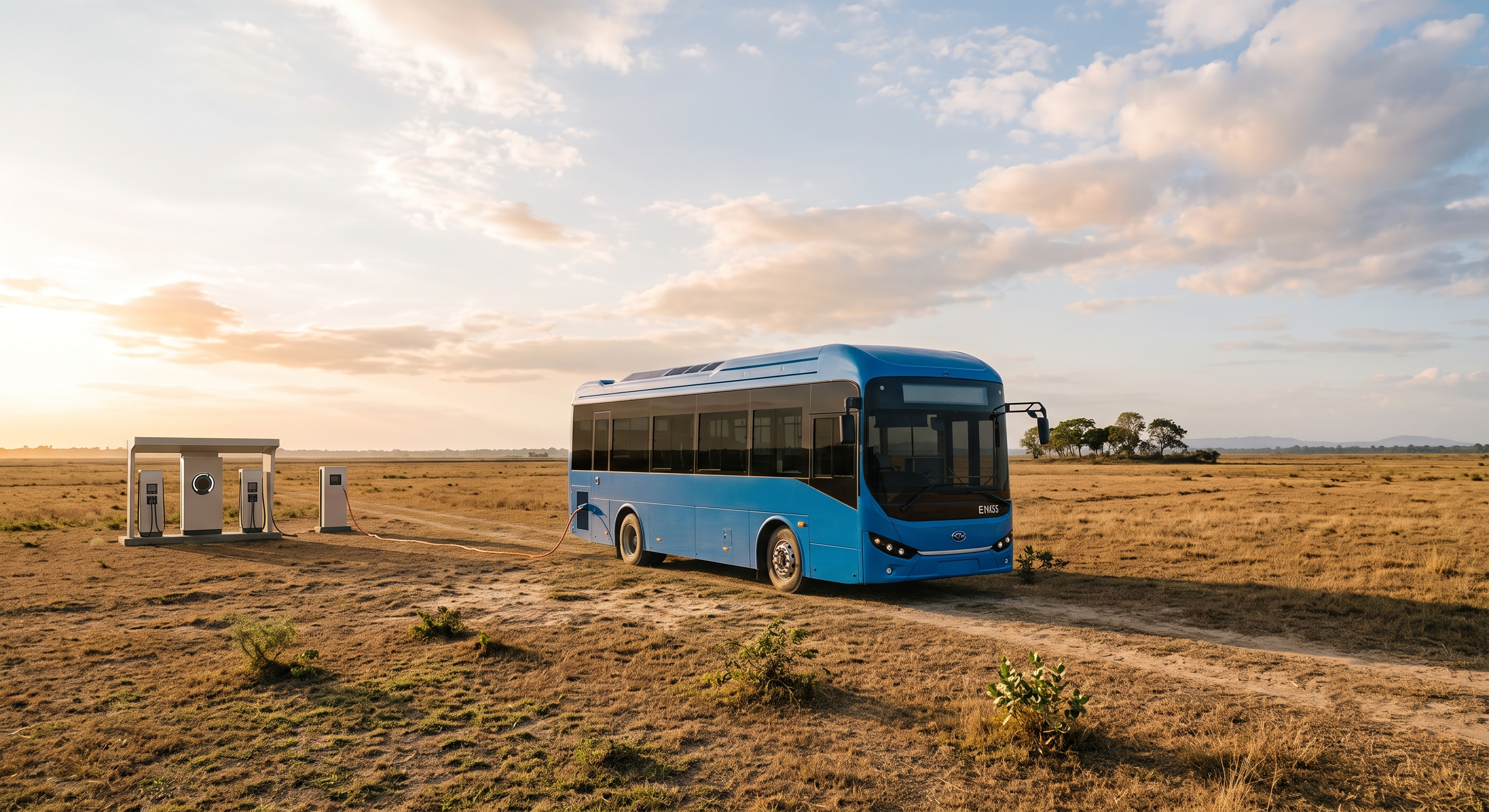
In an unprecedented move to modernize its transportation sector and combat severe urban air pollution, Bangladesh has introduced a sweeping package of tax incentives aimed at accelerating the adoption of electric vehicles (EVs). Finance Minister Amir Khosru Mahmud Chowdhury unveiled these measures during the national budget presentation for the 2026-27 fiscal year, signaling a major policy shift. For a country where an estimated 235,000 people die annually from complications related to air pollution, heavily exacerbated by thousands of diesel-run buses and trucks, the transition to zero-emission technology is not just an economic ambition, but a public health necessity (Chowdhury, 2026). The newly proposed policies offer substantial tax reliefs for EV importers, manufacturers, and buyers, while simultaneously penalizing the continued reliance on fossil fuels.
The fiscal restructuring heavily favors the nascent EV market by dramatically lowering the cost of entry for consumers. Under the new budget, the total tax burden on electric cars valued up to $25,000 will be slashed from 93 percent to 64 percent, while those priced up to $50,000 will face a reduced 80 percent tax burden (The Daily Star, 2026). Plug-in hybrid electric vehicles (PHEVs) will also see significant tariff reductions. Conversely, the government is deliberately discouraging the use of internal combustion engine (ICE) vehicles. The tax incidence for fossil fuel-powered vehicles with engine capacities between 1,200cc and 1,600cc will surge from 132.36 percent to 155.88 percent (The Daily Star, 2026). Furthermore, to support the critical charging infrastructure, all customs duties and taxes on imported EV chargers and charging stations are to be completely removed from their previous rate of 39.75 percent (Chakma, 2026).
Beyond consumer incentives, the government has crafted a robust framework to stimulate domestic EV and battery manufacturing, hoping to replicate the localization success seen in the broader automotive sector. The budget outlines sweeping exemptions from all duties and taxes, except a nominal import duty on inputs, for local manufacturers involved in body fabrication, welding, painting, and assembling of EVs with high local value addition. Additionally, the production of lithium-ion and sodium-ion batteries will enjoy tax exemptions until 2030 (Daily Sun, 2026). These localization policies are already bearing fruit. Chinese automaker BYD has expanded its footprint in the country, signing a manufacturing and supply agreement with local distributor Runner Automobiles to open an EV manufacturing unit in Bhaluka, while Rancon Motors plans to invest 3 billion taka into EV assembly (Daly, 2026).
Despite the widespread optimism, business leaders and industry insiders have voiced critical concerns regarding the execution and unintended consequences of the proposed policies. Hafizur Rahman, chairman of Runner Group, pointed out that the duty cuts primarily benefit higher-income consumers purchasing expensive EVs, offering little relief to lower-income buyers. Rahman also criticized the decision to allow duty-free imports of completely built-up (CBU) electric trucks. He argued this approach undermines local body-building companies, at least 20 of which already operate in Bangladesh, who would benefit far more from duty-free imports of truck chassis, thereby generating local employment instead of merely encouraging trading (Chakma, 2026).
Furthermore, local manufacturers warn that without adequate safeguards, the market could be quickly overwhelmed by heavily subsidized foreign imports. Mir Masud Kabir, managing director of Bangladesh Auto Industries Limited, cautioned that some Chinese manufacturers have the capacity to export EVs at prices below their own production costs. This significant competitive advantage could severely hinder local manufacturers who are just beginning to build a domestic EV ecosystem. Additionally, BARVIDA President Abdul Haque noted that raising taxes on popular 1,200cc to 1,600cc petrol and diesel vehicles will likely inflate prices for middle-income consumers and destabilize the established reconditioned car market before the EV sector is mature enough to fill the void (Chakma, 2026).
The most daunting hurdle facing Bangladesh’s EV ambitions, however, is the glaring lack of operational infrastructure. A seminar jointly organized by the Dhaka Chamber of Commerce and Industry (DCCI) and the Bangladesh Sustainable and Renewable Energy Association (BSREA) highlighted the stark reality on the ground: out of 6.724 million registered vehicles, only 669 are registered EVs (The Daily Star, 2026). Current estimates indicate there are only 32 public charging stations and 250 home chargers across the entire country (Daly, 2026). Moreover, the infrastructure deficit extends beyond chargers. The DCCI identified massive shortages in bus depots, noting that Bangladesh has fewer than 30 state-run depots for over 53,000 buses operating nationwide (The Daily Star, 2026). Without adequate depots, grid stability, and battery recycling ecosystems, mass deployment of commercial EVs remains highly impractical.
Transport operators echo these logistical and financial concerns, stressing that the transition requires far more than just tariff waivers. Saiful Islam, a leader of the Bangladesh Bus-Truck Owners Association, highlighted that commercial electric vehicles cost nearly triple the price of their diesel counterparts. Beyond the high upfront capital, operators lack the technical manpower for repairs, access to spare parts, and the necessary charging infrastructure. Islam warned that unless these critical operational barriers are addressed through comprehensive policy support and feasibility studies, transport owners cannot viably operate electric fleets without drastically increasing passenger fares (Chowdhury, 2026). While Bangladesh has clearly mapped the route toward a zero-emission future, navigating the complex intersections of infrastructure, local industry protection, and economic reality will determine if this green revolution successfully takes off.
References
Chakma, J. (2026). Tax cuts poised to boost EV market. The Daily Star. Retrieved from https://www.thedailystar.net/business/economy/news/tax-cuts-poised-boost-ev-market-4201531
Chowdhury, K. R. (2026). Bangladesh unveils sweeping EV incentives to cut emissions and pollution. Mongabay. Retrieved from https://news.mongabay.com/2026/06/bangladesh-unveils-sweeping-ev-incentives-to-cut-emissions-and-pollution/
Daily Sun. (2026). EV sector gets major tax breaks, policy support. daily sun. Retrieved from https://www.daily-sun.com/business/879625/ev-sector-gets-major-tax-breaks-policy-support
Daly, C. (2026). EV incentives unveiled in Bangladesh as BYD eyes expansion. electrive. Retrieved from https://www.electrive.com/2026/06/24/ev-incentives-unveiled-in-bangladesh-as-byd-eyes-expansion/
The Daily Star. (2026). Duty cuts aim to boost EV adoption. The Daily Star. Retrieved from https://www.thedailystar.net/business/news/duty-cuts-aim-boost-ev-adoption-4196276
The Daily Star. (2026). Bangladesh faces major obstacles to electric vehicle adoption: Speakers. The Daily Star. Retrieved from https://www.thedailystar.net/news/bangladesh/transport/news/bangladesh-faces-major-obstacles-electric-vehicle-adoption-speakers-4209571