
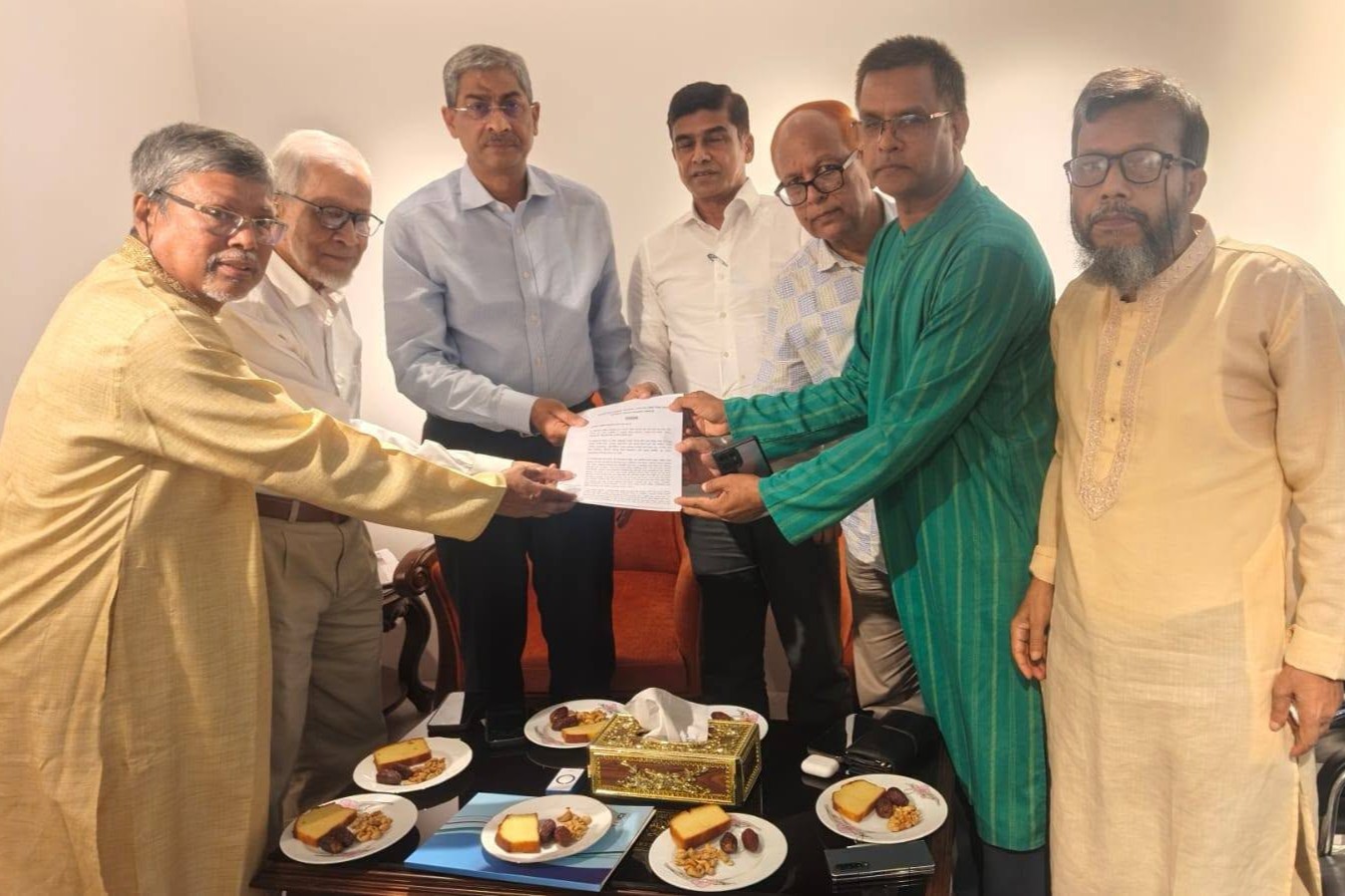
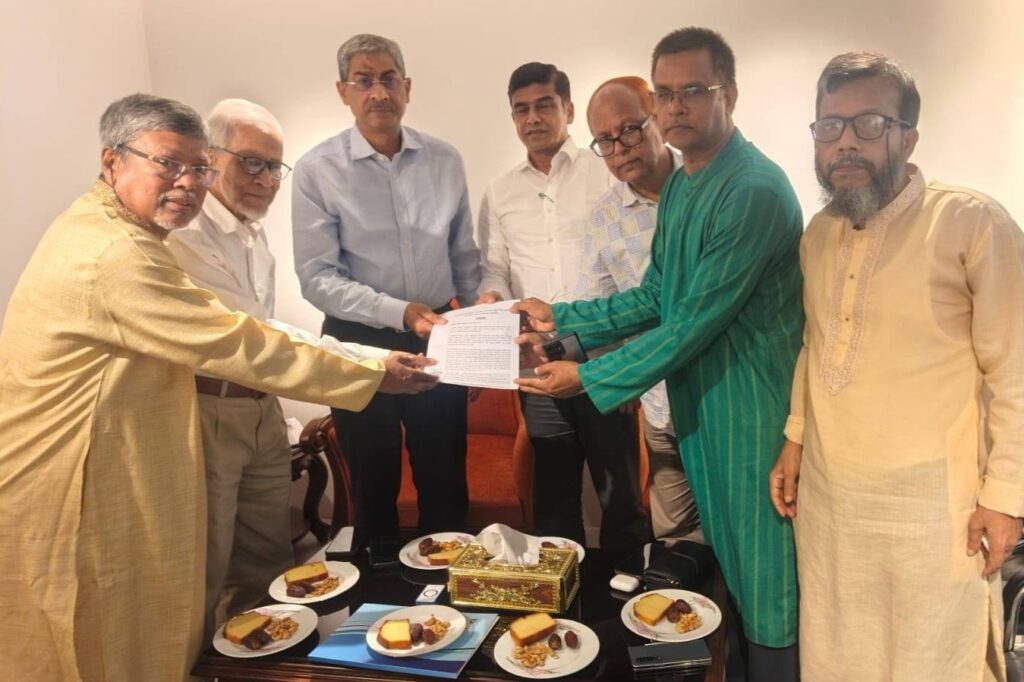
A high-level delegation from Bangladesh Poribesh Andolon (BAPA) met Water Resources Minister Md. Shahiduddin Chowdhury Annie, MP, and State Minister Farhad Hossain Azad, MP, at the Bangladesh Secretariat on July 27, 2026, to discuss Bangladesh’s worsening river and water management crisis.
Led by BAPA President Dr. Nur Mohammad Talukder, the delegation raised concerns over river pollution, encroachment, disrupted water flows, waterlogging, and the ecological impacts of major infrastructure projects, particularly the Teesta Master Plan and proposed Ganges Barrage Project.
BAPA cited flow obstructions in the Fuljhor and Karatoya rivers, pollution and encroachment in the Buriganga, biodiversity loss in Chalan Beel and the Boral River, and prolonged waterlogging in Bhabadah and Beel Horina. The delegation also argued that permanent polders and embankments can worsen flooding by disrupting natural drainage and sedimentation.
The Water Resources Minister expressed support for working with BAPA and proposed joint technical consultations to reassess the Teesta Master Plan and Ganges Barrage proposal. He also said he would visit the waterlogged areas of Bhabadah and Beel Horina and review whether the proposed Rabindra University campus could obstruct the hydrological connection between Chalan Beel and the Padma-Jamuna system.
BAPA subsequently submitted a memorandum calling for major changes in national water-management policy. Its key demands include:
- Adopting an “Open-River” policy that prioritizes free-flowing rivers and removes structures that obstruct natural water movement.
- Converting coastal and inland polders into seasonal embankments to restore natural inundation, sediment deposition, and drainage.
- Removing unnecessary sluice gates, regulators, flap gates, bridges, and culverts that restrict river flow.
- Restoring rivers, canals, and wetlands to their historical boundaries based on Cadastral Survey (CS) records and removing illegal encroachments.
- Completing the stalled Boral River restoration project and rehabilitating severely degraded rivers such as the Kohelia.
- Strengthening action against industrial and municipal pollution in rivers including the Buriganga, Turag, Sutang, Bakkhali, and Mayur.
- Promoting eco-friendly riverbank protection, including indigenous engineering approaches, instead of rigid concrete structures wherever appropriate.
- Giving the National River Protection Commission stronger executive authority to act against polluters and river grabbers.
- Pursuing Bangladesh’s interests in transboundary river negotiations, particularly ahead of the renewal of the Ganges Water Treaty with India.
- Rejecting externally driven plans for the Teesta in favor of a nationally funded, community-participatory approach based on local expertise.
- Conducting a careful technical assessment before proceeding with the Ganges/Padma Barrage Project, including an investigation into why existing monsoon flows do not naturally reach distributaries such as the Gorai-Madhumati and Boral.
- Providing BAPA’s technical support and cooperation to the Ministry of Water Resources in implementing river and water-management reforms.