Bangladesh Paribesh Andolon (BAPA) and Bangladesh Environment Network (BEN) will jointly organize a hybrid seminar on the proposed Ganges (Padma) Barrage Project on August 22 at 10:00 AM BDT. The event will be held at the CIRDAP Auditorium (2nd floor) in Dhaka and will focus on the project’s feasibility and potential environmental impacts.
The seminar will feature keynote presentations by Dr. Nazrul Islam, professor at the Asian Growth Research Institute and founder of BEN, and Dr. Khalequzzaman, a geologist and environmental scientist. Dr. Firoze Ahmed, Vice President of BAPA, will participate as a key discussant. The event is expected to bring together environmentalists, researchers, academics, journalists, and policymakers for discussion on the proposed project.
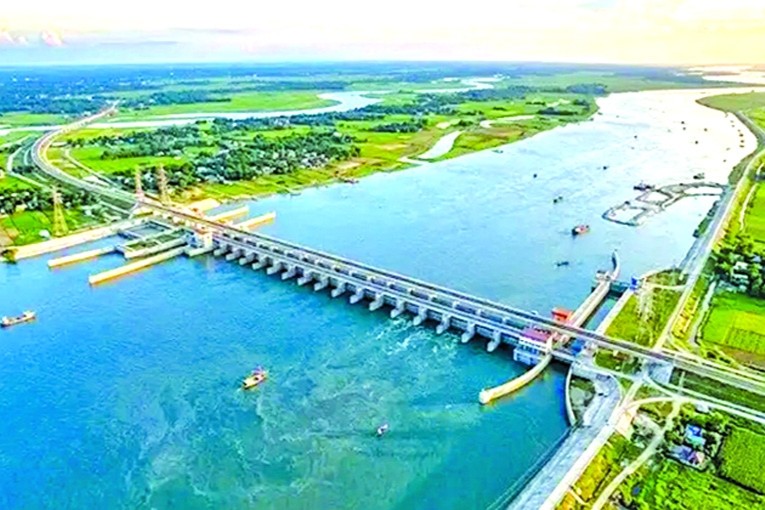
The Padma Barrage, planned at Pangsha in Rajbari, is intended to retain dry-season water and divert it to several rivers in southwestern Bangladesh. According to government projections, the project would help address dry-season water shortages and salinity intrusion while supporting irrigation, fisheries, navigation, and other economic activities. The estimated initial cost of the project is Tk 34,970 crore.
The project, however, has drawn concerns from water and environmental experts. Key issues include the reliability of the hydrological data used in project planning, the availability of sufficient upstream water, and the potential effects of the barrage on sediment transport, river morphology, downstream erosion, and the wider delta ecosystem.
Dr. Khalequzzaman has argued that the Ganges should be managed as a transboundary river system rather than through isolated structural interventions. He has also emphasized the need for cooperation among the countries sharing the basin, particularly on the management of both water and sediment.
The upcoming conference will provide a platform to examine these concerns and discuss alternative approaches to managing Bangladesh’s water resources. BAPA and BEN are also expected to highlight the importance of basin-wide cooperation and the implementation of international frameworks for transboundary water management.