
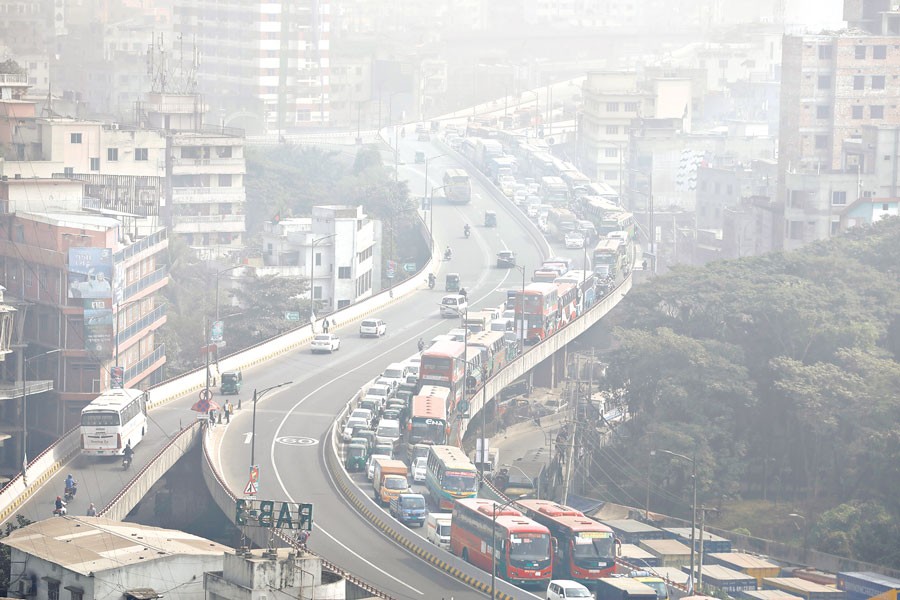
The Jatrabari-Gulistan Flyover (formerly known as the Mayor Mohammad Hanif Flyover) opened on October 11, 2013. Authorities envisioned a monumental infrastructure achievement. It was designed to streamline traffic entering Dhaka from the southern and southwestern regions of Bangladesh. Built under a public-private partnership for Tk 2,108 crore, this 11.7-kilometer structure holds the title of the country’s longest flyover (New Age, 2025). It has instead become the country’s longest stretch of unbroken suffering. Today, that original promise is dead. What was once hailed as a definitive solution to chronic urban congestion has devolved into a daily nightmare. The flyover and the roads beneath it do not accelerate transit. They trap commuters for hours. These choke points are defined by severe traffic gridlocks, financial controversies, and systemic mismanagement.
Vehicles stream onto the flyover from four major entry points- Shonir Akhra, Demra, Saydabad, and Dholairpar. They bring in traffic from approximately forty districts (The Daily Star, 2025). The structural planning is fundamentally broken. Vehicles from the N1, N2, and N8 national highways violently converge at the Jatrabari point before even reaching the ramp. Designers completely ignored this massive influx during the initial planning stages. The original blueprint intended for traffic to share both the elevated structure and the surface roads. Reality proved entirely different. Construction birthed structural barriers that effectively force vehicles onto the flyover. Experts from BUET deem this highly unacceptable (Uddin & Islam, 2026). The structure simply cannot handle the load. The four-lane flyover abruptly constricts into two lanes at the Gulistan exit. It then funnels into a single lane at Chankharpul. Vehicles are forced into aggressive merging, creating inevitable, crushing bottlenecks (Moslem, 2025). Structural planning historically allowed for bizarre, dangerous additions. Unauthorized stairs were built directly into the structure for passenger boarding. The Supreme Court had to explicitly order their removal in 2017 after sheer negligence by city corporation authorities allowed them to exist.
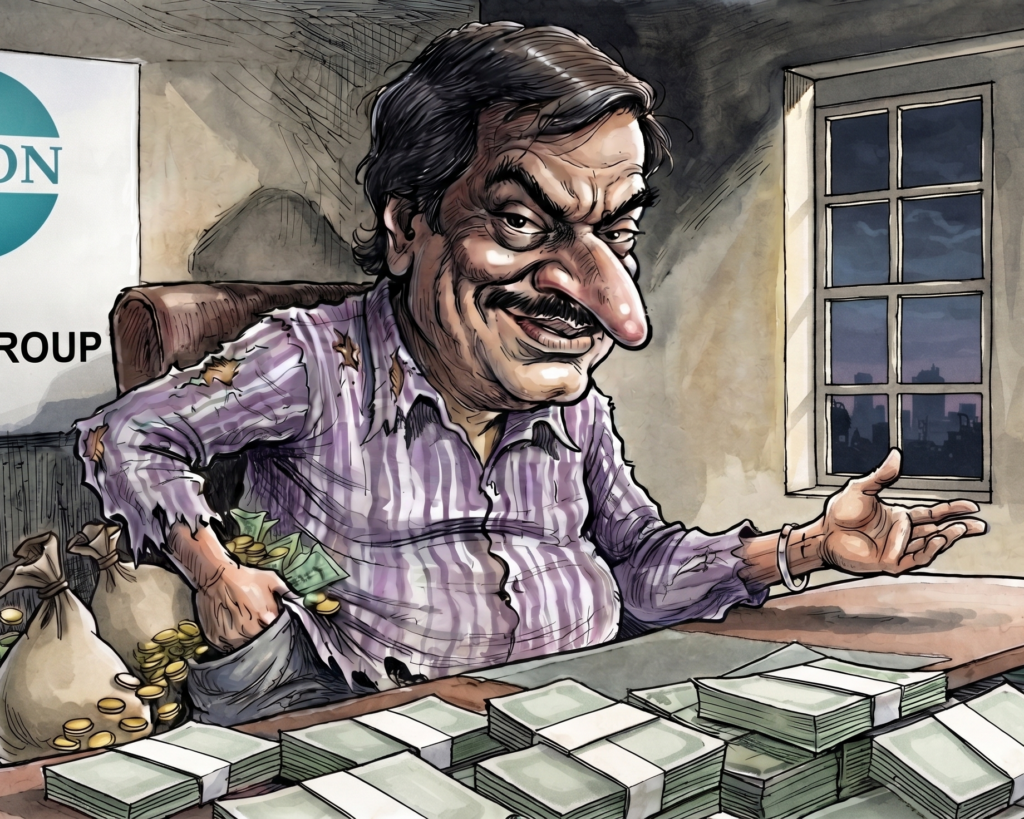
Orion Infrastructure Limited constructed the flyover on a build-own-operate-transfer basis. The private concessionaire secured a 24-year operational period. From the onset, tolls were exorbitant. Commuters and transport workers accused Orion of charging rates often more than double those stipulated in the original 2005 contract (Mahmud, 2013). Manual toll collection actively paralyzes the traffic flow today. Drivers queue for hours just to pay their fees. Orion Infrastructure Limited recently defaulted on a Tk 106 crore bridge financing loan from Sonali Bank. This is a shocking reality given they secured a 15-year tax exemption and continuously collect elevated tolls. The Bangladesh Bank marked the company’s board members as loan defaulters. Orion contributed minimal equity to the project. They utilized Tk 2,250 crore in loans from six financial institutions, none of which have reportedly received a single dividend.
The surface-level roads beneath bear the burden. Intense urban encroachment chokes the space. The route connecting Jatrabari to Sayedabad and Gulistan remains perpetually dilapidated. It is entirely riddled with massive potholes that cause frequent accidents, severe vehicle damage, and excruciating delays (Rahaman, 2022). The space beneath the flyover is hijacked. It hosts unauthorized businesses, secondary garbage transfer stations, and resting spots for horse carts instead of serving as an active transit corridor (New Age, 2025). The infrastructure itself stifles surface movement. The pier-head height was kept unusually low. Surface lanes were deliberately narrowed. These baffling design choices make it incredibly difficult for heavy vehicles to navigate the roads below. Regulatory oversight is practically nonexistent. The Sayedabad Bus Terminal was designed to accommodate up to 800 buses. It currently holds nearly 3,000. Hundreds of illegal transport counters spill directly onto the main road. Recent political shifts triggered a new wave of chaos. Hundreds of unauthorized buses operating without proper route permits now regularly invade the Gulistan and Fulbaria areas. They establish sprawling, illegal parking zones that paralyze traffic flow at the flyover’s critical exits.
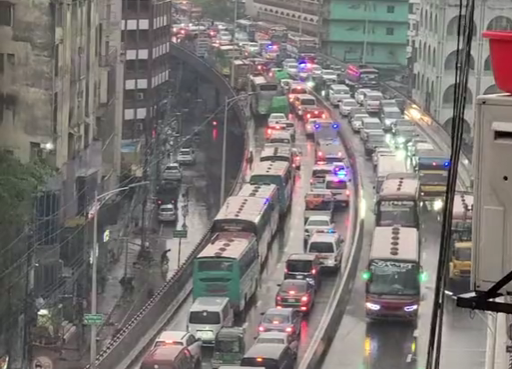
A journey from Khulna to Dhaka might take only three and a half hours on the open highway. Traversing the Jatrabari-Gulistan Flyover and its congested toll plaza can take an equal amount of time. This entirely negates the benefits of modern highway infrastructure. Passengers in Dhaka waste approximately 276 hours per year in traffic, according to a 2023 survey by the Centre for Policy Dialogue. The city’s average vehicular speed has plummeted to a mere 4.8 kilometers per hour (Moslem, 2025). Brac University’s Centre for Inclusive Architecture and Urbanism recently published a study analyzing the poorly utilized spaces beneath Dhaka’s flyovers. They estimate these neglected zones, heavily featuring the Jatrabari-Gulistan Flyover, contribute to an annual economic, environmental, and public health loss of around Tk 21,000 crore.
Planners suggest narrowing the road median below and carving away the pavement near the Gulistan Central Jame Mosque (Uddin & Islam, 2026). These minor adjustments cannot cure a systemic disease. The structural design is fundamentally broken. Authorities now face a monumental, terrifying reckoning. They must seriously consider partially demolishing the most catastrophic choke points, like the constricting Gulistan exit, to reconstruct functional ramps. Perhaps the only true solution is tearing the entire multi-billion-taka concrete failure to the ground and starting over. Until such drastic action is taken, the daily reality for Dhaka’s commuters remains pathetic. Ordinary people are trapped. They bleed hours of their lives inside sweltering, gridlocked buses just to reach a factory floor or return to their children. Orion Group’s defaulted bank loans continue to swell into the billions. This is a smart digital robbery executed in plain sight. Authorities and citizens alike stand by entirely powerless to stop it. The Jatrabari-Gulistan Flyover was meant to carry Dhaka forward. Instead, it has become the heaviest weight on its back.
References
Uddin, J., & Islam, J. (2026). Faulty design blamed for Jatrabari-Gulistan flyover congestion. The Financial Express. Retrieved from https://thefinancialexpress.com.bd/economy/faulty-design-blamed-for-jatrabari-gulistan-flyover-congestion
The Daily Star. (2025). Fix the chaos around Mayor Hanif Flyover: Flawed design, poor management keep traffic snarled. The Daily Star. Retrieved from https://www.thedailystar.net/opinion/editorial/news/fix-chaos-around-mayor-hanif-flyover-4024221
Moslem, S. R. (2025). 3.5 hrs from Khulna to Dhaka, then hours of gridlock at Jatrabari. Prothom Alo. Retrieved from https://en.prothomalo.com/bangladesh/l4ej8ua3o4
New Age. (2025). Traffic left in chaos under Hanif flyover. New Age. Retrieved from https://www.newagebd.net/post/country/272488/traffic-left-in-chaos-under-hanif-flyover
Rahaman, T. (2022). No end to sufferings under Hanif flyover. New Age. Retrieved from https://www.newagebd.net/article/176014/no-end-to-sufferings-under-hanif-flyover
Mahmud, A. H. (2013). Vehicles avoid Hanif flyover because of ‘excessive’ tolls. Dhaka Tribune. Retrieved from https://www.dhakatribune.com/bangladesh/bangladesh-others/43928/vehicles-avoid-hanif-flyover-because-of