

The 2026 Global Report on Food Crises reveals a concerning stabilization of high acute food insecurity across the globe. Researchers found that 266 million people across 47 countries experienced high levels of acute food insecurity in 2025. This figure represents nearly a quarter of the analyzed population. Acute hunger has doubled over the past decade. The Integrated Food Security Phase Classification system confirmed famines in Gaza and Sudan during 2025. This marks the first time two simultaneous famines were recorded in a single year since the report’s inception. The data suggests that severe hunger has transitioned from a series of temporary emergencies into a persistent structural challenge.
A convergence of protracted conflicts and climate extremes alongside economic volatility drives this global trend. Conflict remains the primary catalyst for acute food insecurity. Ten specific nations account for two-thirds of all people facing high levels of acute hunger. These countries include Afghanistan and Bangladesh as well as the Democratic Republic of the Congo and Sudan (ECHO, 2026). Forced displacement heavily compounds food insecurity metrics. More than 85 million people were forcibly displaced across food-crisis contexts in 2025. Displaced populations consistently register higher levels of acute hunger compared to their host communities (Mishra, 2026).
Global humanitarian funding networks are simultaneously contracting. Humanitarian food-sector funding dropped by approximately 39 percent in 2025 compared to the previous year. Development assistance also contracted by at least 15 percent (Reuters, 2026). This financial retreat limits the capacity of international agencies to implement effective interventions. Data collection capabilities have also deteriorated. The decline in available demographic data masks the true severity of the crisis in several fragile regions.
The situation in Bangladesh provides a distinct example of how global economic and climatic pressures manifest locally. Bangladesh remains among the top ten countries with the largest populations facing high acute food insecurity. Approximately 16 million people in the country faced crisis-level food insecurity or worse during the 2025 peak. This included roughly 15.6 million individuals in the Crisis category and 400000 in the Emergency category (Raihan, 2026). The country actually saw an improvement compared to 2024. Favorable remittance inflows and an absence of major natural disasters helped reduce the acutely food-insecure population by 7.6 million people.
The sheer volume of affected individuals highlights underlying structural vulnerabilities despite these year-over-year improvements. Food availability is generally adequate at the national level. The primary issue is household access and affordability. High food inflation forces vulnerable households to alter their consumption patterns. Families frequently reduce their protein intake and shift to cheaper staple crops. This behavioral shift severely compromises nutritional outcomes for vulnerable demographics. Malnutrition data reinforces this structural deficit. Over 35.5 million children globally were acutely malnourished in 2025 (Reuters, 2026).
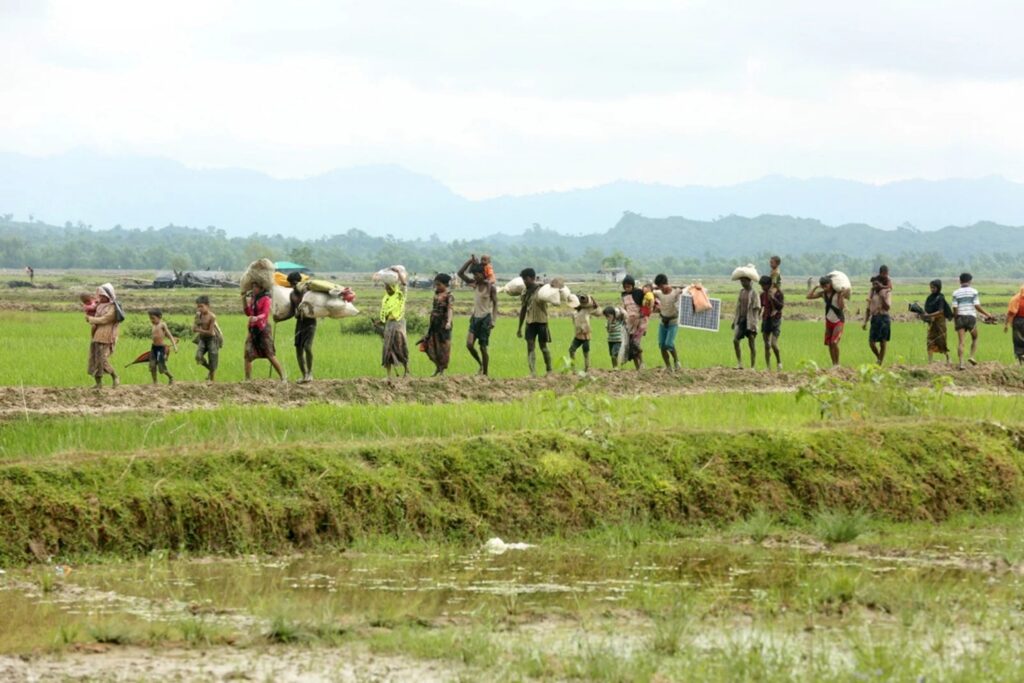
The protracted Rohingya refugee crisis exacerbates local resource constraints in southeastern Bangladesh. The World Food Programme assisted approximately 1.1 million Rohingya refugees in the Cox’s Bazar and Bhasan Char camps during March 2026. The agency relies heavily on targeted interventions. They recently piloted a Small-Scale Traders initiative to connect local farmers with camp markets. This program improves access to fresh vegetables and protein while supporting the local economy. The agency also mobilizes cash-for-work volunteers to maintain environmental infrastructure in host communities (WFP, 2026).
Reductions in international humanitarian assistance place immense pressure on these localized intervention strategies. The World Food Programme required an additional $8.85 million to sustain operations in Bangladesh between April and September 2026 (WFP, 2026). Shrinking aid allocations increase the burden on local labor markets and public services. A sustainable response requires a fundamental shift in policy frameworks. Governments and international bodies must integrate social protection systems with market governance and climate resilience planning. Establishing robust supply chains and equitable access mechanisms is necessary to mitigate the impacts of future macroeconomic and climatic shocks (Raihan, 2026).
References
ECHO. (2026). Acute food insecurity and malnutrition remain alarmingly high as crises deepen. European Commission. Retrieved from https://civil-protection-humanitarian-aid.ec.europa.eu/news-stories/news/acute-food-insecurity-and-malnutrition-remain-alarmingly-high-crises-deepen-2026-04-24_en
Mishra, V. (2026). Two-thirds of global hunger concentrated in 10 conflict-hit countries. UN News. Retrieved from https://news.un.org/en/story/2026/04/1167374
Raihan, S. (2026). Bangladesh’s food insecurity warning cannot be ignored. The Daily Star. Retrieved from https://www.thedailystar.net/opinion/news/bangladeshs-food-insecurity-warning-cannot-be-ignored-4161361
Reuters. (2026). War, drought, aid shortfall to fuel hunger in 2026, global report says. The Daily Star. Retrieved from https://www.thedailystar.net/news/world/news/war-drought-aid-shortfall-fuel-hunger-2026-global-report-says-4159581
WFP. (2026). WFP Bangladesh. Retrieved from https://www.wfp.org/countries/bangladesh