
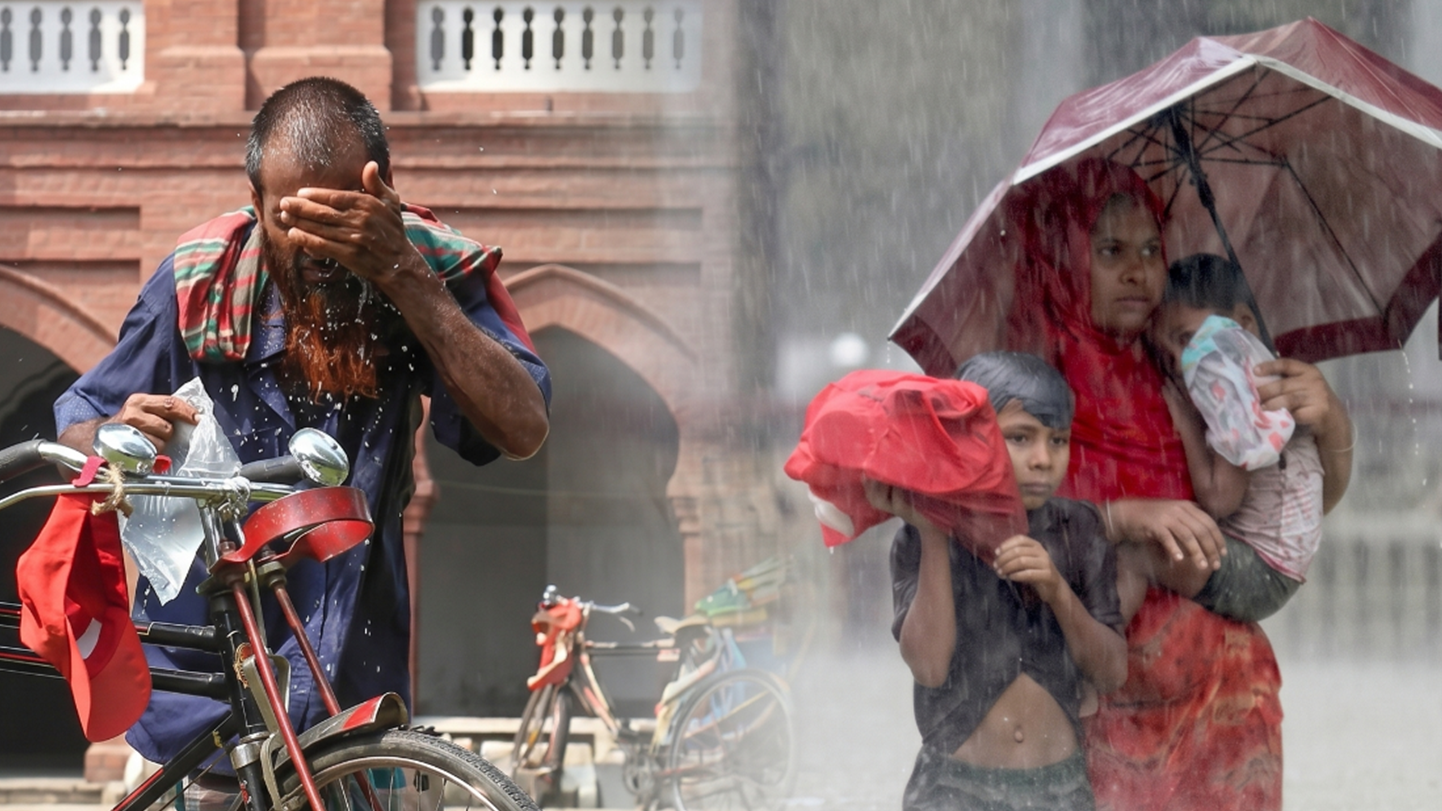
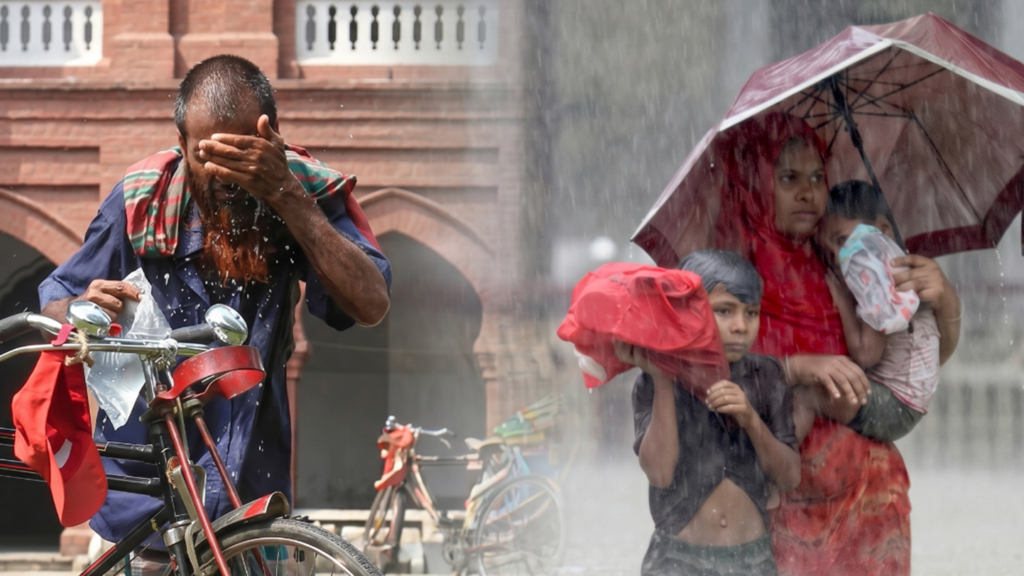
Recent times have presented a profound meteorological anomaly in Bangladesh, characterized by a rapid oscillation between severe heatwaves and unprecedented precipitation. This period serves as a critical case study for understanding the localized manifestations of global climate change. Observational data from the Bangladesh Meteorological Department (BMD) recorded extreme thermal peaks followed immediately by deluge conditions, validating long-term climate models that predict heightened volatility in the region. By examining the atmospheric shifts during this period, meteorologists and climate scientists can better understand the accelerating dynamics of extreme weather events in South Asia.
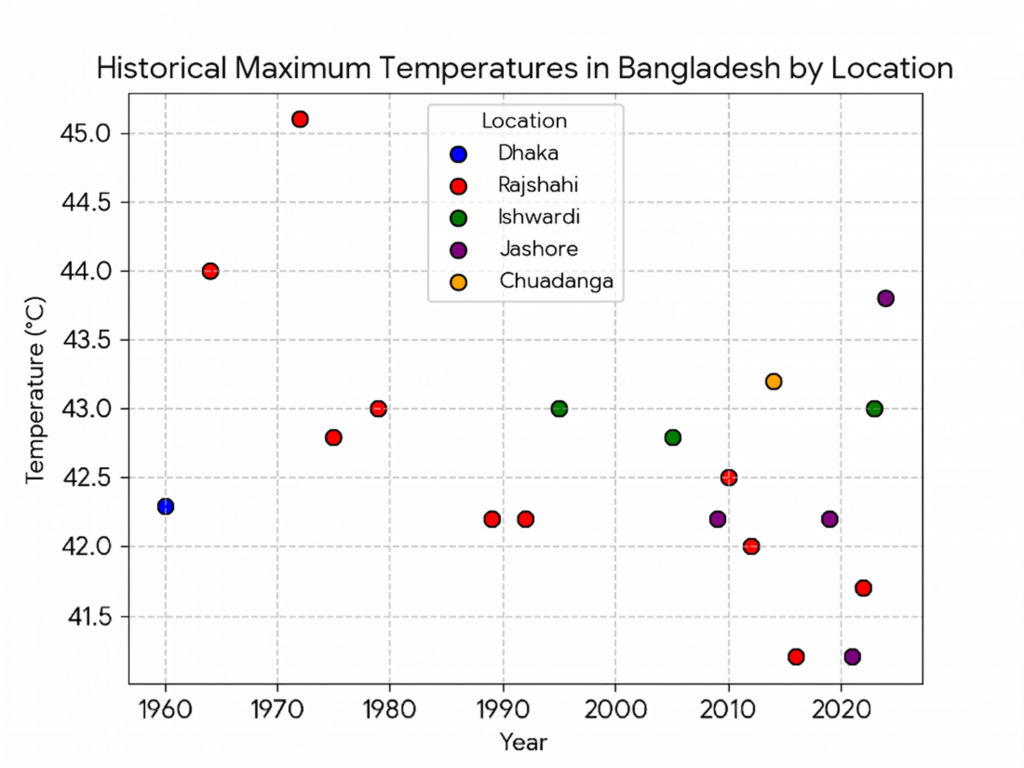
The early to mid-phases of this period were dominated by anomalous thermal escalations across the country. Early on, meteorological forecasts anticipated two to four mild to moderate heatwaves, with temperatures in Chuadanga reaching 39.7°C. This thermal trajectory intensified significantly later in the period. During this peak, severe heatwave conditions swept across 27 districts, with the highest temperature peaking at 40°C in Rajshahi (Bangladesh Pratidin, 2026). The spatial distribution of this thermal stress was extensive, affecting major urban centers including Dhaka, where temperatures hovered around 36.5°C, exacerbated by the urban heat island effect caused by dense concrete infrastructure and the loss of natural cooling agents like green spaces (Prothom Alo, 2026).
The atmospheric conditions underwent a drastic structural shift in the final week of this timeframe, driven by a pre-monsoon rain band and the formation of deep convective clouds over the northern regions. This synoptic development resulted in a transition from severe drought-like heat to extreme precipitation. Towards the end of this period, the BMD reported that approximately 75 percent of areas in the Rangpur, Sylhet, Mymensingh, and Dhaka divisions were projected to experience heavy to very heavy rainfall (BSS, 2026). The meteorological data revealed a highly anomalous precipitation volume for this timeframe; nationwide rainfall was 75.7 percent above the historical normal, averaging 196 millimeters compared to the standard 119 millimeters (Shabuj, 2026).
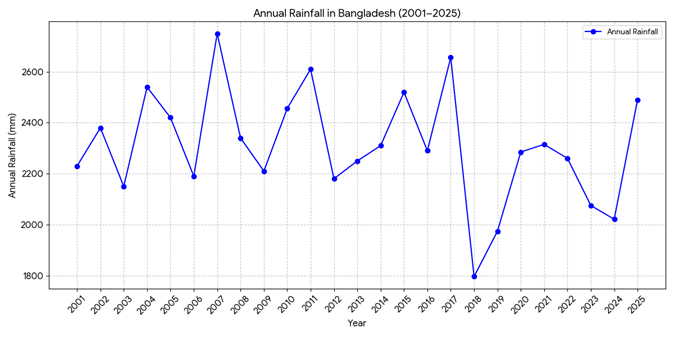
The hydrological consequences of this concentrated rainfall were immediate and severe, particularly in the northeastern topography. The Sylhet division recorded an astonishing 603 millimeters of rainfall, representing a 104.4 percent positive deviation from its historical average for this time of year. Consequently, riverine systems rapidly exceeded their capacity thresholds. Shortly thereafter, the Bhogai-Kangsha, Someshwari, and Mogra rivers in Netrokona, along with the Manu River in Moulvibazar, were flowing significantly above their respective danger marks, triggering localized inundations. The influx of 500 to 700 millimeters of rainfall in upstream catchment areas such as Meghalaya and Assam further compounded the flash flood vulnerabilities in downstream Bangladesh.
This acute meteorological oscillation aligns precisely with recent climatological projections derived from the Coupled Model Intercomparison Project Phase 6 (CMIP6). According to an extensive historical and predictive analysis, Bangladesh has already experienced a baseline temperature increase of 2°C over the past century, alongside long-term shifts towards generally drier conditions (Jihan et al., 2025). However, the CMIP6 global climate models project that despite overall precipitation declines, extreme precipitation events will actually increase in frequency and intensity. The models specifically forecast a rise in consecutive wet days and heavy localized rainfall volumes, conditions that perfectly mirror the transition observed recently. The temporal shift from a severe heatwave to inundating rains within a single timeframe exemplifies the heightened climatic variability that these models anticipate under advanced emission scenarios.
The meteorological phenomena observed in Bangladesh during these recent times serve as a stark empirical validation of projected climate change trajectories. The rapid succession from thermal extremes nearing 40°C to unprecedented rainfall exceeding historical averages by over 75 percent illustrates the destabilization of traditional seasonal patterns. As demonstrated by the integration of real-time meteorological data and CMIP6 climate models, such extreme atmospheric volatility is transitioning from a theoretical projection to an observational reality. Addressing these rapid onset shifts requires a robust recalibration of domestic and regional environmental policies, emphasizing localized adaptation strategies capable of mitigating the dual threats of severe heat and rapid-onset flash flooding.
References
Bangladesh Pratidin. (2026). Temperature hits 40°C as Heatwave sweeps 27 districts. Bangladesh Pratidin. Retrieved from https://en.bd-pratidin.com/national/2026/04/23/61247
BSS. (2026). Heavy to very heavy rainfall likely in 4 divisions. BSS News. Retrieved from https://www.bssnews.net/news/381830
Jihan, M. A. T., Popy, S., Kayes, S., Rasul, G., Maowa, A. S., & Rahman, M. M. (2025). Climate change scenario in Bangladesh: historical data analysis and future projection based on CMIP6 model. Scientific Reports, 15, 7856.
Prothom Alo. (2026). Heatwave in 10 districts including Dhaka may intensify from Tuesday. Prothom Alo. Retrieved from https://en.prothomalo.com/amp/story/environment/climate-change/3d6l5bjt74
Shabuj, M. (2026). Rainfall 75.7% above normal; conditions may normalise soon. The Daily Star. Retrieved from https://www.thedailystar.net/news/environment/weather/news/april-rainfall-757-above-normal-conditions-may-normalise-may-4166556