
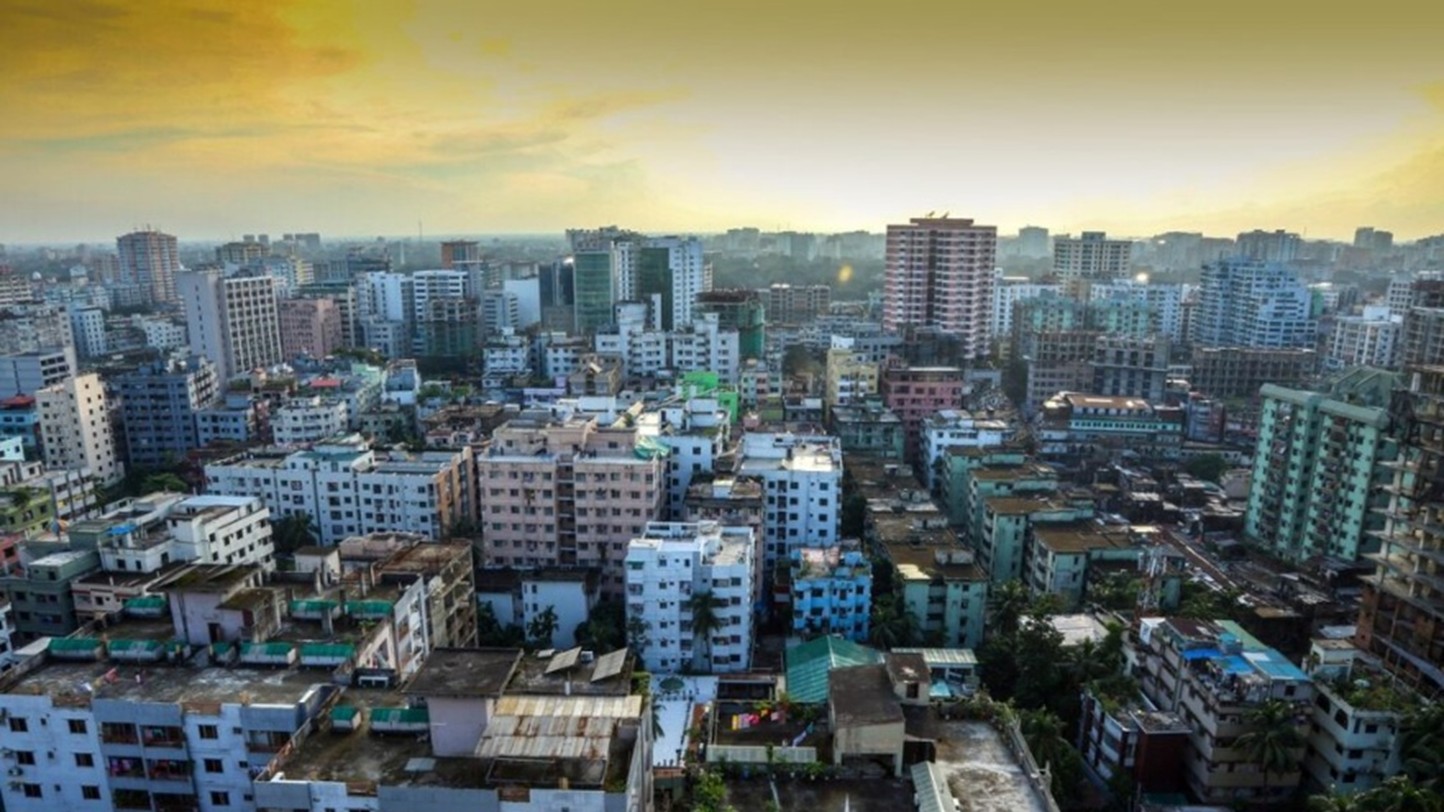
The planet is experiencing an unprecedented climate imbalance driven by record greenhouse gas concentrations. The World Meteorological Organization reported that the period between 2015 and 2025 marked the hottest eleven years in observed history with global temperatures in 2025 reaching 1.43 degrees Celsius above the preindustrial baseline (UN News, 2026). This global warming trend has severe localized consequences in vulnerable nations like Bangladesh. The country has seen its maximum temperature rise by 1.1 degrees Celsius since 1980 while the perceived temperature has surged by 4.5 degrees Celsius (World Bank, 2025). The capital city of Dhaka is at the epicenter of this crisis. The once distinct six seasons of Bangladesh are increasingly blurring into prolonged summers and unpredictable monsoons (TBS, 2025). Recent extreme weather events have pushed temperatures in Dhaka to 39.2 degrees Celsius while western districts like Chuadanga have reached up to 41.2 degrees Celsius (Dhaka Tribune, 2025).
The rapid and unplanned urbanization of Dhaka has drastically intensified the Urban Heat Island effect. Built up areas in the megacity expanded from 6.5 percent in 2000 to 34.2 percent in 2017 which replaced vital cooling mechanisms like water bodies and vegetation (The Financial Express, 2020). Consequently Dhaka lost 47 percent of its green spaces between 1989 and 2020 (Sizear & Mim, 2026). This massive conversion of natural land into impervious surfaces has caused the land surface temperature to increase by an average of 0.24 degrees Celsius per year from 1993 to 2020 (Mosaddek, 2025). As a result the average temperature of Dhaka remains 2.0 degrees Celsius higher than surrounding rural areas during the summer and monsoon seasons (The Financial Express, 2020). Certain areas have experienced even more drastic warming. For example the average temperature in Mohakhali skyrocketed from 33.5 degrees Celsius in 2017 to 41.5 degrees Celsius in 2024 representing a staggering 7.5 degree increase (TBS, 2025).
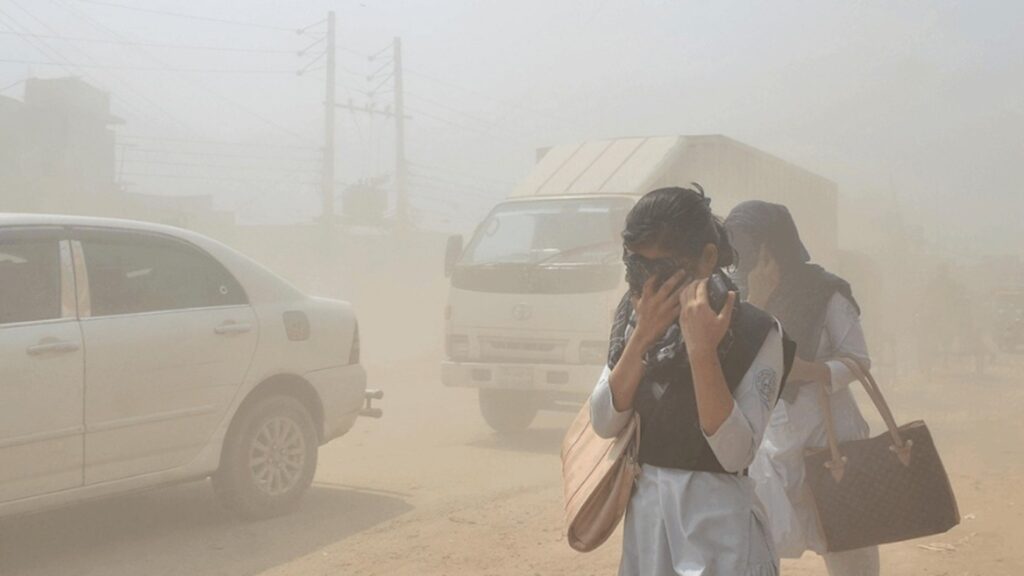
The extreme heat in Dhaka does not act alone but rather combines with severe air pollution to create a compounding environmental threat. The Urban Heat Island effect traps pollutants close to the ground and exacerbates the deterioration of air quality. Spatial analyses from 2010 to 2025 reveal a consistent positive correlation between intense urban heat and elevated concentrations of hazardous gases such as carbon monoxide nitrogen dioxide and sulfur dioxide (Islam & Islam, 2026). Industrial zones and densely populated areas like Tejgaon Badda and Motijheel have emerged as hotspots for this dual vulnerability where residents face both intense surface heating and massive pollutant accumulation. The heavy reliance on fossil fuels combined with emissions from brick kilns and household biomass cookstoves further degrades the atmosphere and reduces the natural cleansing processes of the environment.
This twin threat of heat and pollution disproportionately impacts vulnerable socioeconomic groups. A clear disparity exists between affluent neighborhoods and informal settlements. In the Korail Slum residents live in semi permanent tin structures with poor ventilation leading to severe indoor heat retention (Mosaddek, 2025). Approximately 78 percent of these slum dwellers report heat related health issues such as dehydration and heat exhaustion because they lack access to basic cooling resources like electric fans or air conditioning (Mosaddek, 2025). Conversely residents in affluent areas like Gulshan experience minimal indoor heat exposure due to modern building materials air conditioning and proactive adaptation strategies like rooftop vegetation. However the overall public health burden remains massive across the country. Air pollution alone reduces life expectancy in Bangladesh by over five years and contributes to more than 200000 annual deaths (Sizear & Mim, 2026).
Beyond physical ailments the compounding crises of heat and toxic air take a profound toll on mental health and economic productivity. Exposure to fine particulate matter significantly increases the risk of mental health disorders. Research indicates that a one percent increase in particulate matter levels above the World Health Organization guidelines raises the risk of depression by 20 percent (Sizear & Mim, 2026). The World Bank highlights that extreme heat events trigger spikes in depression and anxiety particularly among older demographics during the summer months. The resulting physical and mental health conditions lead to staggering economic consequences. In 2024 alone heat related illnesses caused the loss of 250 million workdays in Bangladesh which cost the national economy up to 1.78 billion dollars representing 0.4 percent of the gross domestic product (World Bank, 2025).
Addressing the escalating crisis in Dhaka requires immediate and coordinated interventions at both the policy and community levels. Expanding urban green spaces modernizing polluting industries like brick kilns and shifting toward sustainable clean energy sources are essential steps to lower temperatures and filter pollutants. Furthermore implementing heat action plans and early warning systems can help protect the most vulnerable populations from extreme weather shocks. Dhaka must adopt a comprehensive approach that integrates sustainable urban planning with equitable access to cooling resources to ensure a livable future for all its residents.
References
Dhaka Tribune. (2025). Dhaka sizzles at 39.2 C season highest temperature. Dhaka Tribune. Retrieved from https://www.dhakatribune.com/bangladesh/bangladesh-environment/380869/dhaka-records-highest-temperature-of-season
Islam, U. N., & Islam, R. (2026). Spatiotemporal dynamics of urban heat islands and associated air pollution in Dhaka A GIS based analysis. Proceedings of the 8th International Conference on Civil Engineering for Sustainable Development. KUET Khulna Bangladesh.
Mosaddek, N. (2025). Assessing socio economic disparities in heat stress vulnerability and adaptive capacity A comparative study of higher class residents and slum dwellers in Dhaka. Bangladesh University of Professionals.
Sizear, M. I., & Mim, N. J. (2026). Breathing in danger The twin threat of climate change and air pollution in Bangladesh. Global Souths Hub. Retrieved from https://globalsouth.org/2026/02/breathing-in-danger-the-twin-threat-of-climate-change-and-air-pollution-in-bangladesh/
TBS. (2025). Is soaring temperature in Dhaka becoming a new normal. The Business Standard. Retrieved from https://tbsgraduates.net/writeup/environment/is-soaring-temperature-in-dhaka-becoming-a-new-normal/
The Financial Express. (2020). Dhaka temp stays 2.0 degrees higher. The Financial Express. Retrieved from https://old.thefinancialexpress.com.bd/national/dhakas-temp-stays-20-degrees-higher-1579496377
UN News. (2026). UN weather agency warns of record climate imbalance as planetary warming accelerates. United Nations. Retrieved from https://news.un.org/en/story/2026/03/1167178
World Bank. (2025). Bangladesh faces health and economic risks from rising temperature World Bank. World Bank Group. Retrieved from https://www.worldbank.org/en/news/press-release/2025/09/16/bangladesh-faces-health-and-economic-risks-from-rising-temperature-world-bank
