
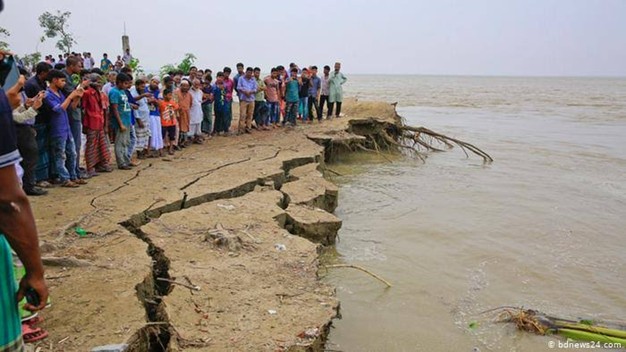
Bangladesh stands at the epicenter of a climate‑induced human displacement crisis—one that is unfolding with alarming speed across its vulnerable coastal belt. The south‑western and south‑eastern districts—Khulna, Satkhira, Bagerhat, Patuakhali, Bhola, Noakhali—are being systematically eroded by relentless riverbank collapse, skyrocketing soil salinity, and increasingly ferocious cyclones and storm surges. Each year, tens of thousands are uprooted. What is often framed as an “environmental” issue has, in reality, metastasized into a multifaceted national emergency: a crisis of social disintegration, economic destabilization, and unplanned urbanization that threatens to overwhelm the country’s development gains.
- The Magnitude of Displacement
Data from the International Organization for Migration (IOM) and the World Bank paint a stark picture: by 2024, an estimated 13 million Bangladeshis had already been internally displaced due to climate‑related factors (1). If current trends persist, this figure is projected to surge past 20 million by 2050. In the coastal zone, nearly 60 percent of the population directly confronts the daily realities of saline intrusion and land loss. These are not mere statistics—they represent millions of livelihoods erased, communities fractured, and futures foreclosed.
- Drivers and Trajectories of Migration
Three interlocking forces propel this exodus:
- Riverbank erosion: The Padma, Meghna, and their tributaries devour entire villages and fertile croplands at an accelerating pace, leaving families with no choice but to flee.
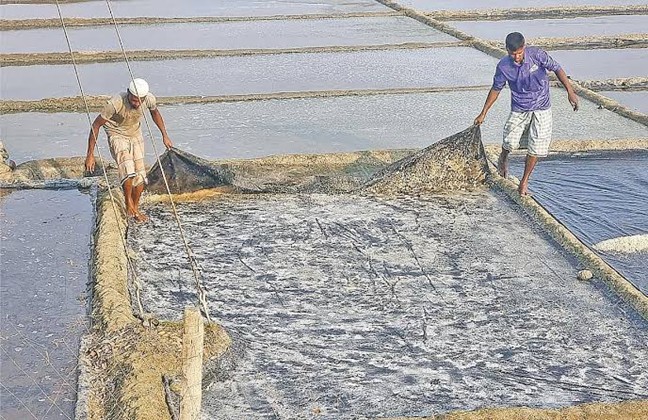
- Salinity intrusion: The creeping salinization of soil and freshwater sources has rendered vast swathes of agricultural land unproductive and drinking water unsafe, dismantling the agrarian economy from the ground up.
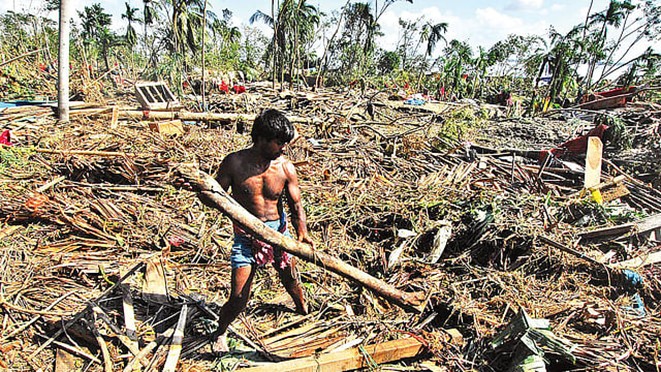
- Cyclones and storm surges: Cyclones—Sidr, Aila, Roanu, Bulbul—have grown more intense and unpredictable, repeatedly smashing infrastructure, livelihoods, and social fabrics.
Migrants typically first seek refuge in secondary towns such as Khulna, Barishal, Feni, and Chandpur. When local opportunities prove inadequate—as they almost always do—they undertake a second, often more desperate migration to the sprawling metropolises of Dhaka and Chattogram.
- Socio‑Economic Fallout and Urban Fragility
The arrival of climate migrants in cities is rarely a story of successful adaptation. Instead, it fuels the rapid, unregulated expansion of slums where housing, sanitation, and basic services are grossly inadequate. Dhaka’s North and South City Corporation areas already host some of the densest informal settlements in the world, incubating water scarcity, rampant child labor, and heightened gender‑based violence. Simultaneously, the hollowing out of rural agriculture undermines national food security and deepens inequality (2).
Yet to view migrants solely as victims would be incomplete. They constitute a vital workforce in the informal economy—as rickshaw pullers, garment workers, construction laborers—propping up sectors that the formal economy depends upon. Their resilience, however, is systematically undercut by exclusion from social protection, leaving them trapped in cycles of precarious poverty.
- Policy Responses: Gaps and Missed Opportunities
The Government of Bangladesh has initiated flagship programs—Delta Plan 2100, the National Adaptation Plan (NAP), and the Bangladesh Climate Change Trust Fund—that invest in cyclone shelters, salt‑tolerant crops, and livelihood diversification. These are commendable steps, yet they remain fragmented and insufficiently coordinated with urban planning and migration governance.
Non‑governmental organizations and research institutions (e.g., BRAC Institute of Governance and Development, Centre for Participatory Research and Development) have generated critical evidence and piloted localized solutions. Nevertheless, the absence of a dedicated national policy on climate migration represents a glaring institutional void (3). Without such a policy, adaptation efforts will continue to operate in silos, and the rights of climate‑displaced persons will remain legally invisible.
- Strategic Recommendations
To move from reactive coping to proactive, just adaptation, Bangladesh must:
- Embed migration into adaptation planning: Coastal resilience projects must explicitly include managed retreat, livelihood transition, and destination‑city preparedness.
- Enforce minimum standards in urban settlements: Guarantee access to housing, water, sanitation, and healthcare for climate migrants in cities.
- Establish a national climate migration framework: Create a cross‑ministerial mechanism with clear mandates, financing, and accountability.
- Advocate for international recognition: Leverage diplomatic channels to secure legal protection and climate finance for cross‑border and internally displaced climate victims.
Conclusion
Bangladesh’s climate migration crisis is not a distant threat—it is a present reality that is reshaping the nation’s social geography and testing the limits of its governance. Whether this displacement becomes a driver of inclusive development or a catalyst for deeper inequality depends on the ambition and urgency of today’s policy choices. The time for piecemeal responses is over; what is required is a paradigm shift that places the dignity, security, and agency of the displaced at the center of climate action.
References
World Bank (2022). Bangladesh Climate and Development Report. Washington, D.C.
IOM (2023). Bangladesh: Climate Change and Migration. Dhaka.
Ahmed, S. M. (2025). Policy gaps in climate migration management. Environment and Development Journal, 15(2), 45–62.
Article submitted by,
Abdullah Al Shahriar
Intermediate Student
B A F Shaheen College, Kurmitola
Dhaka Cantonment, Dhaka – 1206
