
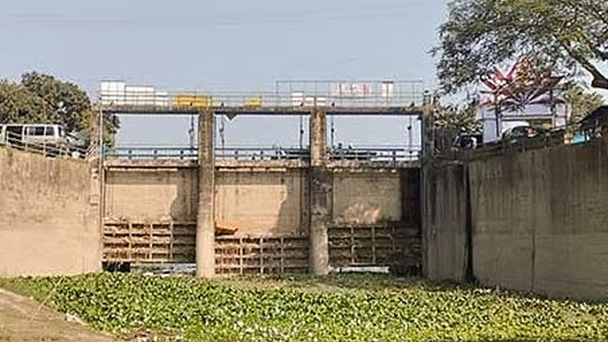
There is hardly any district or upazila in Bangladesh where BWDB has not constructed a polder or embankment, and there is no significant river without a sluice gate or flap gate built over it. But how much has Bangladesh actually benefited from this? Nazrul Islam writes about various BWDB projects in a two-part series. This is the first part that was published in the Daily Prothom Alo on 30-03-2026.
1.
The Water Development Board (BWDB) was established in 1959. At the time, it was named the East Pakistan Water and Power Development Authority (EPWAPDA).
Following the floods of 1955 and 1956, the then-Prime Minister of Pakistan wrote a letter to the UN Technical Assistance (UNTA) seeking help to solve the country’s flood problems. In response, UNTA sent a commission in 1957 led by J. Krug, a former US Secretary of the Interior.
EPWAPDA was formed based on the recommendations of this commission. After independence, EPWAPDA was transformed into BWDB. Therefore, BWDB is about 65 years old. What is the extent of its success over this long period?
2.
In 1957, the Krug Commission felt that there was insufficient local technical capacity to determine water development strategies. Hence, their second recommendation was to hire a foreign consulting firm to devise a plan.
Following this recommendation, the International Engineering Company (IECO), based in San Francisco, USA, was hired. This company formulated a Master Plan in 1964.
It was a master plan based on an “embankment approach,” aiming to isolate the floodplains from river channels by building embankments along both banks of all major rivers.
When an area is completely surrounded by embankments, it is called a “polder.” For this reason, the World Bank described the Master Plan as a program for the “polderization” of Bangladesh.
BWDB wanted to move forward with implementing this plan. However, while the World Bank supported the embankment approach, it disagreed with IECO’s proposal to build dams along all major rivers so rapidly.
Instead, the World Bank recommended initially focusing on expanding irrigation to boost food production in areas above the flood line using locally available water. They suggested that after gaining experience, the country should gradually proceed with building embankments along major rivers.
The government and BWDB could not ignore the World Bank’s recommendations. Consequently, BWDB went ahead with implementing the small and medium-sized embankment projects proposed in IECO’s Master Plan.
3.
Over the last 60 years, BWDB has implemented countless such projects. According to their own figures, the agency had implemented 601 projects by 2015.
The total area under these projects is 7.32 million hectares, which is more than 80% of Bangladesh’s total arable land (9.12 million hectares). In other words, BWDB has constructed projects almost everywhere possible in the country.
In fact, there is no district or upazila where BWDB hasn’t built polders or embankments, and no significant river without structural interventions like sluice gates.
But how much has Bangladesh benefited? BWDB tries to show that the country has benefited immensely. To do this, they compare agricultural production in an area before a project was built with current production levels.
The fallacy of this type of comparison can be clarified with an example. The implementation of the Ganges-Kobadak (G-K) project began in the 1950s. The goal was to pump water from the Ganges to irrigate vast areas of greater Kushtia, Jashore, and Khulna. A pumphouse was built in Bheramara, and a new network of canals was dug to deliver water to farmers’ fields.
However, after the Farakka Barrage was built in 1974, the volume of water in the Ganges during the dry season dropped drastically. As a result, the effectiveness of the G-K project was largely destroyed. Since the 1980s, shallow tube-well-based irrigation expanded in the G-K project area, just like the rest of the country, leading to increased food production.
Yet, BWDB claims this tube-well-driven growth as a contribution of the G-K project. Similar misleading claims are made for many other projects implemented by BWDB. (I have discussed these issues in detail in my books “Water Development in Bangladesh: Past, Present, and Future” and “Water Development in Bangladesh: The Crisis of the Current Trend and Proposals for Alternative Paths,” published in 2022 and 2023 respectively. Interested readers may refer to them.)
4.
More tragically, in many cases, BWDB’s projects have caused harm rather than good. One example is the Coastal Embankment Project. Under this project, about 140 polders were constructed along the coast of Bangladesh using approximately 5,000 miles of embankments.
Although crop intensity and food production inside the polders increased initially, the negative impacts soon became evident. One major issue is waterlogging. Because of the embankments, water inside the polders cannot drain out.
Furthermore, as part of the polder construction program, numerous sluice gates and flap gates were built across rivers, obstructing natural water flows. This led to heavy siltation in the riverbeds; in many places, the riverbeds have risen to the same level as the adjacent roads!
For instance, due to waterlogging, residents of the Bhabadah area (located in Polder 24) have been living an inhumane, waterlogged life for years. During a visit to the area in 2020, it was observed that BWDB had built two sluice gates on the Hari River. One has 21 gates, and the other has 9. Due to siltation and other factors, almost all of them are useless. The riverbed has filled up and is now level with the road.
According to local residents, BWDB’s sluice gates are the root cause of the waterlogging. Therefore, they demand the removal of these gates to open up the river and allow the monsoon flow from the Ganges to pass through. This would flush out the silt within a few years and solve the waterlogging crisis.
However, BWDB is apparently unwilling to do this. Not only that, but they have also set up a special police outpost there to prevent locals from removing the sluice gates on their own initiative. As a result, in the eyes of the locals, BWDB has turned into an anti-people organization.
5.
Another example of BWDB’s anti-people role involves the Baral River in North Bengal. Originating from the Ganges at Charghat in Rajshahi, this river flows through the Chalan Beel and eventually takes the name Hurasagar before merging with the Jamuna near Baghabari in Sirajganj. Almost all the north-south flowing rivers of North Bengal (such as the Gumani, Atrai, and Karatoya) flow into the Baral.
The health of the entire Chalan Beel depends on the Baral. Using Chalan Beel as a natural water reservoir, the Baral River maintains a balance between the water levels of the Ganges and the Jamuna, thereby mitigating floods. Therefore, the Baral is crucial not just for North Bengal, but for the rest of the Ganges-Brahmaputra basin as well.
In 1984, in the name of flood control, BWDB constructed a 3-gate sluice, totaling only 24 feet in width, at the mouth of the Baral in Charghat. According to locals, the natural width of the river there was at least 500 feet. BWDB essentially made the Baral extremely narrow and forced an unnatural 90-degree angle from the Ganges to Charghat.
Downstream, 48.5 kilometers away at Atghari in Baraigram upazila of Natore, BWDB built another 5-gate sluice (40 feet wide in total) on the Baral’s channel flowing toward the Nandakuja river.
Ostensibly, the purpose of this was to store water in the Baral between Charghat and Atghari for irrigation. However, BWDB remained indifferent to what would happen to the Baral further downstream as a result.
Additionally, at Atghari, BWDB built a tiny single-gate sluice, only 5 feet wide, at the mouth of the original Baral channel.
Due to siltation, the Charghat sluice gate soon became useless, and the flow from the Ganges into the Baral was largely choked off even during the peak monsoon. Consequently, the Atghari sluice gate also became ineffective, and the original Baral turned into what BWDB calls the ‘Dead Baral’—a death for which BWDB itself is responsible. The dried-up Baral fell victim to encroachment, and the construction of cross-dams and roads across the riverbed turned the Baral into a series of fragmented ponds.
According to local residents, a corrupt local administration reclassified the land type of the Baral as a ‘degraded water body’ to benefit greedy, influential people.
The people living along the Baral could not accept this outcome. They launched a movement to remove the sluice gates and other dams to free the river. To this end, they formed the ‘Save Baral Movement’ in 2006.
Over time, this movement gained momentum. Numerous rallies and meetings were held, a memorandum with over a hundred thousand signatures was submitted, and a 220-kilometer-long human chain was formed along the riverbanks. The reclassification of the Baral’s land was halted through a district court case, and finally, a writ petition was filed in the High Court in 2014.
In response to this petition, the High Court ordered the administration to free the Baral. Under these circumstances, a meeting of the river task force opined in favor of completely freeing the Baral. But BWDB stood in the way.
Earlier, in 2012, BWDB argued that a technical study was needed before removing the sluice gates. Facing BWDB’s objections, the task force permitted them to conduct the study.
In 2015, BWDB selected a consulting firm to conduct this study, and the firm submitted its report in 2018. It turned out that the study simply recommended the exact proposals BWDB had originally made in 2015.
More importantly, although a total of 10 different scenarios were tested in this study, the scenario of removing the Charghat and Atghari sluice gates—and what its impact would be—was completely ignored!
In other words, the core purpose for which the study was supposed to be conducted was neglected. Instead, the authors of the study recommended building yet another regulator and paired it with extensive river dredging, proposing a massive 1,036 crore Taka project for BWDB.
To many, the study appeared to be a tailored, made-to-order job. Consequently, no further progress could be made on removing the sluice gates.
(For those interested in learning more about these issues, please refer to the book “Baral: The Story of a River’s Murder and the Struggle for its Restoration,” written by myself and S.M. Mizanur Rahman, Member Secretary of the Save Baral Movement, to be published in January 2026.)
Dr. Nazrul Islam
Professor, Asian Growth Research Institute
Former Chief of Development Research, United Nations
Founder, Bangladesh Environment Network (BEN)
The information presented here is an English adaptation based on the report published on The Daily Prothom Alo.
