

Biography
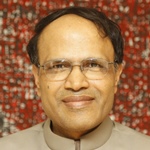
Dr. Nazrul Islam is an eminent economist who has served as the Chief of Development Research at the United Nations. In this position, he led the preparation of UN flagship reports on global development issues and provided policy input and advice to senior management.
He earned his Ph.D. in Economics from Harvard University and M.Sc. in Economics from Moscow State University. He has taught at Dhaka University, Harvard University, Emory University, Kyushu University, and St. John’s University before joining the UN in 2006.
Dr. Nazrul has earned an international reputation for his contributions to growth, transition, sustainable development, and political economy. He has published twenty books and numerous articles in reputed international journals.
Much of his research focuses on Bangladesh’s development. Notable works include “Development Problem of Bangladesh” (1987), “Bangladesh of the Future” (2012), “Let the Delta be a Delta–The Way to Protect Rivers of Bangladesh” (2016), and “Governance for Development” (2016).
Deeply interested in environmental protection, he founded the Bangladesh Environment Network (BEN) in 1998 and initiated the formation of Bangladesh Poribesh Andolon (BAPA) in 2000.
Md. Khalequzzaman, Ph.D.
Global CoordinatorProfessor and Lead
Dept. of EGGS
Lock Haven University
PA 17745, USA
Biography
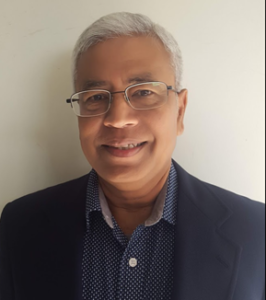
Dr. Md. Khalequzzaman is a professor of Geology at Lock Haven University (LHU) since 2001. He also served as the chair of the Department of Geology & Physics at LHU for three years from 2005 to 2008. Currently, he is serving as the lead of the Environmental, Geographical, and Geological Sciences (EGGS) department at LHU under the Commonwealth University of Pennsylvania.
He holds B.S./M.S. degree in Mining Engineering/Geology from Azerbaijan Institute of Petroleum & Chemistry in Baku, formerly USSR; another M.S. and a Ph.D. in Geology from University of Delaware, U.S.A.
His areas of expertise and research include coastal environmental oceanography, water resources management, sustainability science, and GIS. He published numerous papers and newspaper articles on various aspects of trans-boundary rivers and integrated water resources management in South Asia.
He collaborated with scientists from India, Canada, and Bangladesh on research projects dealing with equitable and reasonable sharing of trans-boundary rivers. He co-edited proceedings of two international conferences on trans-boundary rivers and regional cooperation on water resources in the Ganges-Brahmaputra-Meghna Basins.
Azizur Molla, Ph.D.
TreasurerProfessor
Master of Public Health program
Grand Valley State University
Grand Rapids, Michigan
Biography
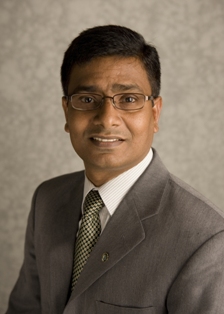
Dr. Azizur Molla is a professor in the Master of Public Health program within the School of Interdisciplinary Health at the College of Health Professions at Grand Valley State University (GVSU).
He received dual PhDs in Medical Anthropology and Demography from the Pennsylvania State University and completed his Master of Public Health (MPH) from the University of North Carolina-Chapel Hill. His research expertise spans climate change, water and health, environmental health, and program evaluation.
With over 20 years of experience in teaching and researching health in South Asia and the U.S., Dr. Molla has worked with USAID in designing and assessing public health programs. He has also coordinated training on global health for officials in Bangladesh and Indonesia.
His current research interests include climate change and its effect on sea level rise, water contamination, air pollution, and health disparities. He is currently working on a textbook titled “Climate Change, Drinking Water Security, and Public Health.”
Activities of BEN are coordinated through the BEN Coordinating Committee (BEN-CC). Current members include the following:
Ahmed Badruzzaman, Ph.D.
Committee MemberEnergy Scientist & Educator
University of California, Berkeley
Biography
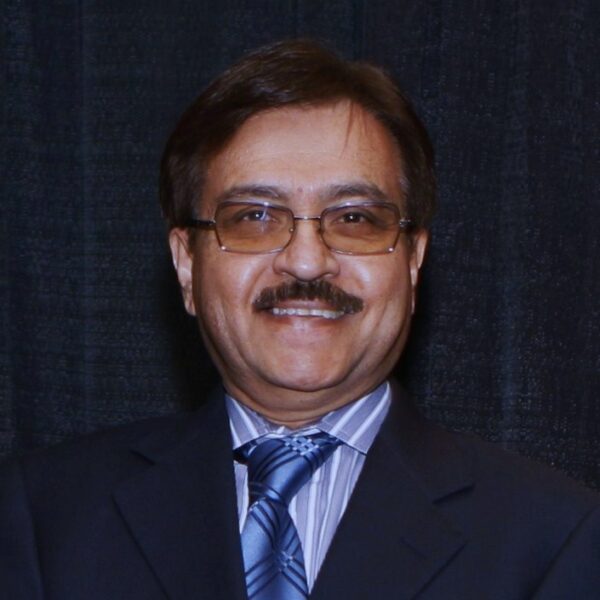
Ahmed Badruzzaman is a Bangladesh-born American energy scientist with contributions in research, development, and deployment of nuclear, petroleum technologies, and small energy systems suitable for developing countries via a 45 year journey through several U.S. R&D and educational institutions. He earned a Ph.D. in Nuclear Engineering and Science from Rensselaer Polytechnic Institute, Troy, NY in 1979.
After his retirement from industrial research in 2012, Dr. Badruzzaman has focused in exploring novel nuclear techniques to probe the subsurface to support the low-carbon energy transition underway. He is also educating the younger generation on this transition, necessary to mitigate climate change. On the former, he is also an SME consultant to the US Department of Energy. On the latter, he has been teaching the course Energy and Civilization, which he and his two co-instructors developed at University of California, Berkeley in 2016.
Dr. Badruzzaman is an author of over 50 papers, two US patents, and an upcoming textbook on nuclear technologies. He is a Fellow of the American Nuclear Society, and a recipient of several technical awards from professional societies, including the SPWLA Gold Medal, the Society’s highest technical recognition – 43rd recipient in 60 years, in May 2025.
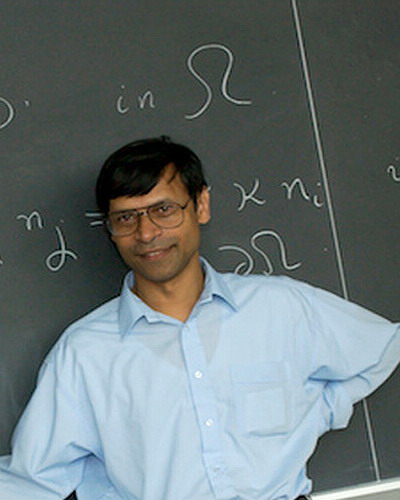
Saleh A. Tanveer, Ph.D.
Committee MemberProfessor of Mathematics
Ohio State University
Biography
Saleh A. Tanveer was born on 8 February, 1956, Dhaka, Bangladesh. He passed SSC, HSC from Mirzapur Cadet College. BA, Pomona College, Double Major in Math and Physics, 1979. MA, Claremont Graduate School, Mathematics, 1979. MS, Civil Engineering, Caltech, 1982. Ph.D, Applied Math, Caltech, 1984.
He was post Doctoral Research Fellow, Applied Math, Caltech, Oct ’83 – Aug ’84. Assistant Professor, Mathematics, Virginia Tech, 1984-89. Visiting Fellow, Caltech, Jan ’86 – Sep ’87. Associate Professor, Mathematics, Ohio State University, ’89-’95. Professor, Mathematics, Ohio State University, ’95-present.
His field of specialization and research is Complex variable, asymptotics and PDEs with applications to Fluids, Quantum Mechanics and other areas of physics. He received Francois Frenkel Award, American Physical Society, Division of Fluid Dynamics, 1987. He was named a Simons Fellow, Isaac Newton Institute Program on Complex Variables, Cambridge, UK, Fall ’19.
Debadarshi Dipen Bhattacharya, Ph.D.
Committee MemberProfessor of Physics and Astronomy
Moreno Valley College, California
Biography
Dr. Dipen Bhattacharya is a Professor of Physics and Astronomy at Moreno Valley College, California. He previously held research positions at NASA’s Goddard Space Flight Institute and the University of California, Riverside. He is a key Coordinating Committee member of the Bangladesh Environment Network (BEN).
While his academic field is high-energy astrophysics, he is a prominent science communicator and an active advocate for environmental protection through his work with BEN. He earned his M.S. from Moscow State University and his Ph.D. from the University of New Hampshire, USA.
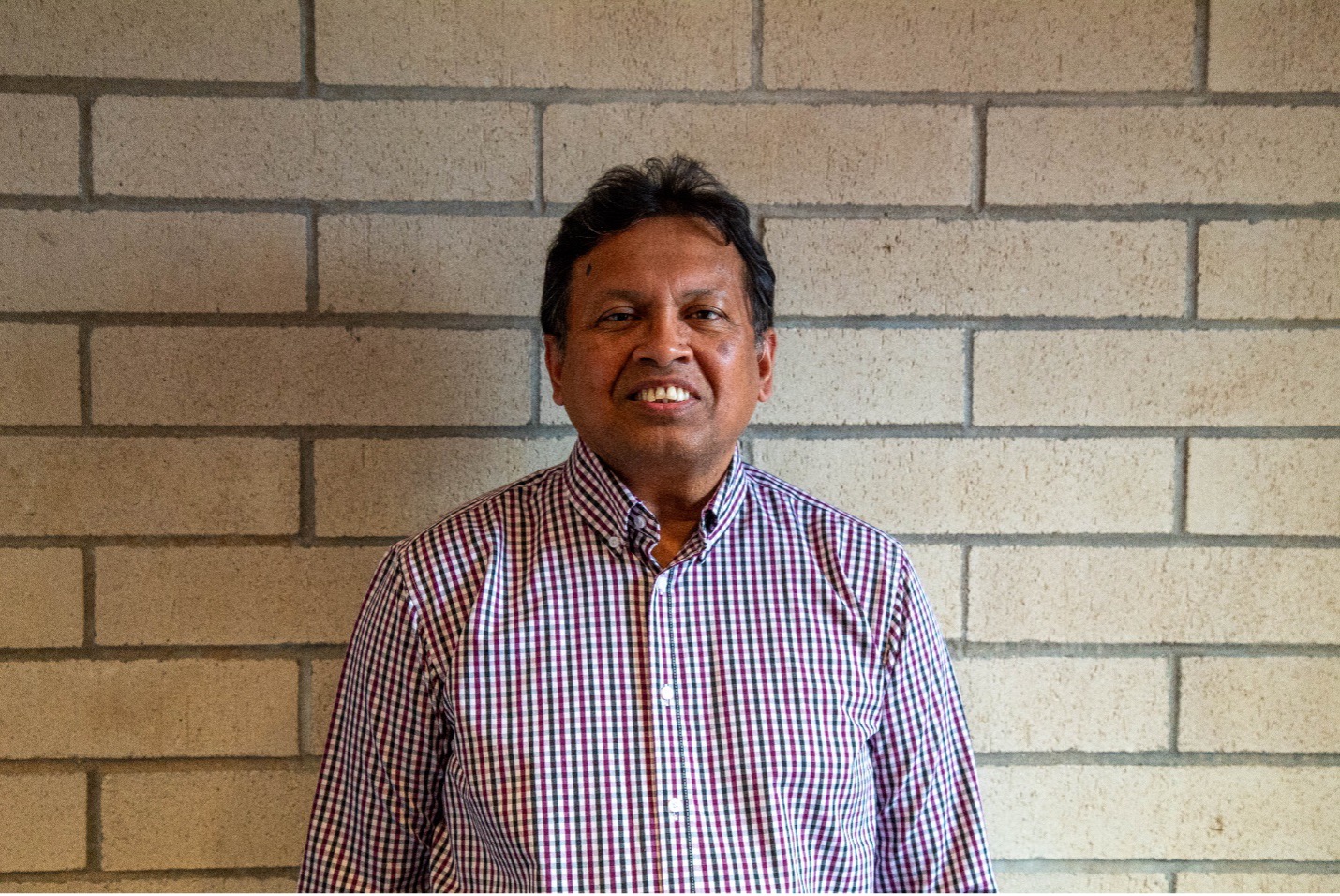
Mohammod T. Irfan, Ph.D.
Committee MemberSenior Scientist
Korbel School’s Frederick S. Pardee Institute
Biography
Mohammod T. Irfan is a Senior Scientist at the Korbel School’s Frederick S. Pardee Institute for International Futures. With over twenty years of experience in global development research, his work explores long-term human, social, and environmental change through integrated modeling and foresight analysis.
As part of the core team developing the International Futures (IFs) system—a widely used platform for long-range global projections—Dr. Irfan contributes to modeling efforts across areas such as demography, education, economics, energy, infrastructure, and sustainability. His research focuses on improving understanding of complex development dynamics and supporting evidence-based policy planning.
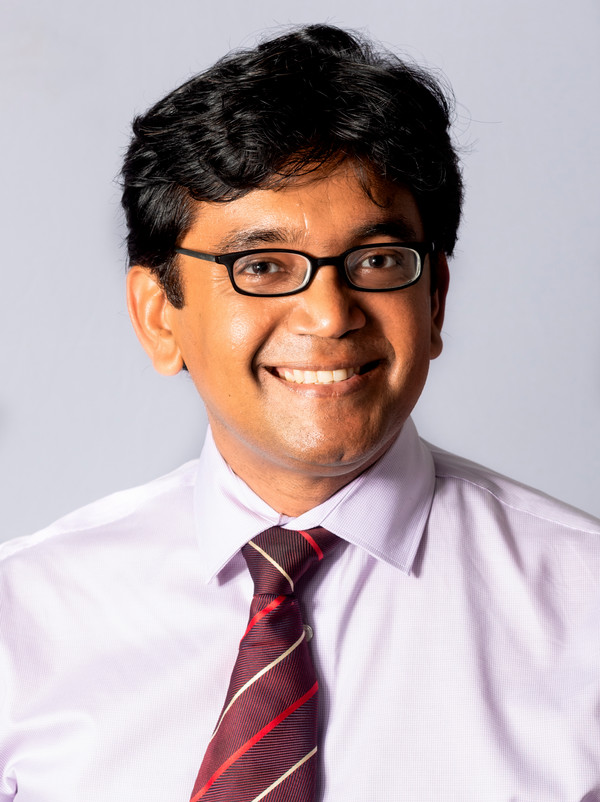
Hossain Azam, Ph.D., P.E.
Committee MemberAssociate Professor
Civil Engineering
University of the District of Columbia
Biography
Dr. Hossain M. Azam is an Associate Professor of Environmental Engineering at the University of the District of Columbia, specializing in water and wastewater treatment, solid waste management, and environmental sustainability.
He has a robust research focus on resource recovery and the water-energy-food-climate nexus, and a strong commitment to advancing engineering education through innovative, interdisciplinary approaches.
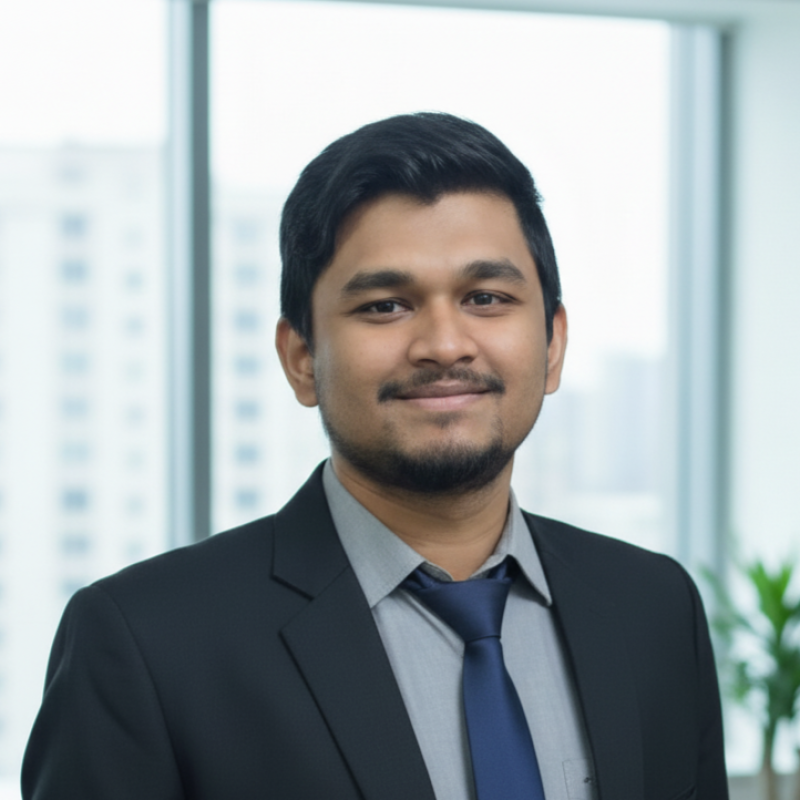
Md. Sahariar Kabir Nion
BEN Fellow | Research Assistant, Azam Research GroupMd. Sahariar Kabir Nion completed his bachelor’s degree in civil engineering from the University of Asia Pacific (UAP), Dhaka. Currently, he is working remotely as a Research Assistant in the Azam Research Group at the Water-Energy-Food-Climate Nexus Lab, focusing on water and wastewater management.
