
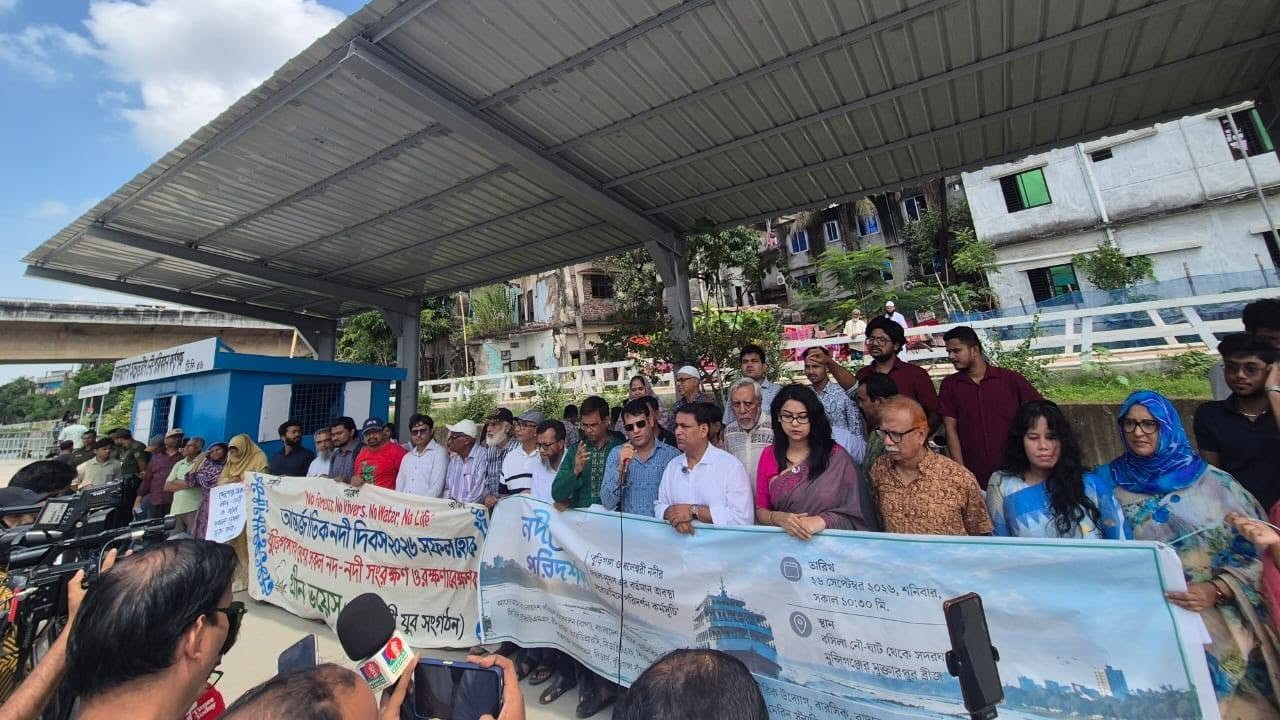
Twenty-three environmental and river-conservation organizations joined forces on Saturday, September 26, 2026 to address the growing crisis facing Bangladesh’s rivers. Led by Bangladesh Poribesh Andolon (BAPA) the coalition included organizations such as BELA, Green Voice, ALRD and WBB Trust. The delegation began its field inspection at Basila Launch Ghat in Mohammadpur to observe the encroachment and pollution affecting the Buriganga and Dhaleshwari rivers. The inspection documented alleged illegal occupation of river areas, industrial pollution and long-standing failures in enforcement. The organizations called for immediate action to restore the rivers and protect the communities that depend on them.
The rivers are essential to Bangladesh’s economy, ecology, and everyday life. Yet their continued degradation threatens livelihoods, fisheries and public health. Anisur Rahman Talukder Khokon, a Member of Parliament and member of the Parliamentary Standing Committee on the Ministry of Shipping, attended the inspection as chief guest. He issued a strong warning to those occupying river land and polluting waterways. Comparing environmental crimes with narcotics offences he argued that those who destroy public resources for personal gain should face strict legal consequences. MP Khokon also highlighted the government’s stated focus on river dredging and afforestation under Prime Minister Tarique Rahman. He demanded the immediate publication of a definitive list of river encroachers and polluters so that the responsible parties could be held accountable.
The field inspection revealed a troubling gap between official commitments and conditions on the ground. BAPA General Secretary Md. Alamgir Kabir described the experience as deeply distressing saying the delegation had witnessed rivers struggling to survive. Industrial facilities and other structures were found occupying areas identified as part of the river system. The delegation specifically raised concerns about Shah Cement and Scan Cement alleging that their factories and jetties had encroached on river areas.
Kabir also questioned the placement of river boundary pillars in 2009 following a High Court writ. According to him, the pillars were installed in a zigzag pattern that bypassed occupied areas. He argued that this arrangement allowed encroachment to continue while protecting influential occupants from eviction. River boundaries cannot be protected effectively if the demarcation process fails to account for occupied land and existing violations.
Bangladesh’s river-conservation movement has faced these challenges for decades. Initial eviction drives began in 1999, followed by several High Court orders between 2009 and 2021. Yet legal directives have not been enough to restore the rivers. Poor coordination among government ministries and inconsistent enforcement continue to obstruct progress.
BAPA Vice President Mahidul Haq Khan, who chaired the event stressed that years of environmental activism had failed to eliminate river pollution. Other leaders including Mihir Biswas and Sanjida Khatun Ripa called for stronger accountability and continuous monitoring. They emphasized that industrial facilities must operate their Effluent Treatment Plants (ETPs) properly and consistently. The Ministry of Environment must also strengthen inspections and take action against industries that violate environmental regulations.
The organizations argued that river conservation requires sustained enforcement, scientific monitoring and cooperation among government agencies. Without these measures, pollution will continue to damage aquatic ecosystems and threaten fisheries and biodiversity.
Following the inspection, the coalition presented a ten-point demand to the authorities. The first priority was a fresh survey of the Buriganga and Dhaleshwari river boundaries. The organizations called for the recovery of all illegally occupied river areas and an immediate halt to unauthorized drainage connections that discharge untreated industrial waste and sewage into the waterways.
The coalition also demanded that all industrial facilities operate their ETPs around the clock, with strict online monitoring to verify compliance. Regular enforcement drives should identify and penalize polluters. Illegal structures along the riverbanks must be removed to restore the rivers’ natural channels and reclaim occupied land.
The organizations called for regular testing of river water and sediment, alongside assessments of aquatic biodiversity. Such monitoring would help identify pollution sources, measure ecological changes and evaluate the effectiveness of restoration efforts. They also demanded a strict ban on dumping plastics, polythene, market waste and hazardous oil from ships into the rivers.
The coalition urged all relevant government agencies to develop and implement a coordinated action plan with clear deadlines. Responsibilities must be defined, progress must be monitored and violations must carry meaningful consequences. Without a time-bound framework, even well-intentioned commitments risk becoming another set of unfulfilled promises.
The organizations also called for the state to act as a genuine guardian of the country’s natural resources, including rivers, forests and hills. They demanded greater institutional independence for the National River Conservation Commission including the authority to make decisions without political or corporate interference. They argued that such powers are essential to protecting rivers from powerful interests and ensuring that environmental laws are enforced.