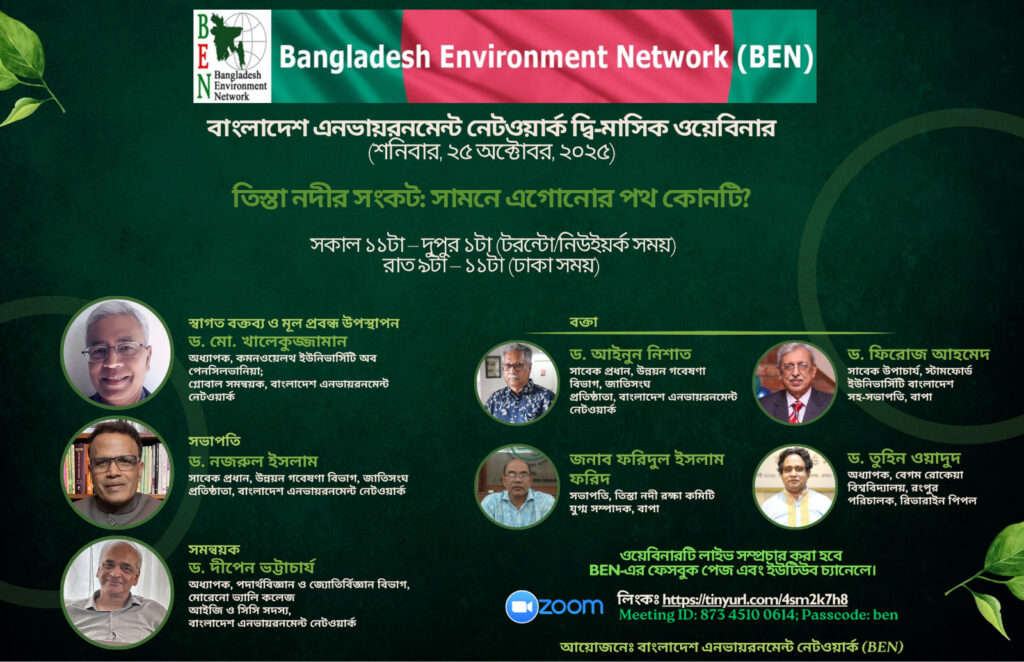
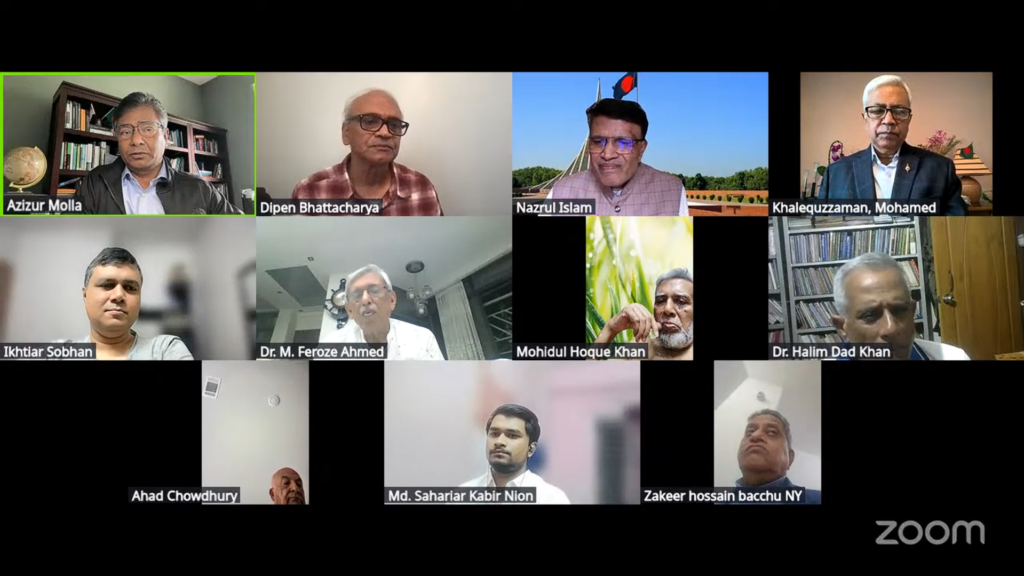
The hydrological viability of the controversial “Teesta River Comprehensive Management and Restoration Project,” set against the backdrop of acute seasonal water scarcity, was the subject of rigorous scrutiny during the 17th webinar organized by the Bangladesh Environment Network (BEN). Titled “Crisis of the Teesta River: Which Way Forward?”, the virtual forum convened a panel of distinguished hydrologists, environmentalists, and local activists to critically assess the proposed “Master Plan” and explore sustainable alternatives for the transboundary river. The overarching consensus emerging from the deliberation was a rejection of aggressive river-narrowing engineering in favor of a holistic approach prioritized by hydro-diplomacy and ecological conservation.
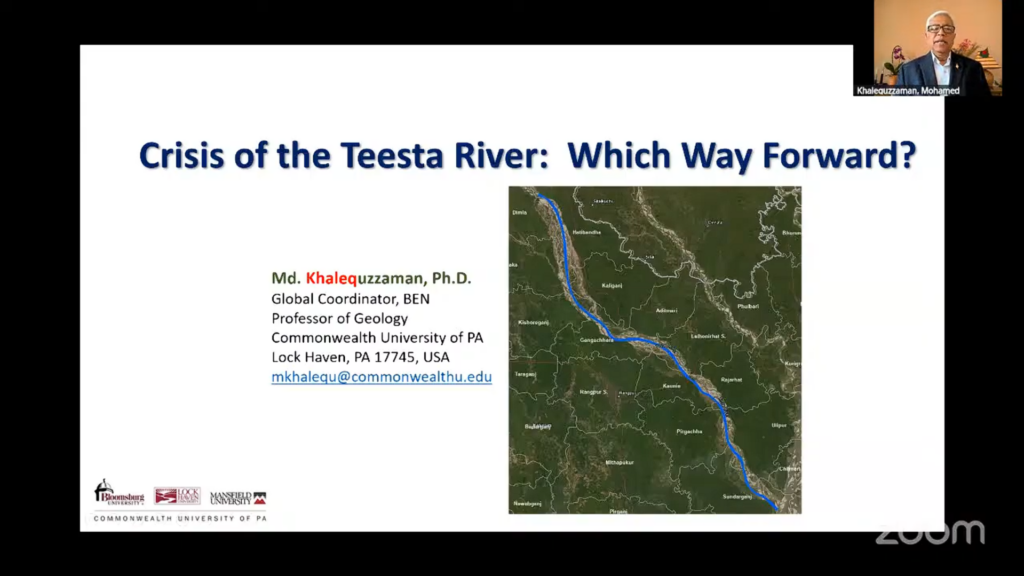
Delivering the keynote address, Dr. Md. Khalequzzaman, Professor of Geology at Commonwealth University of PA, dissected the proposed project through the lens of fluvial geomorphology. He argued that the project’s central premise—confining a naturally braided river, which historically spans three to four kilometers, into a narrow channel of merely 700 to 1,000 meters—is fundamentally at odds with geological principles. He noted that the Teesta is designed by nature to carry massive sediment loads from the Himalayas; artificially straightening and narrowing such a dynamic system ignores its morphological reality. Dr. Khalequzzaman presented calculations indicating that such constriction would drastically increase water velocity during monsoon peaks—potentially jumping from a manageable 0.26 m/s to a destructive 3 m/s—thereby heightening the risk of catastrophic embankment breaches and erosion.
The presentation further dismantled the notion that internal engineering could compensate for the lack of transboundary flow. Dr. Khalequzzaman asserted that dredging and narrowing the river channel does not generate “new water.” Without a binding water-sharing treaty with India to ensure dry-season flow, the project fails to address the root cause of the crisis: the unilateral withdrawal of water upstream. The discussion underscored that infrastructure-heavy solutions are futile without first securing the river’s lifeblood—water itself—through international negotiation.
The panel discussion broadened the critique to include severe ecological and socio-economic ramifications. Dr. Firoze Ahmed warned that transforming the riverbed into a lined channel could sever the connection between surface water and aquifers, threatening the groundwater recharge essential for the region’s agriculture. Complementing this view, Dr. Ainun Nishat, a veteran water resource expert, recalled the river’s historical volatility, citing the 1968 floods to argue that a “straight-jacket” approach for the Teesta is destined to fail against natural forces. Simultaneously, Dr. Tuhin Wadud and Faridul Islam Farid voiced concerns for the riverbank communities, fearing that land reclamation for urbanization might displace thousands of farmers whose livelihoods depend on the existing river chars.
Concluding the deliberations, BEN Founder Dr. Nazrul Islam emphasized the urgent necessity of transparency and independent review. He called upon the government to press the “pause button” on the multi-billion dollar Master Plan, advocating instead for a transparent feasibility study involving local experts and public consultation. The webinar ultimately crystallized a unified demand for “Hydro-diplomacy,” asserting that Bangladesh must exhaust all diplomatic avenues—including potential mediation by international bodies—to secure a fair share of Teesta waters, rather than resorting to scientifically questionable domestic engineering that risks permanent ecological damage.