|
Year 23
|
No. 7
|
July, 2026
|
|
|
| |
|
This edition reflects on growing environmental and infrastructural challenges. From the gridlock around the Jatrabari-Gulistan Flyover to the devastating floods in Chattogram and persistent waterlogging in Dhaka, the failures of unplanned urbanization and ecological mismanagement are becoming harder to ignore. For years, Bangladesh has followed a flawed “cordon approach,” relying on rigid infrastructure and concrete structures while ignoring the natural flow of its delta. As BEN founder Dr. Nazrul Islam emphasized, and as we proudly recognized at BEN’s 28th-anniversary celebration, this approach must change. Projects such as the proposed Padma Barrage risk repeating the same mistake. Instead of restoring rivers, large-scale interventions can disrupt natural river systems and create new problems. Bangladesh needs an “open approach” that protects and restores canals, wetlands, floodplains, and free-flowing rivers. Resilience also depends on cooperation beyond our borders. Bangladesh must secure guaranteed minimum river flows and push for equitable, basin-wide management of transboundary waters. BAPA and BEN remain committed to advancing these nature-based solutions. Policymakers must enforce environmental laws, remove destructive structures, and protect the country’s natural waterways. Temporary fixes are no longer enough. Bangladesh’s long-term survival depends on working with nature, not against it.
For suggestions, feedback and/or queries please contact:
BEN Newsletter.
If you are interested to contribute to the future BEN newsletters with articles or ideas, please sign up
here or
mail us.
|
|
| |
|
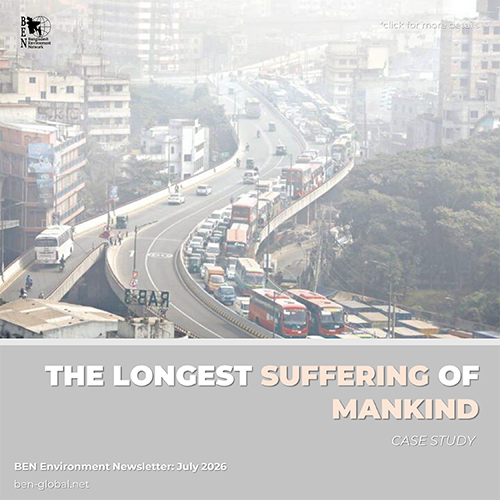
The Jatrabari-Gulistan Flyover causes chronic gridlock due to structural flaws, narrowing lanes, and mismanagement. Experts estimate annual losses of Tk 21,000 crore, prompting calls for partial or total demolition.
|
|
|
| |
|
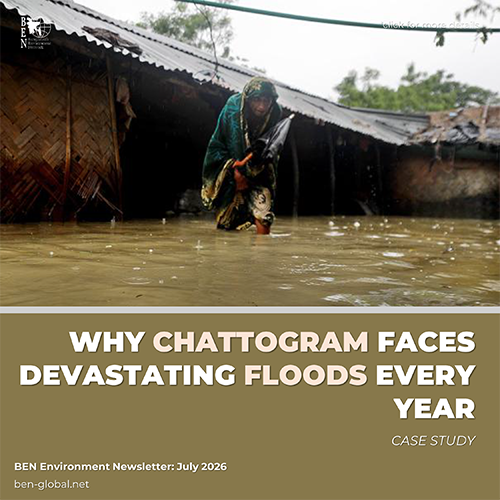
Chattogram’s devastating 2026 floods were triggered by heavy rain but rooted in decades of ecological mismanagement, illegal hill cutting, and the destruction of 3,000 natural water bodies and drainage systems.
|
|
|
| |
|
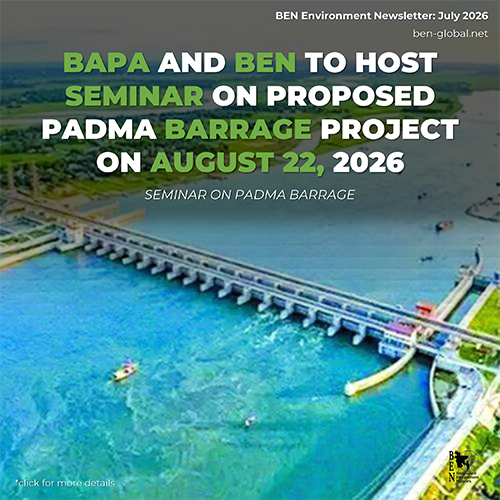
BAPA and BEN will host an August 22 seminar on the proposed Padma Barrage. Experts will discuss the mega-project's feasibility, potential ecological damage, and downstream erosion concerns in Bangladesh.
|
|
|
| |
|
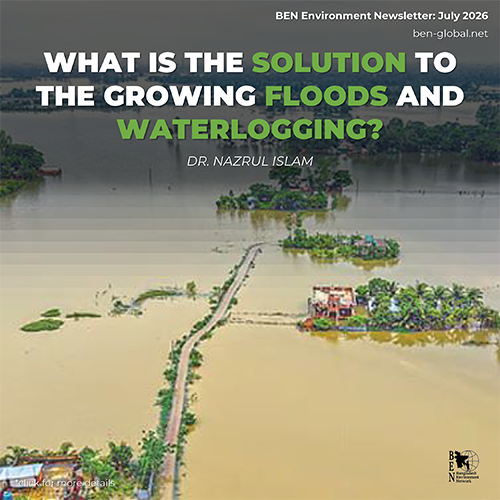
Dr. Nazrul Islam blames Bangladesh’s worsening floods on the destructive "cordon approach" of building embankments. He advocates an "open approach" to restore natural canals and allow free water flow.
|
|
|
| |
|
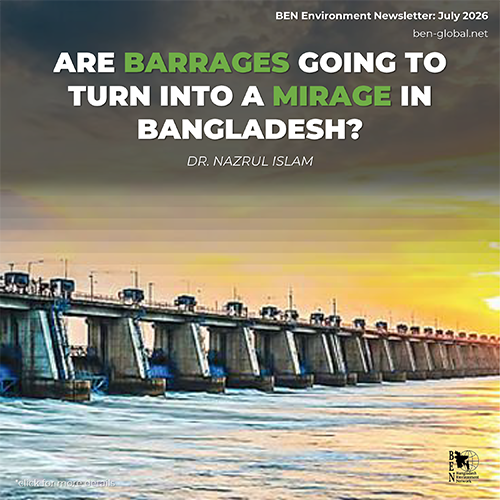
Dr. Nazrul Islam argues the proposed Padma Barrage is a dangerous "mirage" that cannot store enough monsoon water for winter. He recommends restoring natural wetlands over building destructive mega-structures.
|
|
|
| |
|
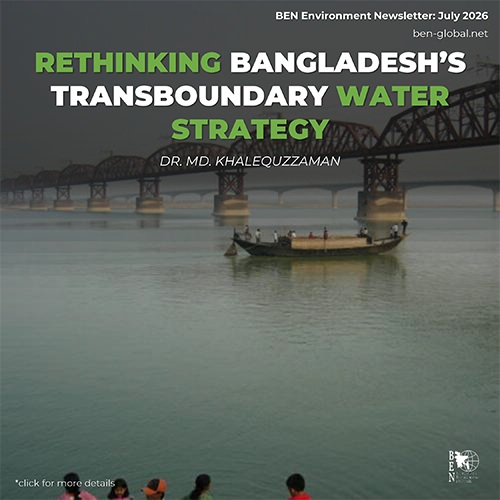
Dr. Md. Khalequzzaman urges an overhaul of Bangladesh’s transboundary water strategy, advocating for guaranteed minimum river flows, international cooperation under UN conventions, and the removal of flow-obstructing dams.
|
|
|
| |
|
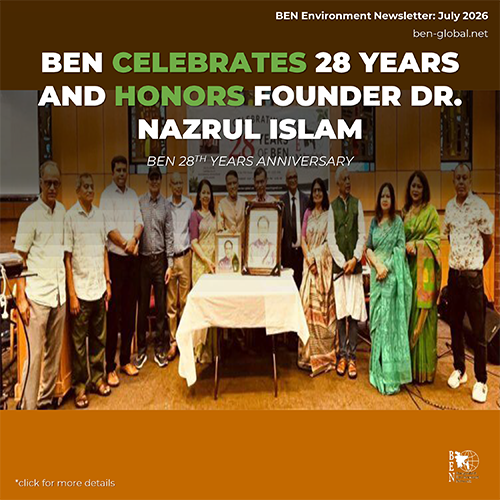
The Bangladesh Environment Network celebrated its 28th anniversary in New York, honoring founder Dr. Nazrul Islam with a Lifetime Achievement Award and a commemorative book for his conservation efforts.
|
|
|
| |
|
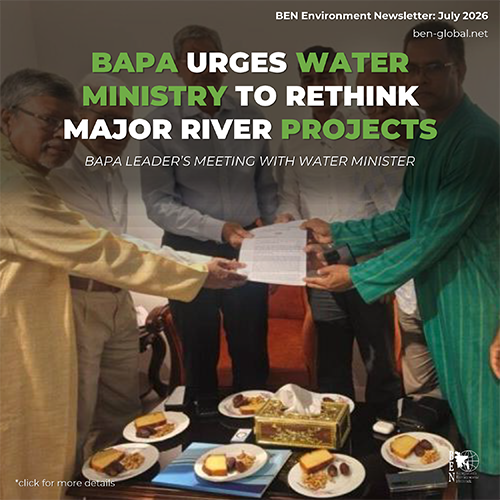
BAPA met with Water Ministry officials to demand an "Open-River" policy. They urged the reassessment of major structural projects, advocating for free-flowing waterways and the removal of unnecessary dams.
|
|
|
| |
|
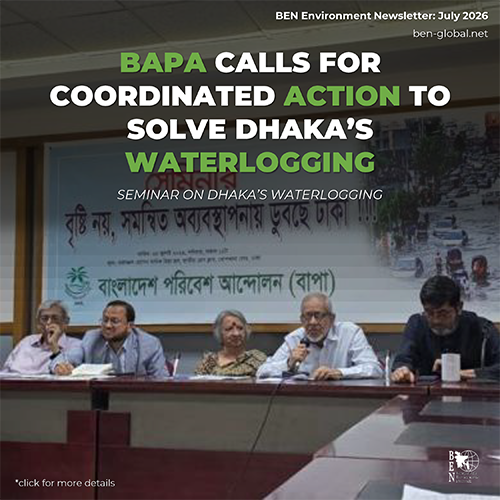
BAPA highlights that Dhaka’s severe waterlogging is a man-made crisis driven by destroyed canals. They demand an end to artificial pumping and the restoration of natural, topography-based drainage systems.
|
|
|
| |
|
© 2026 Bangladesh Environment Network
|
|
|
| |
|