|
Year 23
|
No. 6
|
June, 2026
|
|
|
| |
|
This edition arrives at a defining juncture for Bangladesh, where lofty policy ambitions collide with harsh ground realities. As we face the impending expiration of the 30-year Ganges Water Sharing Treaty, our contributors urge an uncompromisingly "ecological" approach. Demanding the removal of the Farakka Barrage and securing a guaranteed minimum flow of 35,000 cusecs are absolute prerequisites for our environmental survival. Simultaneously, we must abandon destructive, unaccountable mega-projects like the proposed Ganges (Padma) Barrage, which threaten to devastate downstream ecosystems. Domestically, the government’s historic FY2026-27 climate budget and electric vehicle incentives signal a massive green transition. Yet, as our experts warn, financial allocation without transparency is a dangerous illusion. These policy disconnects are felt most acutely by the vulnerable, from Boro farmers facing ruined harvests due to geopolitical diesel shortages, to Dhaka residents still sleeping above illegal chemical warehouses sixteen years after the Nimtoli tragedy. To thrive in this era of climate uncertainty, Bangladesh must bridge the glaring gap between ambitious promises and authentic, equitable implementation. We urgently demand transparent, accountable, and nature-centric governance that protects our rivers, ecosystems, and marginalized communities first.
For suggestions, feedback and/or queries please contact:
BEN Newsletter.
If you are interested to contribute to the future BEN newsletters with articles or ideas, please sign up
here or
mail us.
|
|
| |
|
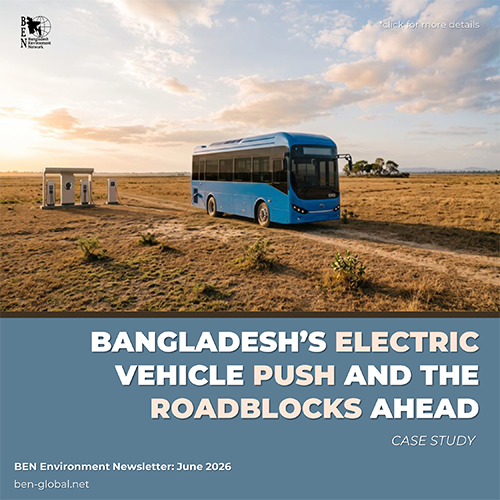
Bangladesh’s FY2026-27 budget offers sweeping tax incentives to accelerate electric vehicle adoption and domestic manufacturing. However, experts warn a severe lack of charging infrastructure could derail this green transition.
|
|
|
| |
|
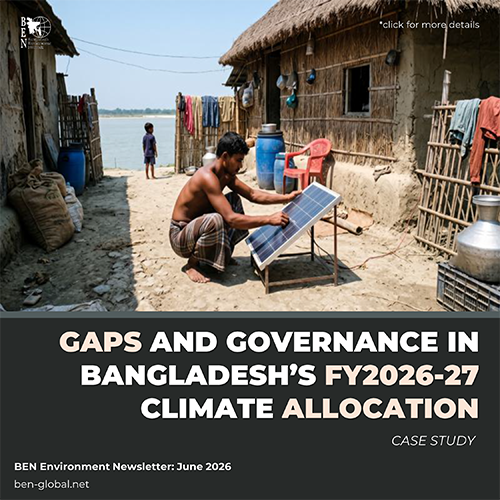
Despite a record Tk 51,746 crore climate budget, experts warn it falls significantly short. Systemic misallocations, heavy domestic reliance, and bureaucratic inefficiencies threaten Bangladesh’s long-term environmental adaptation goals.
|
|
|
| |
|
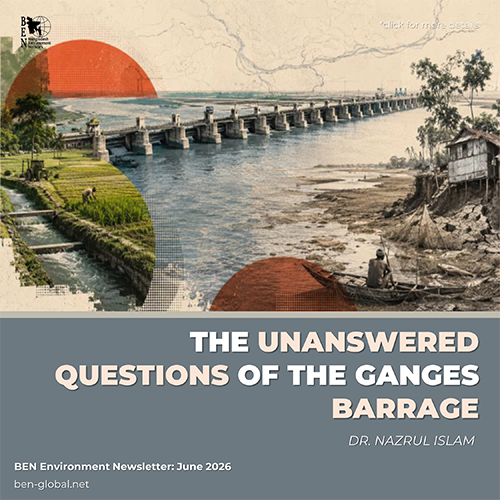
Dr. Nazrul Islam refutes BWDB engineers regarding the proposed Ganges Barrage, warning it will fatally reduce downstream winter flows, cause siltation, and destroy ecosystems. He demands full project transparency.
|
|
|
| |
|
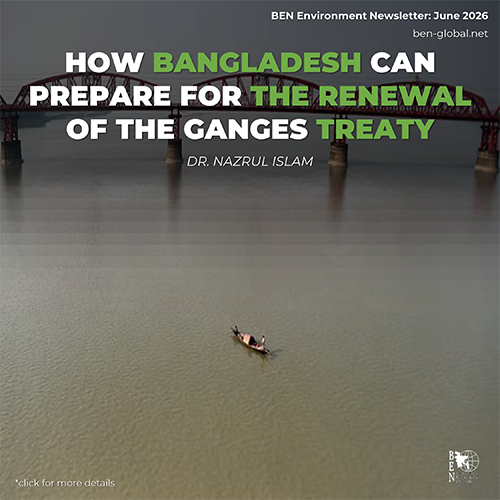
Ahead of the Ganges Treaty’s expiration, Bangladesh must abandon short-sighted "commercial" river management. Adopting an "ecological" approach and signing the 1997 UN Watercourses Convention is crucial for fair negotiations.
|
|
|
| |
|
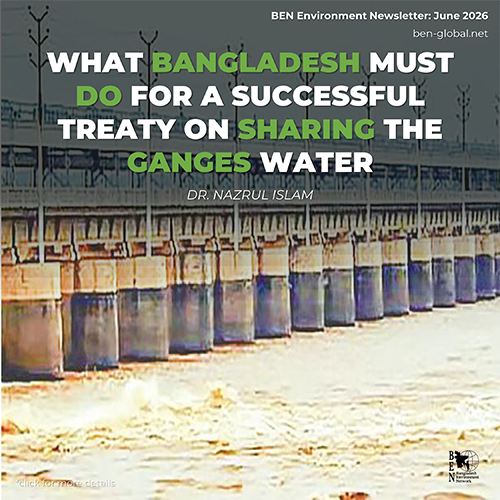
Bangladesh must demand the Farakka Barrage's removal and secure a 35,000-cusec minimum guarantee clause in the upcoming Ganges Treaty. Advancing the domestic Padma Barrage simultaneously would be diplomatically suicidal.
|
|
|
| |
|
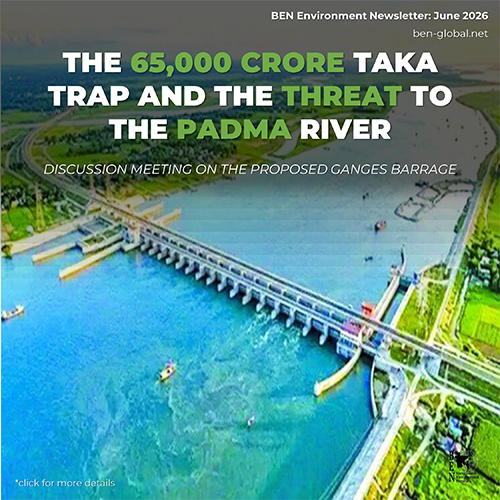
Condemning the proposed 65,000-crore taka Ganges Barrage, Dr. Nazrul Islam warns it will trap silt, devastate the Padma River, and give India an excuse to deny dry-season water shares.
|
|
|
| |
|
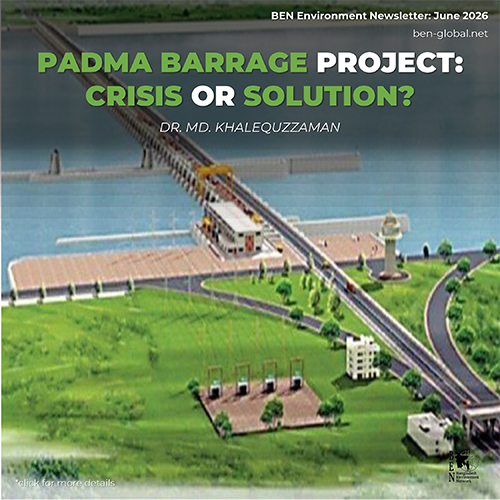
Dr. Khalequzzaman warns the Padma Barrage will trigger severe waterlogging and erosion, essentially creating a second Farakka. He argues the project prioritizes bureaucratic financial gains over genuine environmental solutions.
|
|
|
| |
|
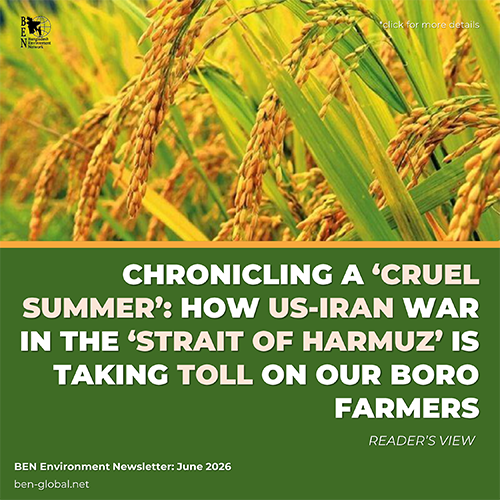
The geopolitical US-Iran conflict has triggered a severe diesel shortage in Bangladesh, leaving thousands of irrigation pumps idle and devastating farmers during the critical Boro paddy cultivation season.
|
|
|
| |
|
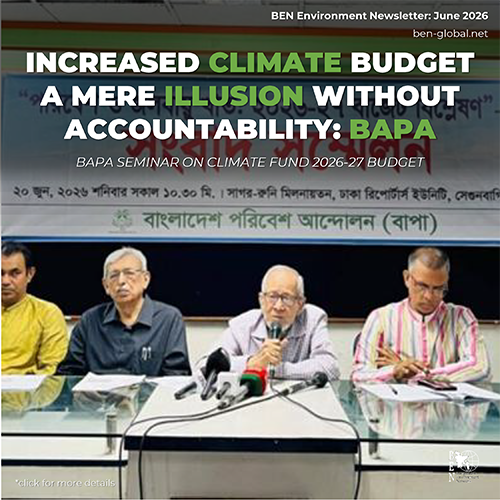
BAPA leaders argue the newly increased climate budget is a mere illusion without transparency. They urgently demand strict accountability, carbon taxes, green bonds, and an end to destructive mega-projects.
|
|
|
| |
|
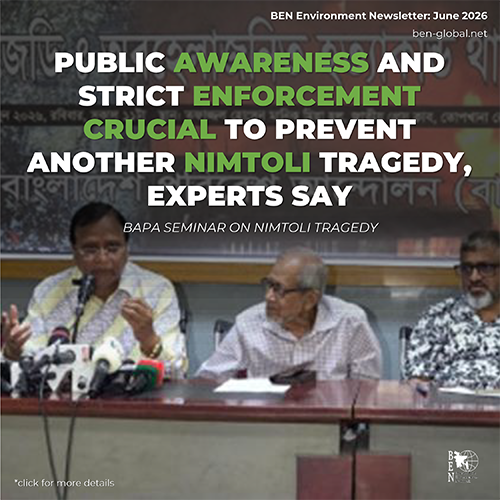
Sixteen years post-Nimtoli, experts warn Dhaka remains a dangerous tinderbox. Eliminating illegal chemical warehouses requires stringent enforcement of building codes, immense political will, and heightened civic responsibility among landlords.
|
|
|
| |
|
© 2026 Bangladesh Environment Network
|
|
|
| |
|