|
Year 23
|
No. 4
|
April, 2026
|
|
|
| |
|
This edition confronts the undeniable reality of climate destabilization, translating recent meteorological extremes into an urgent call for systemic resilience. As Bangladesh reels from violent atmospheric mood swings shifting rapidly from scorching 40°C heatwaves to catastrophic pre-monsoon flash floods in the Haor basin, we insist that proactive environmental governance must replace reactive disaster management. Inside, we scrutinize the compounding threats of an impending El Niño system and a contracting global humanitarian landscape, advocating for robust agricultural planning to safeguard national food security. These immediate climate struggles are framed by an examination of our shifting infrastructural vulnerabilities, from the economic complexities of the newly fueled Rooppur Nuclear Power Plant to the looming threat of regional megathrust earthquakes addressed in our upcoming BEN webinar. We also amplify the unwavering grassroots momentum of BAPA, highlighting recent nationwide mobilizations for World Earth Day, strict noise pollution enforcement, and the passionate Rajshahi human chain demanding the Padma Barrage to combat desertification. As we navigate this era of compounding crises, we affirm that genuine national progress and survival depend entirely on an unwavering commitment to protecting Bangladesh’s ecological integrity.
For suggestions, feedback and/or queries please contact:
BEN Newsletter.
If you are interested to contribute to the future BEN newsletters with articles or ideas, please sign up
here or
mail us.
|
|
| |
|
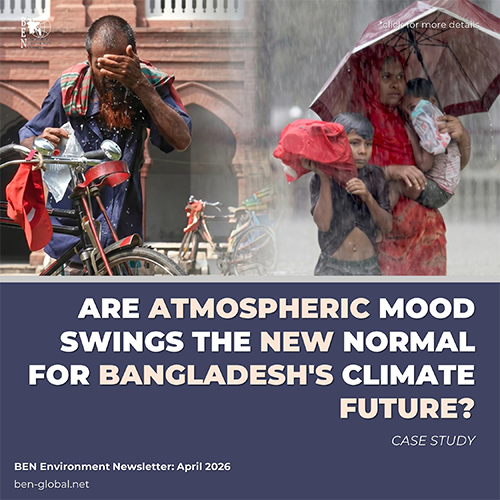
Bangladesh is experiencing extreme climate volatility: April 2026 saw 40°C heatwaves followed by 75.7% above-normal rainfall, causing devastating flash floods in Sylhet. This validates CMIP6 models, necessitating urgent regional policy recalibration.
|
|
|
| |
|
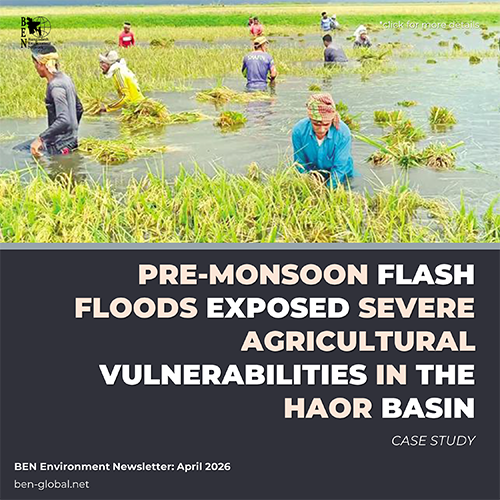
In April 2026, catastrophic flash floods in Northeastern Bangladesh submerged 30,000 hectares of Boro rice. Driven by extreme rainfall and infrastructure failure, the crisis caused 5 billion Taka in losses.
|
|
|
| |

|
The 2026 Global Report reveals 266 million people face acute food insecurity. Driven by conflict and climate, funding dropped 39%, demanding a shift from temporary aid toward integrated, resilient structural solutions.
|
|
|
| |

|
To observe International Noise Awareness Day 2026, Bangladesh launched nationwide programs and strict enforcement—including 17,000 legal cases—to combat noise pollution's severe health risks through social awareness and judicial action.
|
|
|
| |
|
BEN and BAPA will host a webinar on May 30, 2026, at 9:00 PM regarding Bangladesh’s earthquake risks. Global experts will discuss seismic vulnerabilities and preparedness to advance regional disaster resilience.
|
|
|
| |

|
Join BEN's 28th Anniversary Celebration on July 18th, 3-9 PM, at the Jewish Center in Jamaica, NY. BEN to specially honor founder Dr. Nazrul Islam for his lifetime of contributions.
|
|
|
| |
|
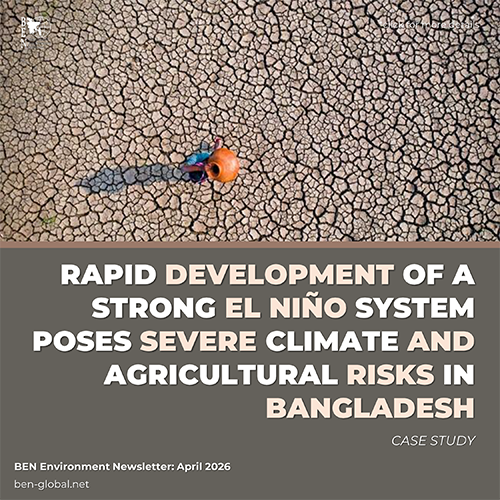
A severe El Niño peak by mid-2026 threatens Bangladesh with record heatwaves (44°C) and suppressed monsoons. Resulting crop failures and food supply deficits pose a critical risk to national stability.
|
|
|
| |
|
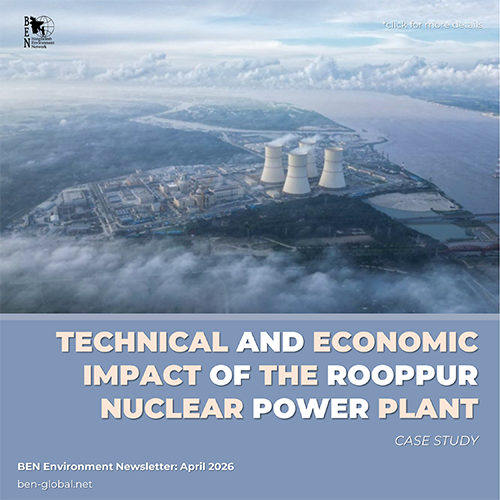
Bangladesh’s Rooppur Nuclear Power Plant began fueling its VVER-1200 reactors to provide 2,400MW. Despite enhancing energy security, the project faces 1.39 trillion taka costs, grid integration hurdles, and safety oversight needs.
|
|
|
| |

|
On April 22, Moheshkhali’s BAPA branch observed World Earth Day in Kalarmarchhara. Led by Maulana Shahab Uddin, speakers and locals advocated for urgent regional climate action and ecological preservation.
|
|
|
| |
|
© 2026 Bangladesh Environment Network
|
|
|
| |
|