|
Year 23
|
No. 5
|
May, 2026
|
|
|
| |
|
This edition confronts a recurring threat to Bangladesh’s ecological security: the perilous allure of misguided mega-projects. As Dr. Nazrul Islam and Dr. Md. Khalequzzaman extensively outline in our featured series, proposed interventions like the Padma Barrage threaten to replicate the disastrous legacy of Farakka. Instead of pouring billions into commercial structures that trap sediment and exacerbate waterlogging, Bangladesh must champion nature-based solutions, integrated river basin management, and robust hydro-diplomacy through the 1997 UN Watercourses Convention. This urgent need to return to fundamentals echoes across our urban landscapes. Dhaka’s waste crisis persists as authorities chase unfeasible, foreign-funded incineration plants over essential source segregation. Similarly, our earthquake preparedness must pivot from theoretical 'mega-quake' panics to enforcing strict building codes against very real localized vulnerabilities. Furthermore, the man-made floods currently devastating our haors prove that ignoring nature’s boundaries invites immediate catastrophe. As BEN celebrates its 28th anniversary by launching a global Reel Competition, we urge the next generation to raise their voices. True resilience does not lie in concrete blockades and imported technology, but in political will, scientific integrity, and an uncompromising respect for nature.
For suggestions, feedback and/or queries please contact:
BEN Newsletter.
If you are interested to contribute to the future BEN newsletters with articles or ideas, please sign up
here or
mail us.
|
|
| |
|
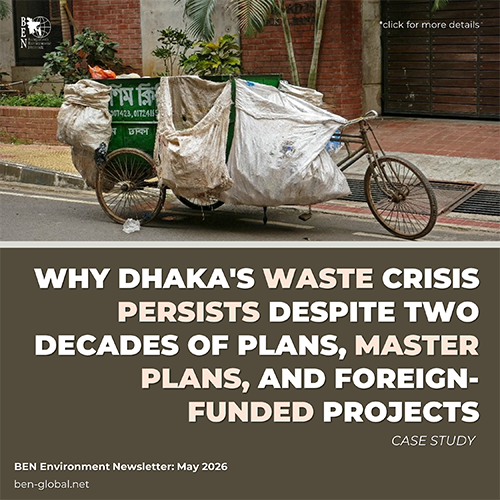
Despite costly master plans, Dhaka’s waste management remains in a critical state. An expensive Waste-to-Energy incineration project is flawed for organic waste. Without proper segregation, imported technologies risk total failure.
|
|
|
| |
|
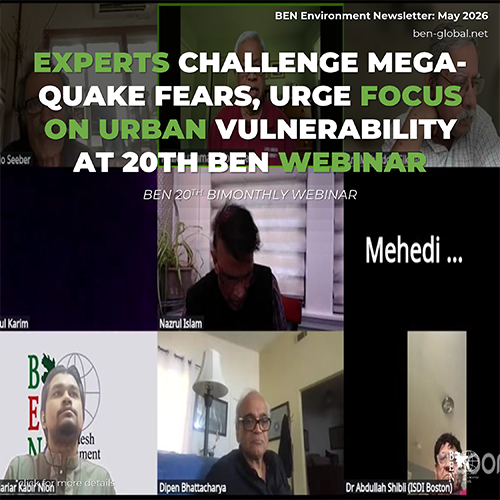
Experts dispute fears of mega-quakes in Bangladesh, capping realistic threats at 7.0. However, unregulated urban expansion and poor engineering make even moderate tremors structurally catastrophic for local cities.
|
|
|
| |
|
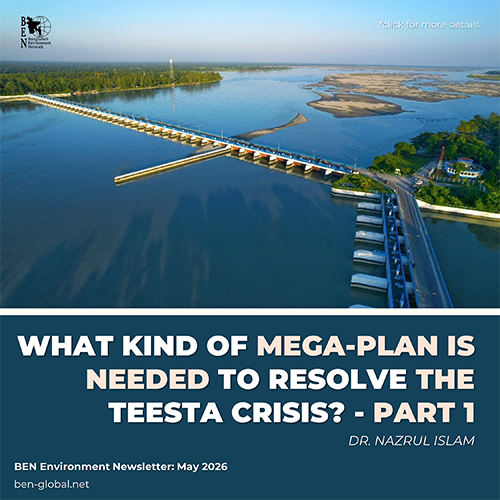
Dr. Nazrul Islam criticizes damaging commercial river management relying on intrusive dams and embankments. He advocates a post-industrial, nature-based approach that respects the Teesta River’s dynamic, living natural water ecosystem.
|
|
|
| |
|
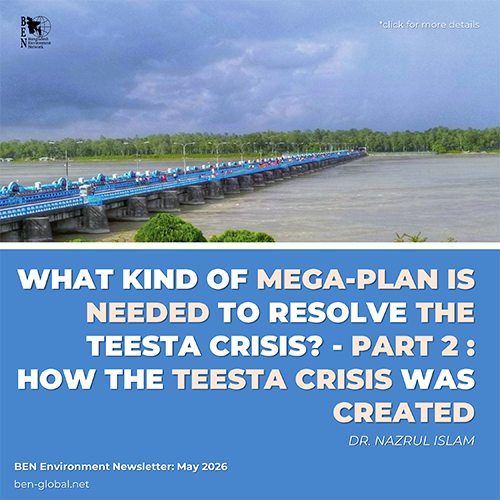
Dr. Nazrul Islam blames the Teesta crisis on aggressive commercial interventions by India and Bangladesh. Upstream dams and downstream embankments cause severe dry-season water shortages, monsoon flash floods, and massive erosion.
|
|
|
| |
|
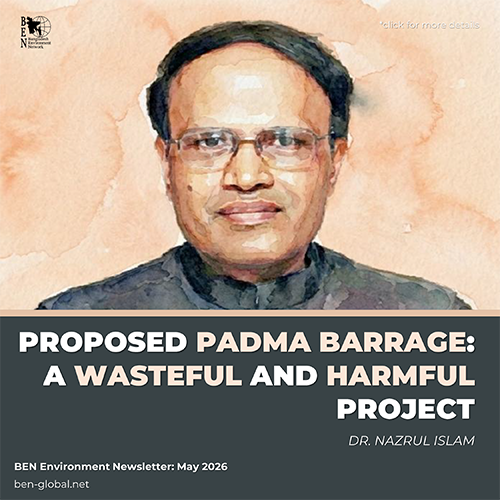
Dr. Nazrul Islam warns the costly Padma Barrage will cause upstream siltation, exacerbate inland salinity, and ruin diplomatic leverage. He urges pursuing fairer water treaties and restoring natural river ecosystems instead.
|
|
|
| |
|
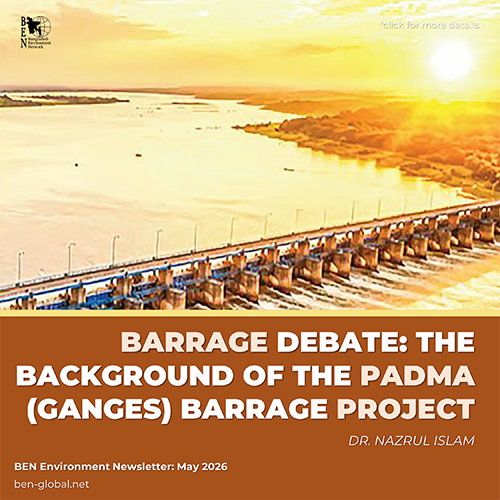
Dr. Nazrul Islam criticizes the secretive Padma Barrage project, arguing past Water Development Board interventions caused current waterlogging. He claims the board continually prioritizes budget-inflating structures over genuine river restoration efforts.
|
|
|
| |
|
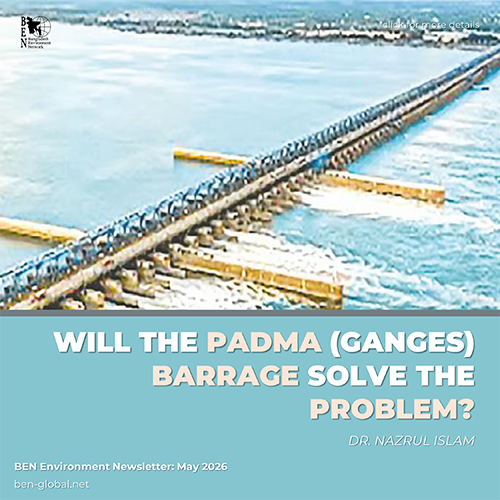
Dr. Nazrul Islam argues the Padma Barrage will deplete downstream flow, devastate local agriculture, and accelerate salinity. Upstream siltation will worsen flooding, while the mega-project undermines diplomatic leverage for water-sharing treaties.
|
|
|
| |
|
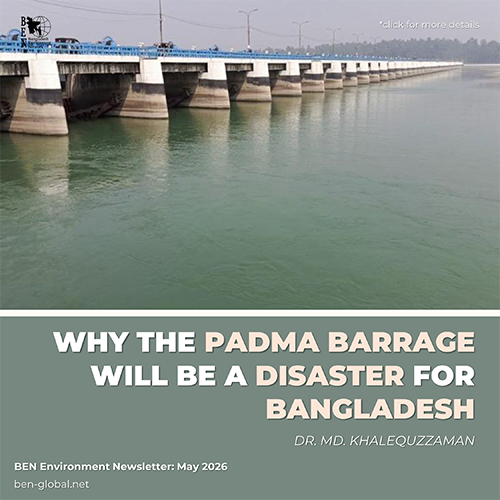
Dr. Khalequzzaman warns the Padma Barrage will trap vital sediment, starving coasts and worsening floods. Without a guaranteed Ganges flow, the project’s irrigation claims remain completely misleading and mathematically insufficient.
|
|
|
| |
|
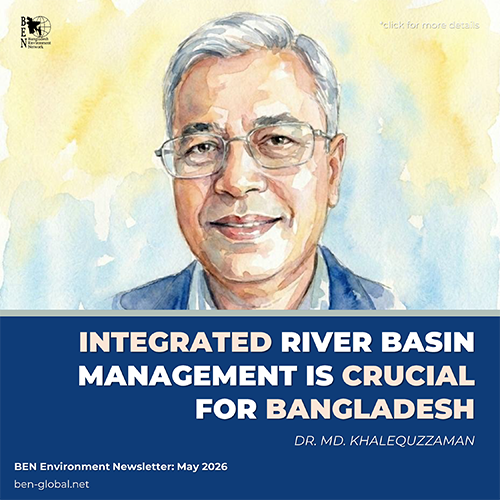
Dr. Khalequzzaman states the proposed Padma Barrage is premature without a basin-wide Ganges treaty. Bangladesh must prioritize integrated hydro-diplomacy, extensive dredging, and modifying existing polders to secure long-term environmental stability.
|
|
|
| |
|
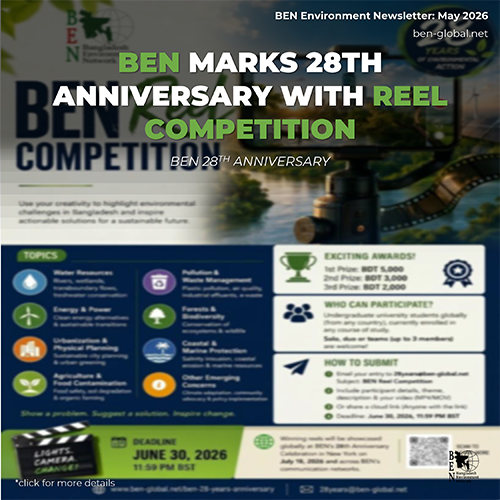
Celebrating its 28th anniversary, BEN launched a global video reel competition. Creators are invited to highlight environmental challenges and actionable solutions through scientifically accurate vertical videos without using generative AI.
|
|
|
| |
|
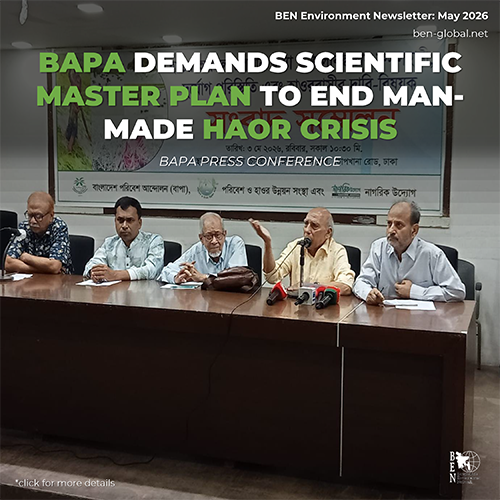
BAPA activists declare the haor crop devastation a man-made disaster driven by unplanned infrastructure. They demand a science-based master plan, river dredging, and immediate financial relief for all affected farmers.
|
|
|
| |
|
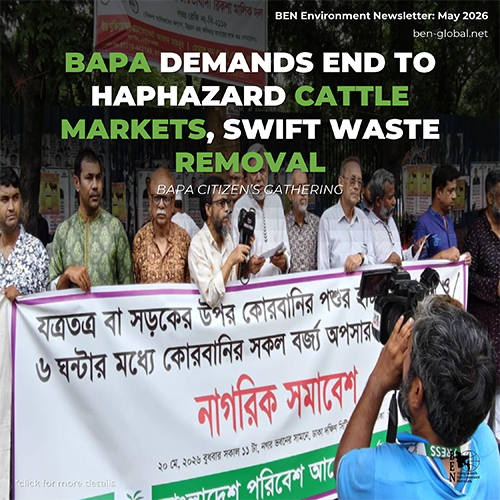
BAPA demands modern waste management and an end to street-based cattle markets during Eid. The memorandum urges designated neighborhood slaughterhouses, fair rawhide pricing, public awareness, and strict environmental monitoring protocols.
|
|
|
| |
|
© 2026 Bangladesh Environment Network
|
|
|
| |
|