|
Year 23
|
No. 8
|
August, 2026
|
|
|
| |
|
This edition highlights the compounding environmental, energy, and infrastructural crises facing Bangladesh. From the severe spread of nearly invisible microplastics across air, water, and soil to recurring urban waterlogging and devastating glacial-induced debris flows in the Himalayan basin, our ecosystems are under unprecedented stress. Compounding these natural threats are domestic policy failures, such as costly energy contracts and neglected domestic gas exploration, which continue to leave households in the dark. Furthermore, planned mega-projects like the proposed Padma Barrage and destructive road construction over Cox's Bazar sand dunes risk repeating historic mistakes by disrupting natural delta sediments and coastal defenses. As experts like Dr. Nazrul Islam, Dr. Khalequzzaman, and Dr. Ahad Chowdhury emphasize, Bangladesh must urgently transition from a rigid commercial approach to an inclusive ecological strategy. Policymakers need to embrace nature-based solutions, enforce strict environmental laws, restore natural river flows and canals, and secure equitable transboundary water agreements. Bangladesh's long-term survival depends on working with nature.
For suggestions, feedback and/or queries please contact:
BEN Newsletter.
If you are interested to contribute to the future BEN newsletters with articles or ideas, please sign up
here or
mail us.
|
|
| |
|
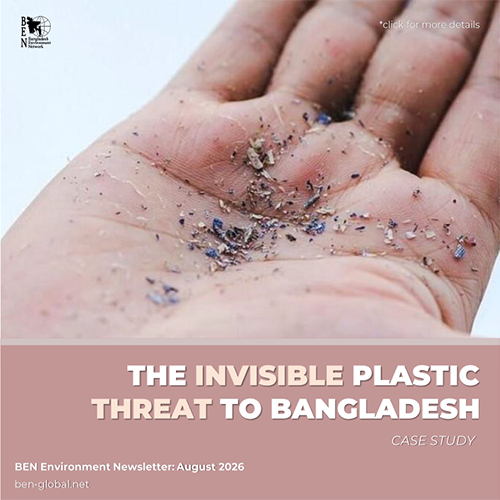
Microplastics come from primary and secondary sources. They pollute air, water, and soil globally. Bangladesh faces severe microplastic contamination in its rivers, coastal areas, and food systems, requiring urgent regulatory interventions.
|
|
|
| |
|
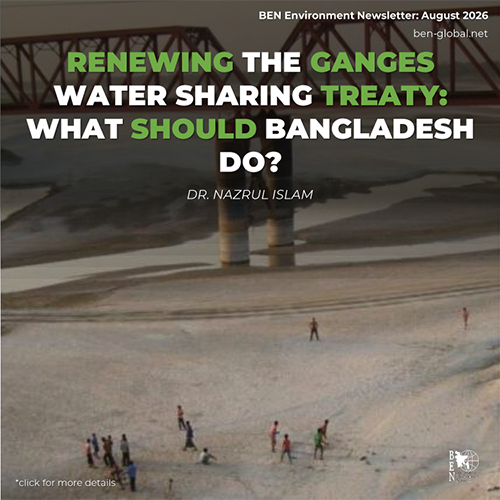
Dr. Nazrul Islam considers Bangladesh should replace the commercial approach with an ecological strategy. He argues that signing the UN Watercourses Convention and demanding a minimum guarantee clause will protect resources.
|
|
|
| |
|
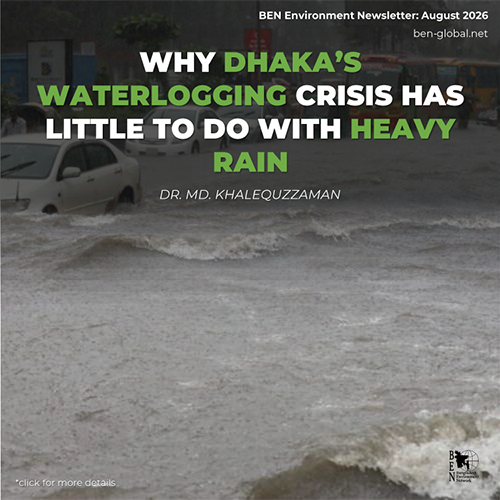
Dr. Md. Khalequzzaman thinks that rapid urbanization and blocked drainage cause Dhaka's severe waterlogging. He suggests that improving watershed management, restoring natural khals, and integrating authorities will solve the crisis.
|
|
|
| |
|
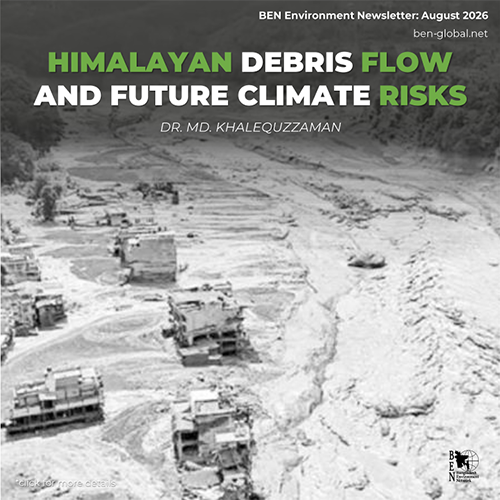
Dr. Md. Khalequzzaman reckons global warming causes glacier collapses and deadly debris flows in Nepal. He urges South Asian nations to modernize monitoring systems and strengthen regional data sharing.
|
|
|
| |
|
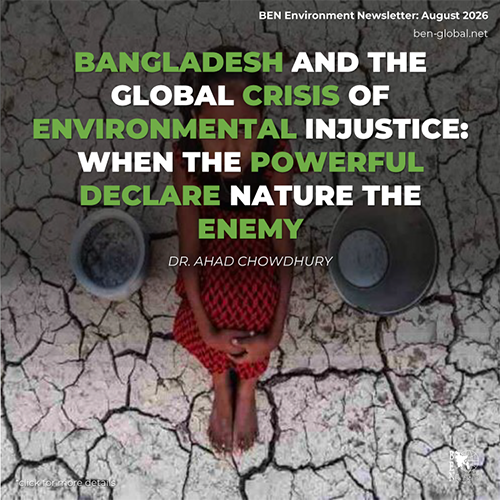
Dr. Ahad Chowdhury assumes Bangladesh faces both global climate injustice and internal environmental mismanagement. He urges the government to enforce environmental laws and protect the natural delta ecosystem.
|
|
|
| |
|
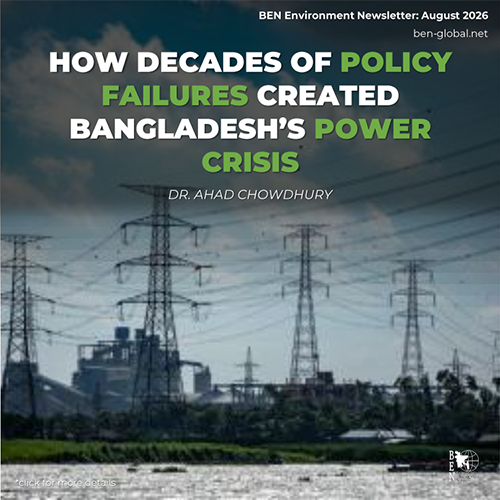
Dr. Ahad Chowdhury reflects Bangladesh's energy crisis stems from policy failures, costly contracts, and underinvestment. He urges leaders to prioritize domestic gas exploration, transmission infrastructure, and solar energy development.
|
|
|
| |
|
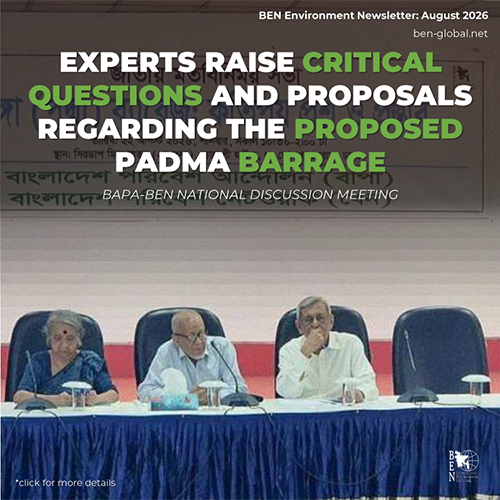
The proposed Padma Barrage project sparks intense debate among experts. While supporters highlight agricultural benefits, environmentalists warn of severe sediment traps, water shortages, increased salinity, and significant ecological risks.
|
|
|
| |
|
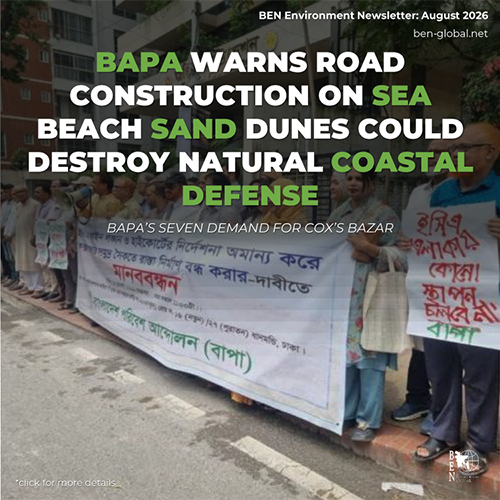
Bangladesh Poribesh Andolon demands an immediate halt to road construction on Cox's Bazar sand dunes. Leaders warn that destroying these natural coastal defenses threatens marine biodiversity and violates laws.
|
|
|
| |
|
© 2026 Bangladesh Environment Network
|
|
|
| |
|