


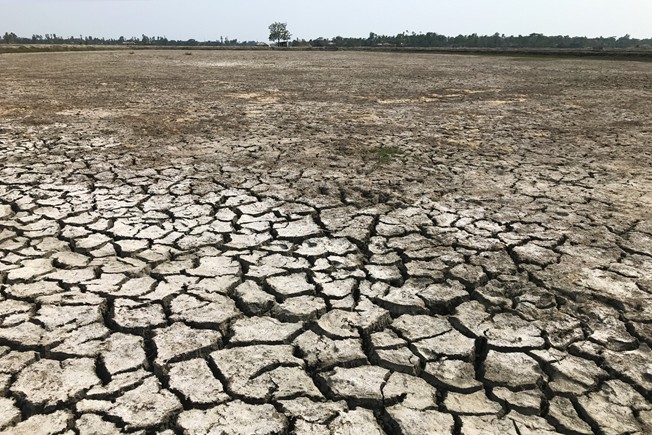
Saltwater intrusion that is driven by sea-level rise and the over-extraction of groundwater. It is systematically turning coastal freshwater sources saline worldwide. This encroaching crisis signifies a shift toward a persistent contamination of vital aquifers and surface waters. Saltwater intrusion refers to the inland movement of saline water from oceans into freshwater aquifers.
The mechanisms driving this salinization are deeply tied to anthropogenic and climate-driven factors. Global warming exacerbates the process by triggering sea-level rise and altering precipitation patterns. Excessive groundwater extraction tips the delicate balance between freshwater and saltwater interfaces, allowing sea salt to seep inland. Populations relying on saline water face severe health vulnerabilities globally. In countries like The Gambia, saltwater intrusion caused a 42% reduction in traditional rice cultivation areas between 2009 and 2023, while in Vietnam, severe droughts have pushed saltwater up to 90 kilometers inland (Saint, 2026).
Bangladesh embodies this global salinization crisis with particular intensity facing acute threats across its low-lying coastal delta. The country’s coastal belt which includes regions like Khulna, Bagerhat, Barisal, and Satkhira, is battling high soil and water salinity exacerbated by climate change and decreased upstream river flows (World Bank, 2015). Historical data reveals a stark trajectory: the total amount of salinity-affected land in Bangladesh escalated from 83.3 million hectares in 1973 to 105.6 million hectares in 2009, reflecting a 26% increase over 35 years that is actively spreading into non-coastal areas (Haider, 2019). Climate change models project significant alterations in river salinity in the southwest coastal region during the dry season by 2050, severely impacting both drinking water availability and aquatic ecosystems. In the southern parts of the delta, groundwater is already brackish to saline from 10 to 150 meters below the ground surface (Faneca Sanchez et al., 2015).
This encroaching salinization has cascading consequences that extend beyond traditional coastal boundaries. Jashore is now experiencing alarming levels of saltwater invasion. In Jashore’s Keshabpur upazila, water salinity reached 1,430 microsiemens per centimeter in August 2021, dramatically exceeding the safe human tolerance limit of 670 microsiemens. This represents a rapid deterioration from 2016, when the level was recorded at 879 microsiemens (The Business Standard, 2022). Similar tolerance breaches are documented in neighboring Manirampur and Abhaynagar. Experts warn that consuming this highly saline water poses significant health risks to Jashore’s residents, particularly increasing vulnerabilities for pregnant women. Excess salinity in agricultural soils has decimated the cultivation of high-yielding Aman paddy and sessional vegetables, forcing many farmers to convert previously fertile land into brackish shrimp ponds which is a practice that ironically accelerates further environmental degradation.

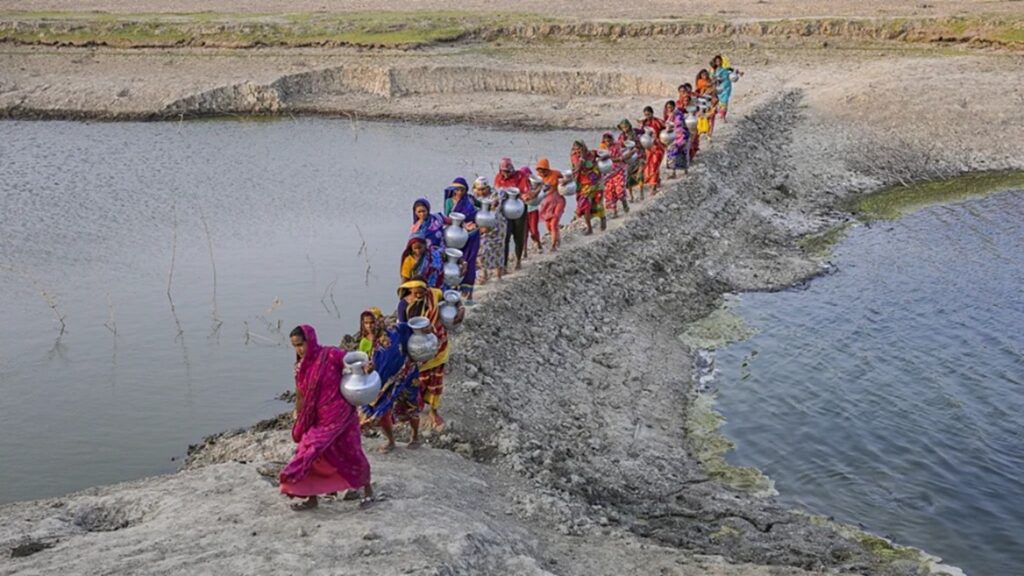
Urban water security and infrastructure in Bangladesh are also confronting an existential threat from saltwater intrusion. Khulna faces severe water supply deficits due to rising river salinity driven by climate change, tidal variations, and human activities. Khulna will require an estimated 340 million liters per day by 2050 (Asian Development Bank, 2024). The economic fallout of salinity is equally staggering as increased groundwater salinity is projected to inflate the maintenance and repair expenditures of paved roads by up to 252% (World Bank, 2015). Environmentally, increased river salinity threatens the wild habitats of freshwater fish and giant prawn, and may induce a detrimental shift in the Sundarbans mangrove forest from the highly valuable Sundari to fewer dominant varieties like Gewa and Guran.
References
Asian Development Bank. (2024). Khulna Tackles Water Supply Issues Amid Rising Salinity and Population Growth.
Faneca Sanchez, M., Bashar, K., Janssen, G., Vogels, M., Snel, J., Zhou, Y., Stuurman, R., & Oude Essink, G. (2015). SWIBANGLA: Managing salt water intrusion impacts in coastal groundwater systems of Bangladesh. Deltares.
Haider, R. (2019). Climate Change-Induced Salinity Affecting Soil Across Coastal Bangladesh. Inter Press Service.
Saint, E. (2026, February 17). ‘We prepare for the wrong disasters’: Earth’s fight against encroaching saltwater. BBC.
The Business Standard. (2022, February 14). According to the data, the salinity level in water has crossed the tolerance level in other areas of the district as well, including Manirampur and Abhaynagar.
World Bank. (2015, February 17). Salinity Intrusion in a Changing Climate Scenario will Hit Coastal Bangladesh Hard.

