|
Year 23
|
No. 3
|
March, 2026
|
|
|
| |
|
This edition confronts the compounding environmental and systemic crises threatening the very fabric of Bangladesh. From the accelerating submergence of our southern coasts to the suffocating urban heat and air pollution choking Dhaka, the ecological toll of unplanned development is undeniable. We delve into the unseen but deadly infiltration of "forever chemicals" poisoning our waterways and driving widespread ecological collapse. A recurring theme in this issue is the devastating impact of misguided policies and predatory infrastructures. Dr. Nazrul Islam critically examines how Bangladesh Water Development Board (BWDB) projects have historically choked our rivers, amplifying the urgency of BAPA's recent nationwide campaigns for river restoration. Furthermore, expert analyses on the safety of the Rooppur Nuclear Power Plant and the financial drain of corrupt energy contracts highlight a desperate need for transparency and accountability. As we witness millions displaced by climate catastrophes and rural economies shattered by saline intrusion, the message is clear: piecemeal solutions are no longer viable. We must urgently transition toward adaptive, pro-people governance, sustainable energy, and stringent environmental protections before these looming humanitarian disasters become entirely irreversible.
For suggestions, feedback and/or queries please contact:
BEN Newsletter.
If you are interested to contribute to the future BEN newsletters with articles or ideas, please sign up
here or
mail us.
|
|
| |
|
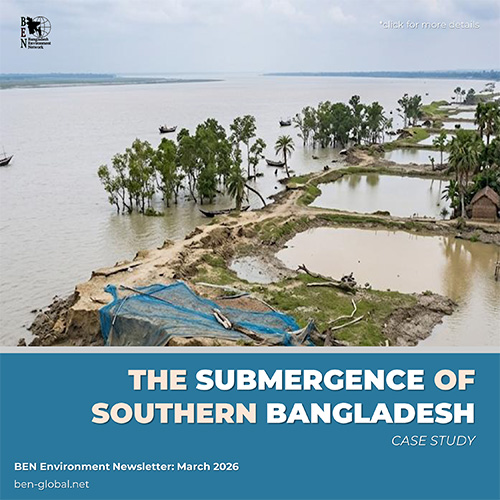
Southern Bangladesh faces a catastrophic crisis as sea-level rise and land subsidence outpace global averages. Driven by infrastructure and groundwater extraction, relative sea levels could rise 140cm by 2100, submerging 17% of the territory. This looming disaster threatens the Sundarbans, agriculture, and livelihoods, requiring urgent sedimentation and management interventions.
|
|
|
| |
|
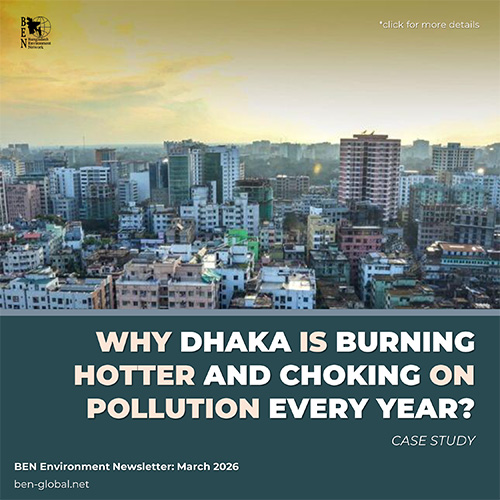
Dhaka is at the epicenter of a deadly climate crisis, where surging temperatures and unplanned urbanization create a lethal "Heat Island" effect. Combined with toxic pollution, this disproportionately harms vulnerable populations, causing 200,000 annual deaths and massive economic losses. Survival necessitates immediate sustainable planning, expanded green spaces, and clean energy.
|
|
|
| |
|
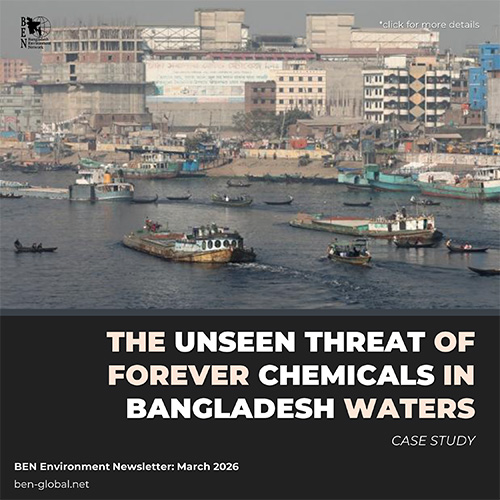
Bangladesh faces a public health emergency as textile industries saturate water with "forever chemicals" and micropollutants. A 2024 study found these toxins in 87% of surface samples, with rivers exceeding international limits by 54,000 times. This ecological collapse threatens agriculture and human health, demanding urgent regulatory action from fashion brands.
|
|
|
| |
|
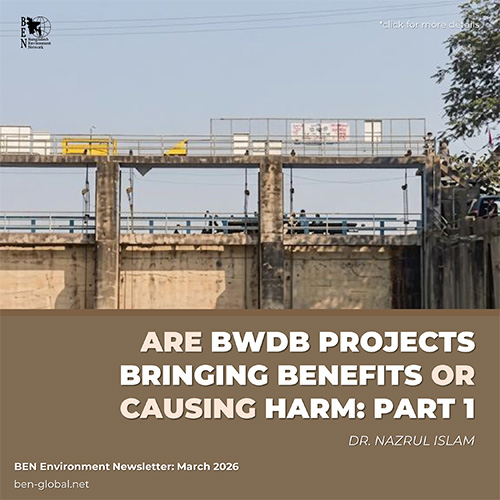
Dr. Nazrul Islam critiques the BWDB's 65-year legacy, arguing its 600+ "polderization" projects caused catastrophic environmental damage and waterlogging. While claiming false credit for agricultural growth, the BWDB now acts as an "anti-people" entity, resisting grassroots movements and legal mandates to protect rivers like the Baral from destructive infrastructure.
|
|
|
| |
|
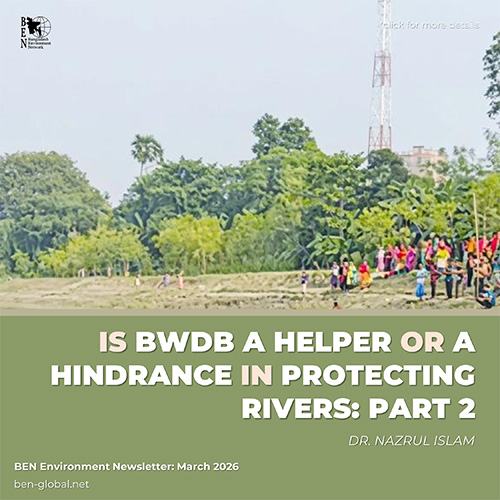
Dr. Nazrul Islam condemns the BWDB as an anti-people organization obstructing river conservation. Despite the successful 2024 Baral river restoration, the agency prioritizes lucrative structural projects and futile dredging over natural flows. By using technical delays and flooding excuses, the BWDB reveals a fundamental disregard for sustainable delta ecosystems.
|
|
|
| |
|
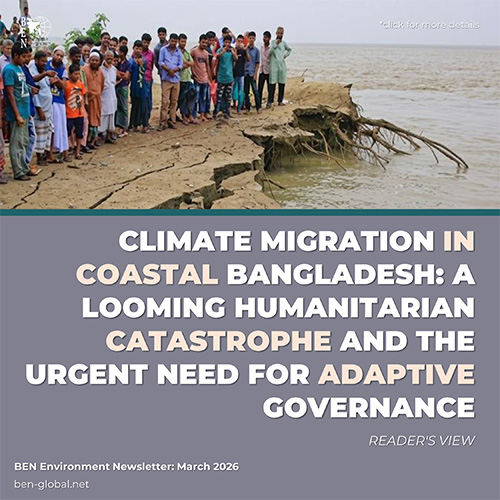
Bangladesh faces a massive climate-induced displacement crisis, with millions uprooted by erosion and salinity. Migrants flee to cities, encountering poverty and marginalization instead of adaptation. To protect national development and human dignity, Bangladesh must urgently integrate migration into national policy, ensure urban services, and secure international climate finance.
|
|
|
| |
|
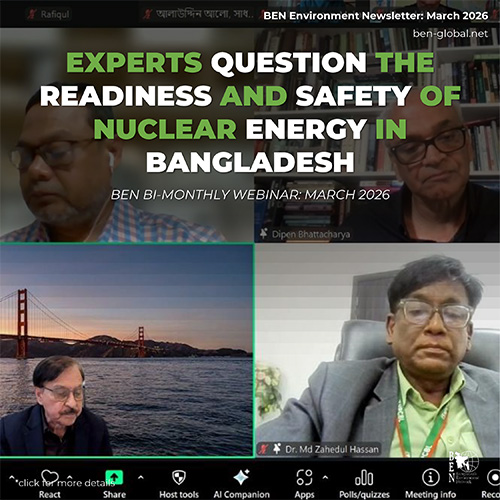
The nineteenth BEN webinar debated Bangladesh’s readiness for the Rooppur Nuclear Power Plant. Experts contrasted robust reactor safety features and Russian fuel agreements against critical concerns regarding evacuation plans, grid instability, and cyber threats. Ultimately, they concluded that transparently addressing these infrastructural and safety challenges is essential for a sustainable nuclear future.
|
|
|
| |
|
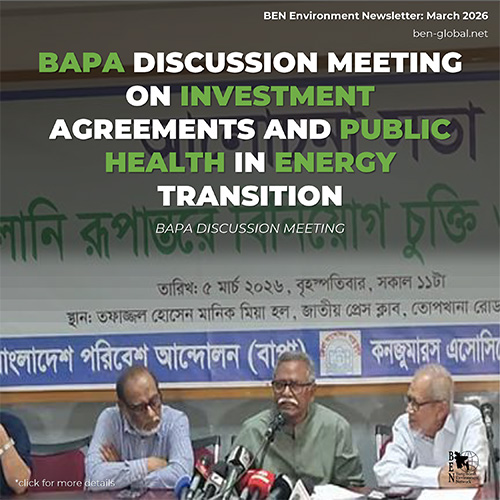
Dhaka experts and civil society leaders demanded the cancellation of predatory energy contracts and an end to structural looting. Critiquing import reliance, they advocated for domestic capacity building and local gas exploration. Highlighting flawed deals like Adani, speakers called for prosecuting energy criminals and transitioning toward a renewable, publicly-owned sector.
|
|
|
| |
|
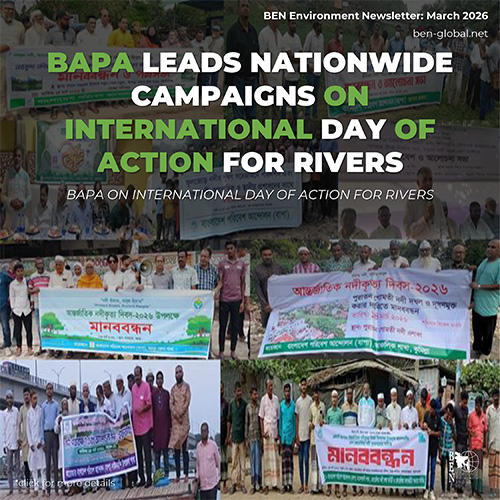
BAPA led nationwide campaigns on March 14, marking the International Day of Action for Rivers. Activists across Sirajganj, Chakaria, and Jashore demanded an end to pollution and illegal encroachment. From calling for bridge constructions to rescuing vital ecological networks, these grassroots demonstrations reinforced a national resolve to reclaim Bangladesh’s rivers.
|
|
|
| |
|
© 2026 Bangladesh Environment Network
|
|
|
| |
|