
Environment Newsletter
The Unseen Threat of Forever Chemicals in Bangladesh Waters
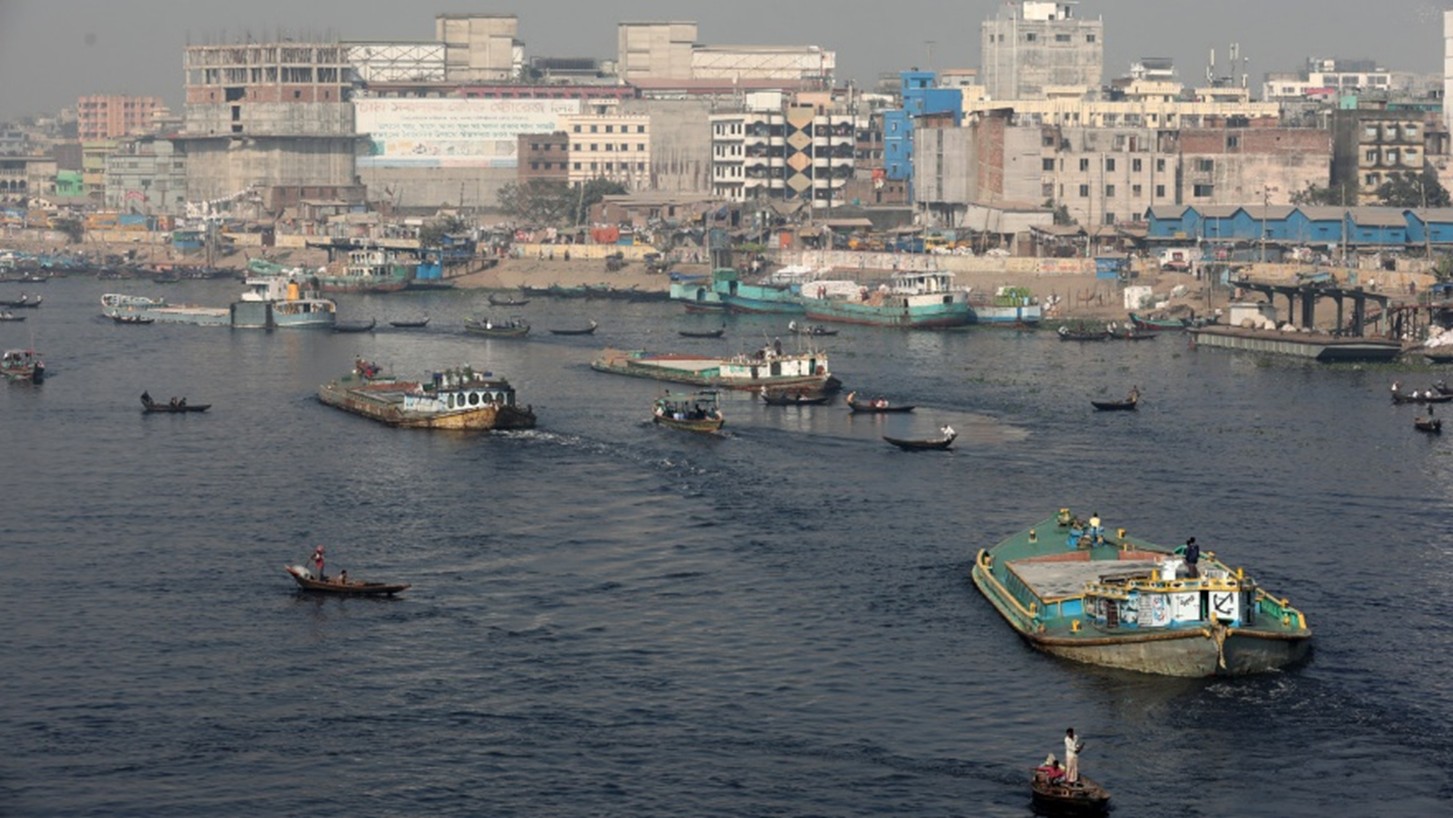
Bangladesh is facing a severe environmental and public health crisis due to widespread water contamination by industrial and agricultural waste particularly from the rapidly expanding textile industry. Recent studies reveal staggering levels of per and polyfluoroalkyl substances known as forever chemicals and hundreds of other micropollutants in the surface and drinking waters of the country. A 2024 study found these chemicals in 87 percent of surface water samples near the textile hubs of the capital Dhaka with concentrations in rivers like the Karnatali reaching 54000 times above international advisory limits. Alarmingly globally banned forever chemicals were also detected in tap water and local fish populations. This pervasive pollution poses devastating threats including increased cancer risks weakened immunity and severe ecological collapse that leaves rivers devoid of fish and destroys agricultural lands. Advocates stress that international fashion brands and local regulators must urgently enforce safe production processes to prevent further devastation.
The Submergence of Southern Bangladesh
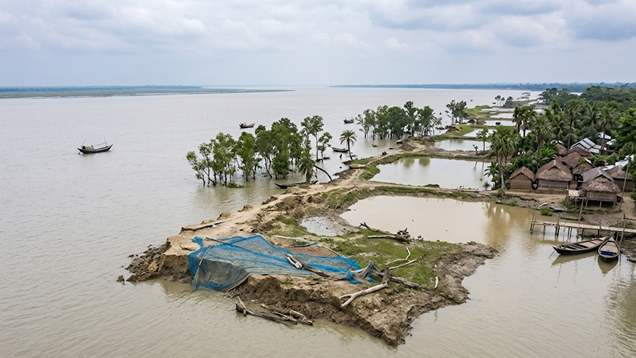
Southern Bangladesh is confronting a catastrophic environmental crisis driven by the dual threats of accelerated sea-level rise and severe land subsidence. While global sea levels rise at 3.42 to 3.8 mm annually, Bangladesh’s coast experiences a 5.8 mm yearly increase. Compounding this, the delta is sinking by 1 to 7 mm per year due to disrupted natural sedimentation from coastal infrastructure. Urban centers like Barishal face even faster subsidence due to excessive groundwater extraction. Consequently, the region could see a relative sea-level rise of 85 to 140 cm by 2100, potentially submerging 17% of its territory, destroying the Sundarbans, and causing a 30% loss in agricultural land. Human displacement is already surging, exacerbated by massive industrial projects that destroy ancestral livelihoods. Combating this looming disaster requires urgent interventions, including sustainable groundwater management, restoring natural sediment flows, adopting salinity-tolerant crops, and implementing robust social protection systems.
Why Dhaka is Burning Hotter and Choking on Pollution Every Year?
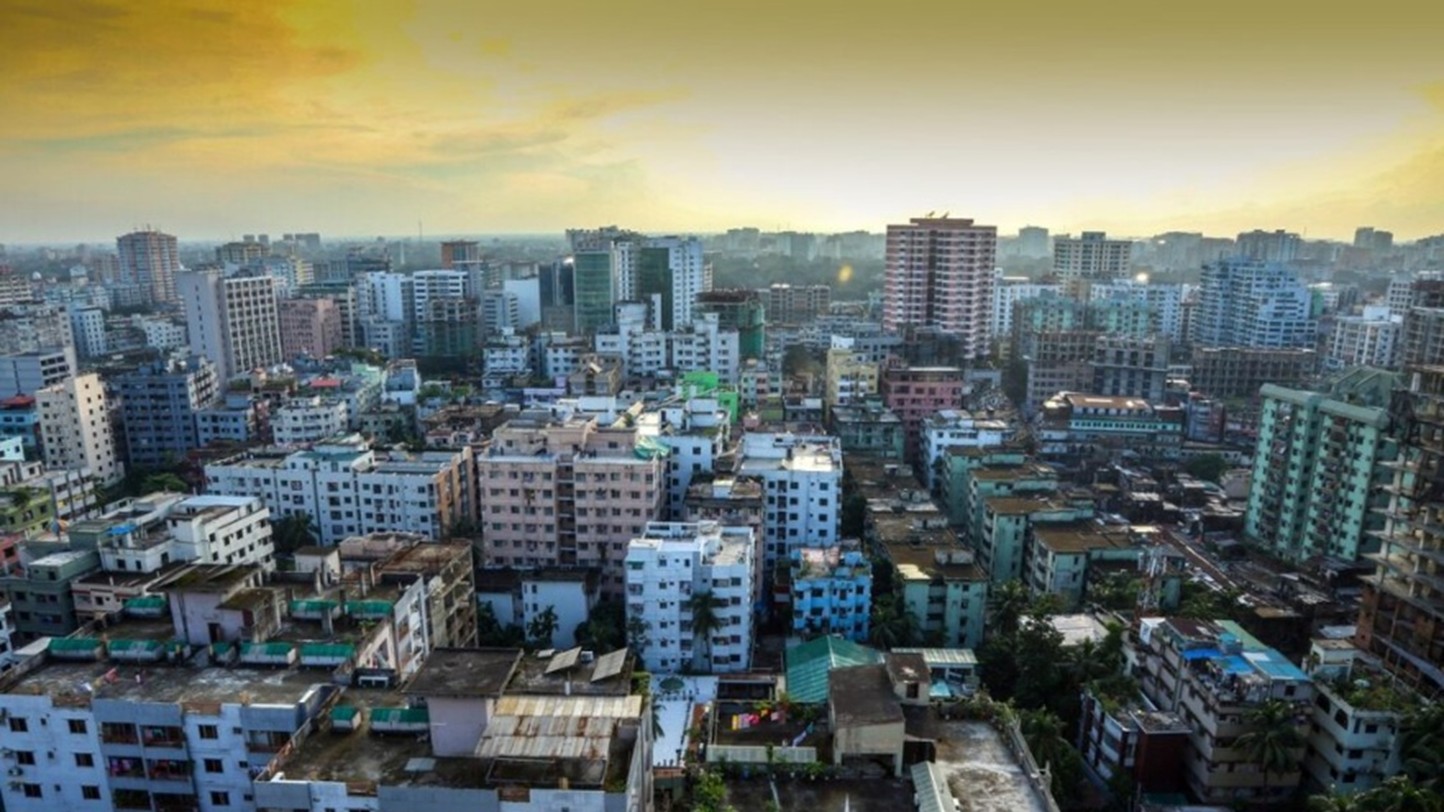
The planet faces an unprecedented climate crisis and Dhaka sits at the devastating epicenter. Global warming has caused temperatures in Bangladesh to surge with Dhaka recently hitting 39.2 degrees Celsius. Rapid unplanned urbanization severely worsens this through an Urban Heat Island effect. As concrete replaces green spaces the city traps heat and grows significantly hotter than surrounding rural areas. This extreme heat combines dangerously with toxic air pollution from fossil fuels and brick kilns to create a deadly twin threat. The crisis disproportionately harms vulnerable slum populations who lack cooling resources while affluent residents easily adapt. The physical toll is massive as pollution reduces life expectancy by over five years and causes 200,000 annual deaths. Furthermore this environmental disaster profoundly impacts mental health and economic productivity costing the nation 1.78 billion dollars in 2024. Survival requires immediate sustainable urban planning green space expansion and clean energy implementation.
Are BWDB Projects Bringing Benefits or Causing Harm: Part 1
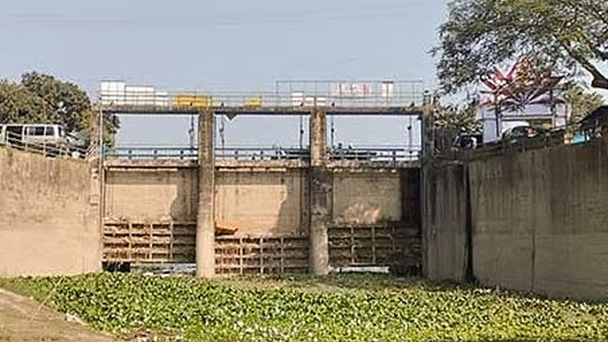
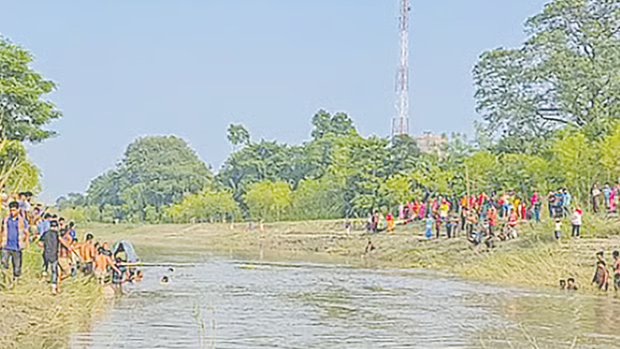
In this critical commentary, originally published as the first part of a series in the Daily Prothom Alo on 30-03-2026, Dr. Nazrul Islam shares his thoughts on the Bangladesh Water Development Board (BWDB). Over its 65-year history, BWDB has implemented over 600 embankment and polder projects, covering 80% of the country's arable land. While BWDB claims immense success—often falsely taking credit for agricultural growth driven by private tube-wells—Dr. Islam argues its projects have frequently caused severe environmental harm. Originating from a 1964 "polderization" plan, these structures severely obstruct natural river flows. For example, the Coastal Embankment Project caused catastrophic waterlogging in Bhabadah, and poorly planned sluice gates choked the vital Baral River. Tragically, BWDB now acts as an anti-people organization, resisting grassroots movements and High Court directives to remove harmful structures. Instead, they manipulate technical studies to justify building more destructive infrastructure.
Is BWDB a Helper or a Hindrance in Protecting Rivers: Part 2
In the second part of his critical reflections, published in the Daily Prothom Alo on 31-03-2026, Dr. Nazrul Islam argues that the Bangladesh Water Development Board (BWDB) is a major obstacle to river conservation. Following the 2024 uprising, public pressure forced the BWDB to temporarily open the Baral river's sluice gates, successfully restoring the Ganges' natural flow after 40 years. However, rather than permanently removing these gates to fully revive the river, the BWDB used a technical committee to propose unnecessary dredging and endless surveys, effectively stalling genuine progress. Islam asserts that dredging without restoring natural water flows is entirely futile. He strongly criticizes the BWDB for prioritizing lucrative, structure-heavy projects over ecological health, showing a fundamental misunderstanding of beneficial delta floodplains. The agency's sudden excuses regarding potential flooding risks further expose their resistance. Ultimately, Islam condemns the BWDB as an anti-people organization that actively hinders sustainable river ecosystems.
Experts Question the Readiness and Safety of Nuclear Energy in Bangladesh
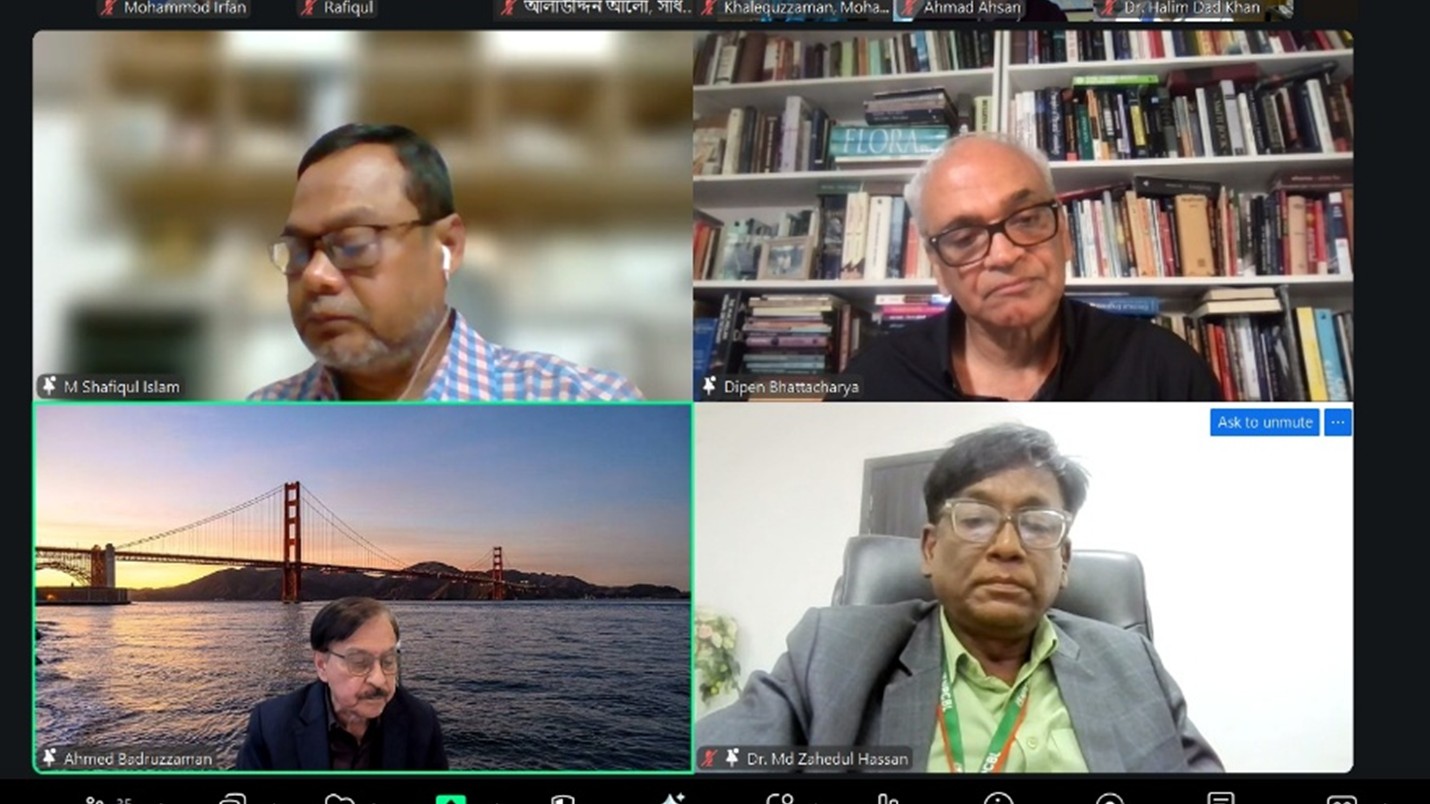
BEN recently held their nineteenth webinar to debate the readiness of Bangladesh for the Rooppur Nuclear Power Plant. Dr Ahmed Badruzzaman raised critical questions about the lack of a credible evacuation plan for millions and questioned the national culture of safety following the Fukushima disaster. Defending the project Dr Md Zahedul Hassan highlighted the robust safety features of the Generation Three Plus VVER reactors including a core catcher and double containment structures. He also confirmed an agreement with Russia to handle spent nuclear fuel. Meanwhile Dr Md Shafiqul Islam warned about severe grid instability and modern cyber threats advocating for a completely independent regulatory body. The interactive session highlighted public anxieties over potential geopolitical disruptions and long term decommissioning costs. Ultimately the experts concluded that confronting these profound safety and infrastructural challenges transparently is the only way to secure a sustainable energy future.
Climate Migration in Coastal Bangladesh: A Looming Humanitarian Catastrophe
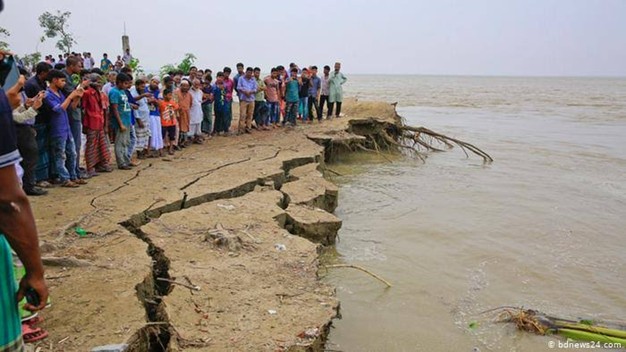
Bangladesh stands at the epicenter of a climate-induced displacement crisis, with 13 million already uprooted and 20 million projected to flee by 2050. Relentless riverbank erosion, rising soil salinity, and intensifying cyclones are systematically destroying coastal livelihoods. This exodus is pushing vulnerable populations from secondary towns into sprawling metropolises like Dhaka and Chattogram. Instead of successful adaptation, migrants encounter unregulated slum expansion, entrenched poverty, and social marginalization, despite sustaining the informal economy. Although initiatives such as the Delta Plan 2100 are commendable, the absence of a dedicated national policy leaves responses fragmented and the displaced legally invisible. Bangladesh must embed migration into adaptation planning, ensure urban services, build a cross-ministerial framework, and secure climate finance.
BAPA Discussion Meeting on Investment Agreements and Public Health in Energy Transition
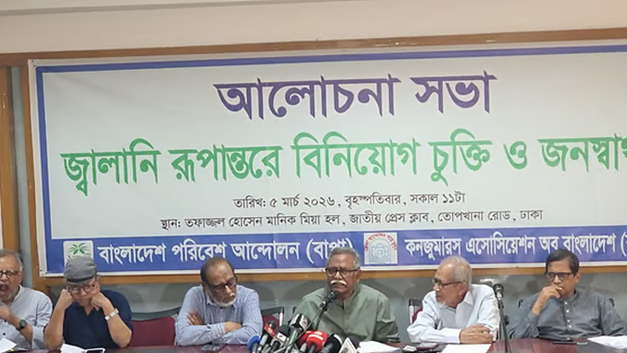
Experts and civil society leaders at a recent Dhaka discussion demanded the immediate cancellation of predatory energy contracts and an end to structural looting. Organized by the Bangladesh Poribesh Andolon and the Consumers Association of Bangladesh, the event exposed vulnerabilities from import reliance and foreign dominance. Economist Anu Muhammad argued domestic capacity and public ownership could shield the nation. Former chairman M A Mayeed revealed flawed deals like Adani, with capacity charges despite zero supply. Professor M M Akash urged local gas exploration over LNG imports. Youth demanded renewables transition.
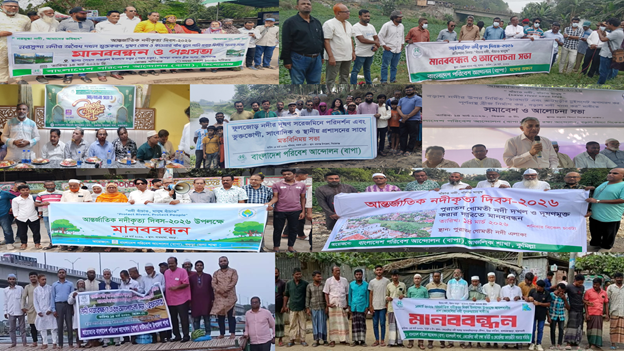
BAPA Leads Nationwide Campaigns on International Day of Action for Rivers
BAPA led nationwide campaigns on March 14 to mark the International Day of Action for Rivers, demanding an end to severe pollution and illegal encroachment. A central delegation inspected the heavily polluted Fuljor, Karatoya, and Bangal rivers in Sirajganj, holding discussions with locals and officials to find pragmatic solutions. Simultaneously, activists gathered at the Baral river demanding the removal of sluice gates and the construction of a full width bridge. In Chakaria and Moheshkhali, dedicated human chains and assemblies called for the rescue of the Matamuhuri and Kohelia rivers respectively, uniting environmentalists, fishermen, and local professionals. Further demonstrations took place in Jashore along the Bhairab river and in Cumilla to protect the Old Gomti river. The Kishoreganj unit campaigned to save the Narasunda river and restore water flow at the Kaona dam. Additional grassroots actions in Daudkandi and Bogra reinforced this unwavering national resolve to reclaim vital ecological networks.
© 2026 Bangladesh Environment Network
