|
Year 23
|
No. 2
|
February, 2026
|
|
|
| |
|
This edition comes in the aftermath of the national elections, interpreting our widespread pre-election environmental campaigns into a definitive mandate for the newly formed government. The survival of the Bengal Delta must be this administration's paramount priority. With the 1996 Ganges Water Sharing Treaty expiring in 2026, climate change has rendered the old framework obsolete. We face a compound crisis where upstream dams starve the delta of essential sediment, threatening a catastrophic collapse mirroring that of the Mississippi Delta. We demand a basin-scale, integrated water and sediment management compact to replace outdated provisions. Locally, promised canal excavations will fail unless waterways are systematically reconnected to natural rivers, requiring an end to the destructive practice of isolating floodplains with permanent embankments. Such management is vital to halt saltwater intrusion currently devastating inland agriculture in regions like Jashore and causing urban water deficits. Furthermore, we urge immediate state action on broader civic priorities: officially recognizing February 14 as National Sundarbans Day to bolster conservation, and shifting from traditional landfilling to a circular economy to manage the 1.18 lakh tons of daily waste projected by 2040. Finally, the government must dismantle market syndicates to ensure safe, affordable food for all. This administration must interpret our environmental campaigns as a definitive mandate for these life-sustaining reforms.
For suggestions, feedback and/or queries please contact:
BEN Newsletter.
If you are interested to contribute to the future BEN newsletters with articles or ideas, please sign up
here or
mail us.
|
|
| |
|
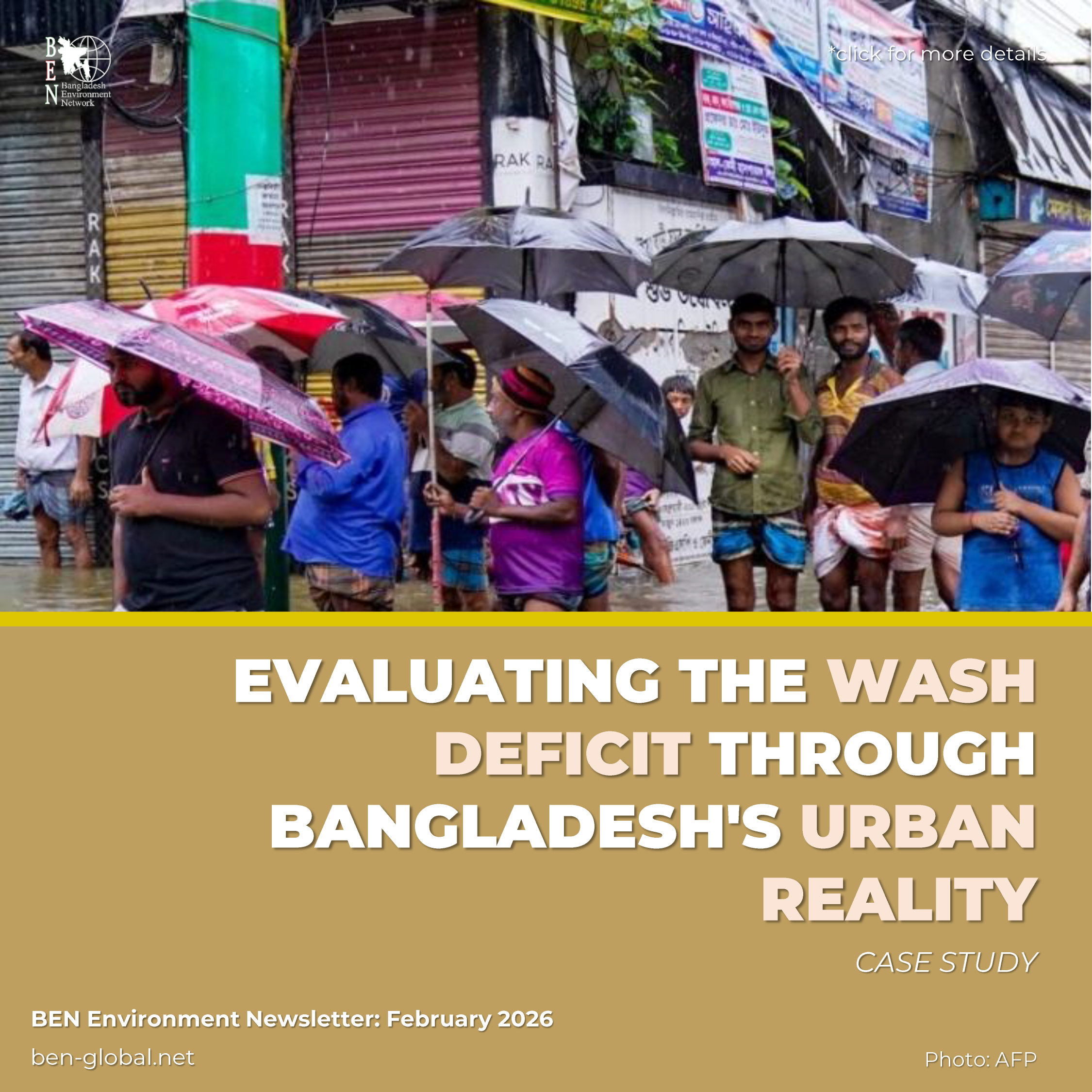
Despite 2030 deadlines, 105 countries face systemic delivery failures in water and sanitation. Bangladesh shows progress, with 84.6% safely managed sanitation, yet climate-driven urban migration creates acute deprivations. Success requires bridging a 46% global funding gap, eliminating institutional overlaps, and prioritizing climate-resilient infrastructure to secure universal access.
|
|
|
| |
|
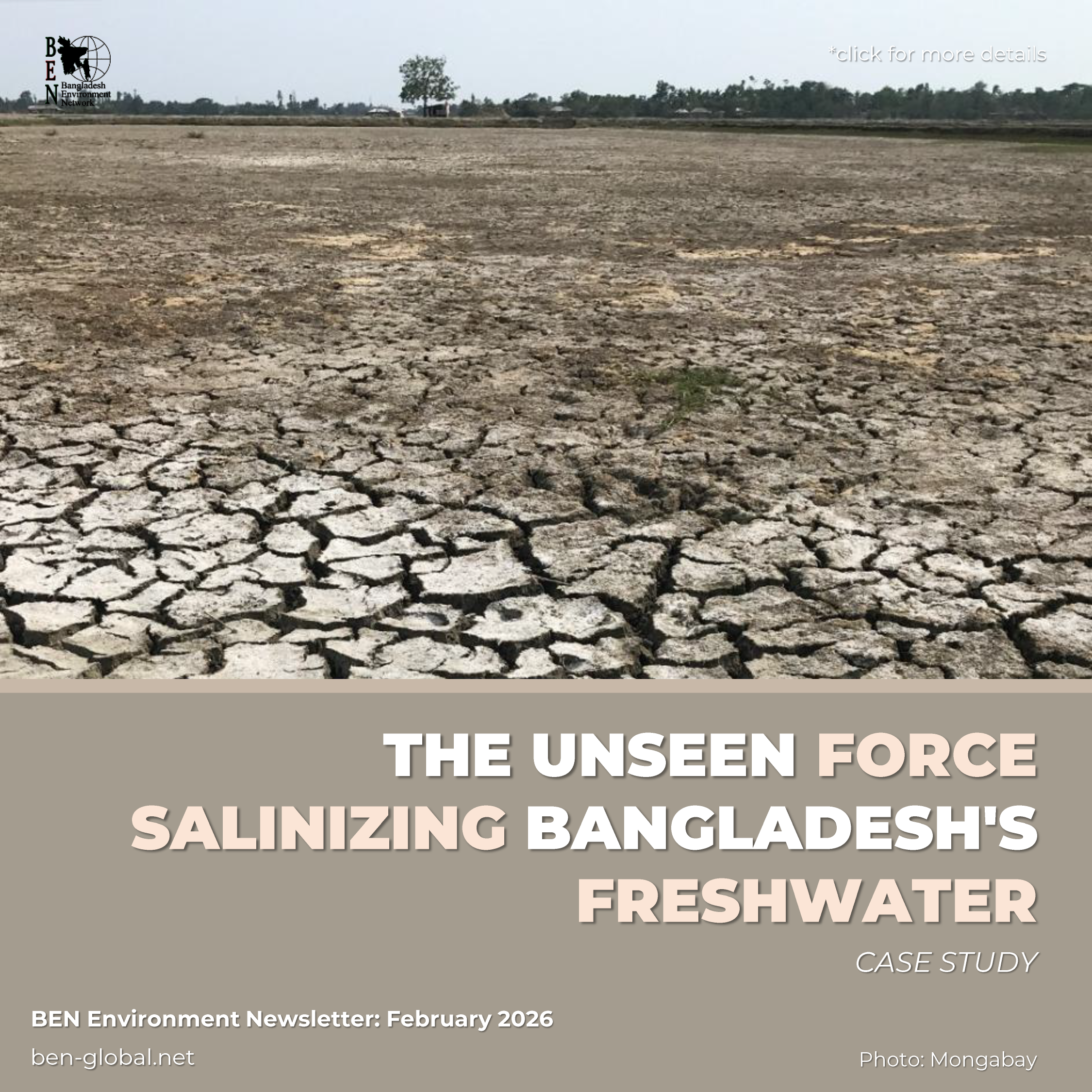
Sea-level rise and over-extraction are turning freshwater aquifers saline worldwide. In Bangladesh, salinity-affected land increased by 26% over 35 years, decimating agriculture and threatening urban water security. In regions like Jashore, salinity levels now exceed safe human limits, necessitating urgent adaptive infrastructure to prevent catastrophic health and economic fallout.
|
|
|
| |
|
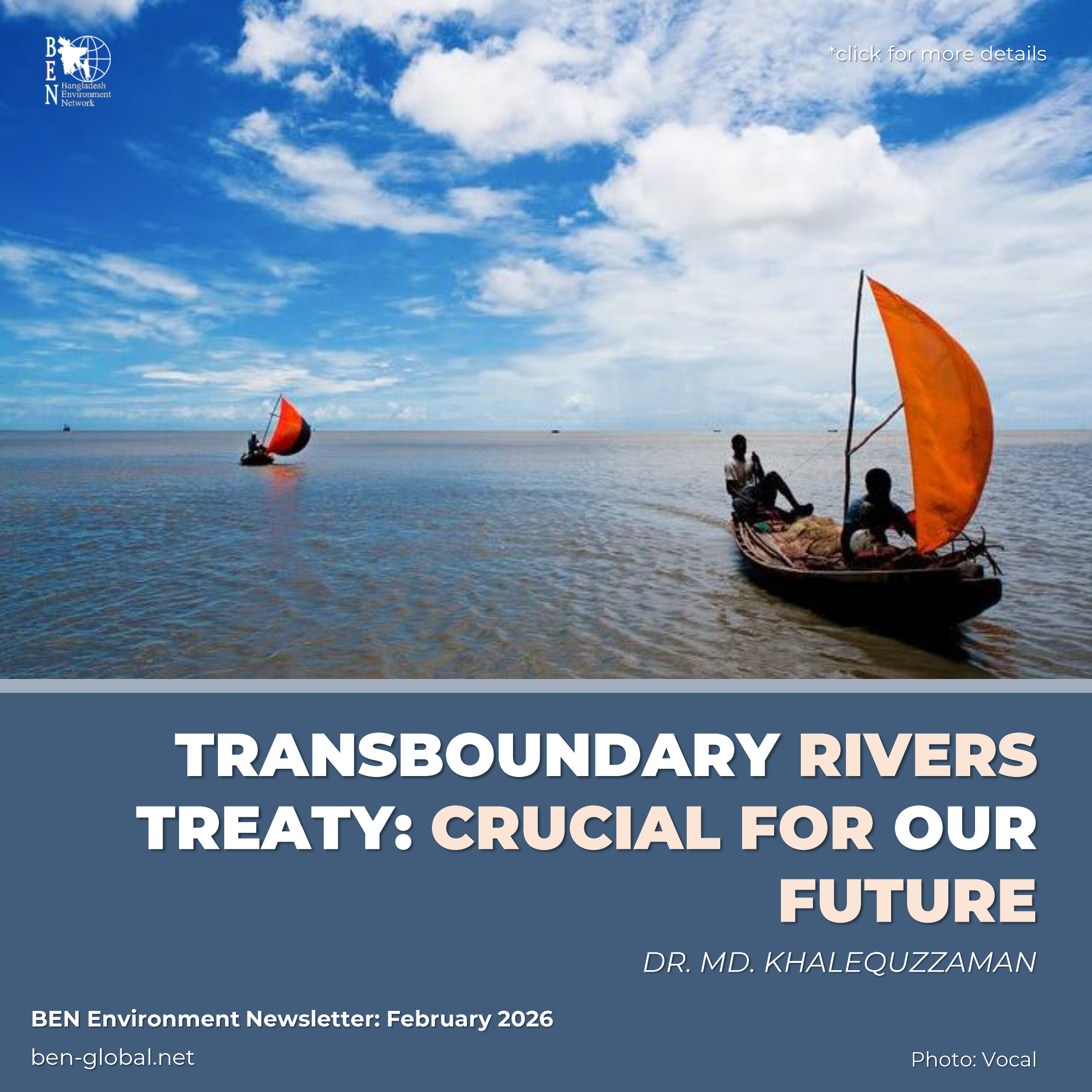
Bangladesh’s survival depends on 54 transboundary rivers, yet the expiring 1996 Ganges Treaty lacks comprehensive management and guarantee clauses. With dry-season flows frequently below agreed levels, salinity and erosion rise. Experts advocate for "basin-scale compacts" involving India and Nepal to manage water and sediment holistically through hydro-diplomacy.
|
|
|
| |
|
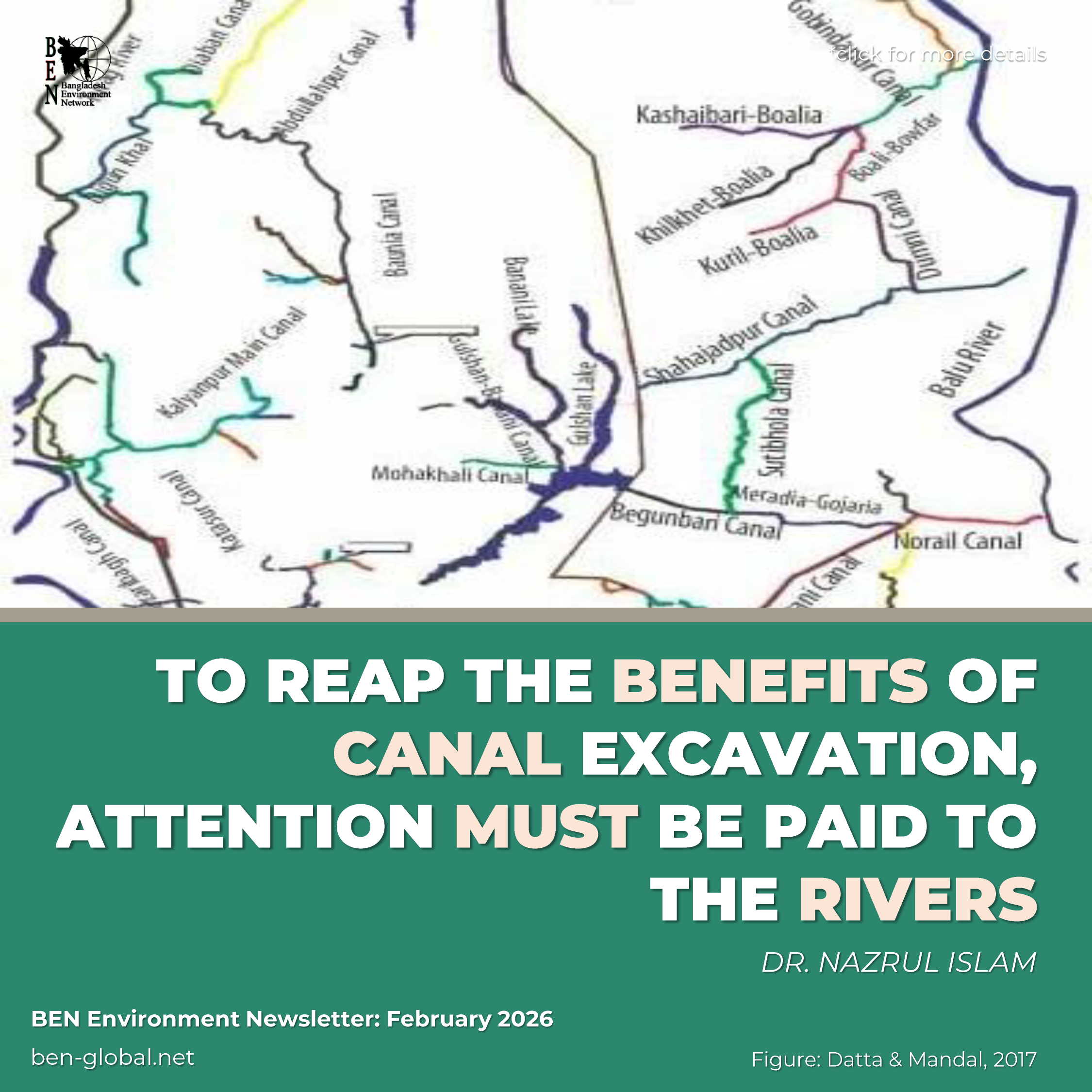
BNP has pledged to excavate 20,000 kilometers of canals to solve urban waterlogging. While echoing Ziaur Rahman’s legacy, the initiative’s success depends on reconnecting canals to surrounding rivers and abandoning "enclosed" hydrological approaches. Effective implementation requires restoring "village-level" governance to manage these man-made water bodies sustainably.
|
|
|
| |
|
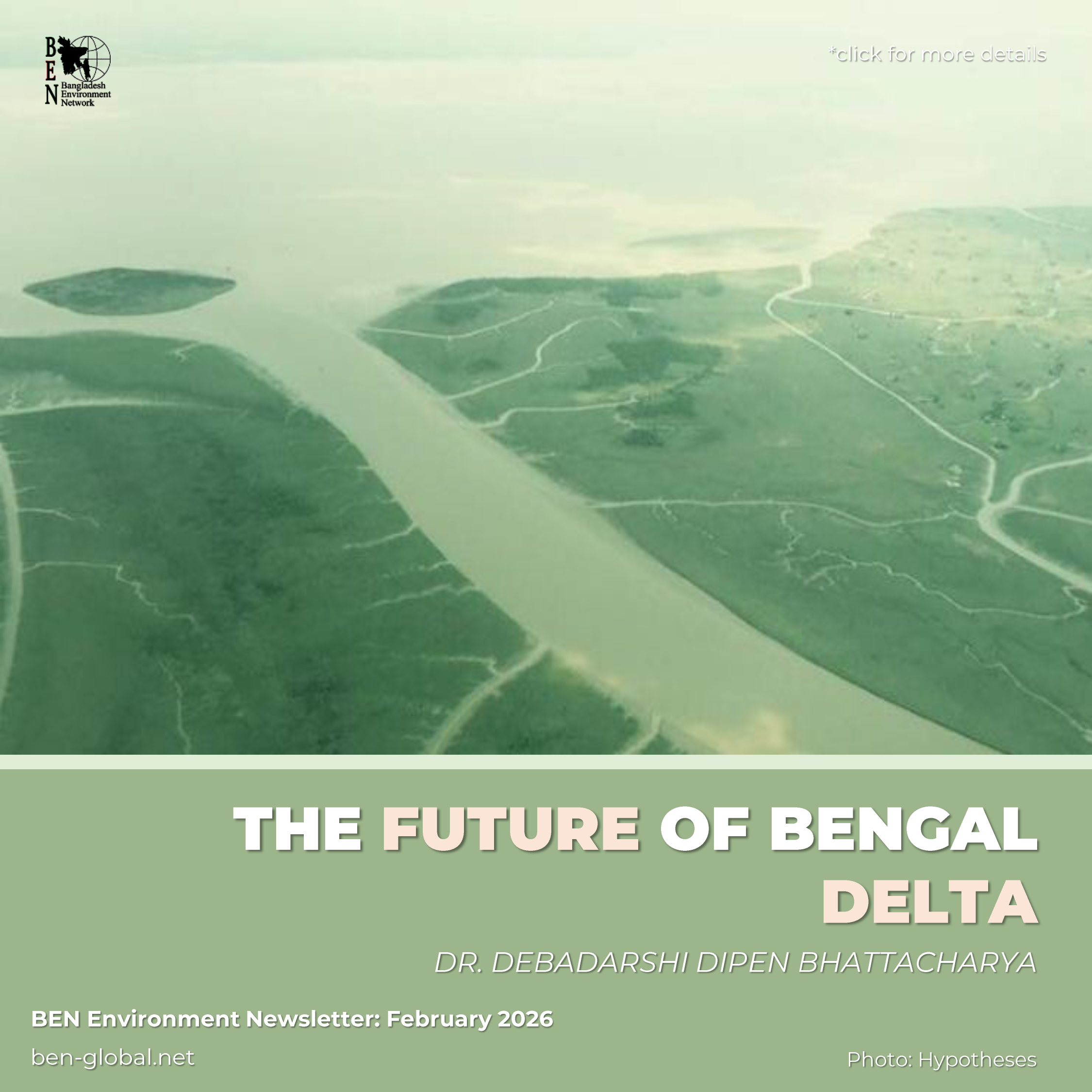
The world’s largest delta, that was built over 20 million years by Himalayan sediment. Its survival depends on a natural cycle of flooding and subsidence. As sea levels rise, the delta must remain "unhindered" by dams or embankments so that sediment can continue to elevate the land and counter submergence.
|
|
|
| |
|
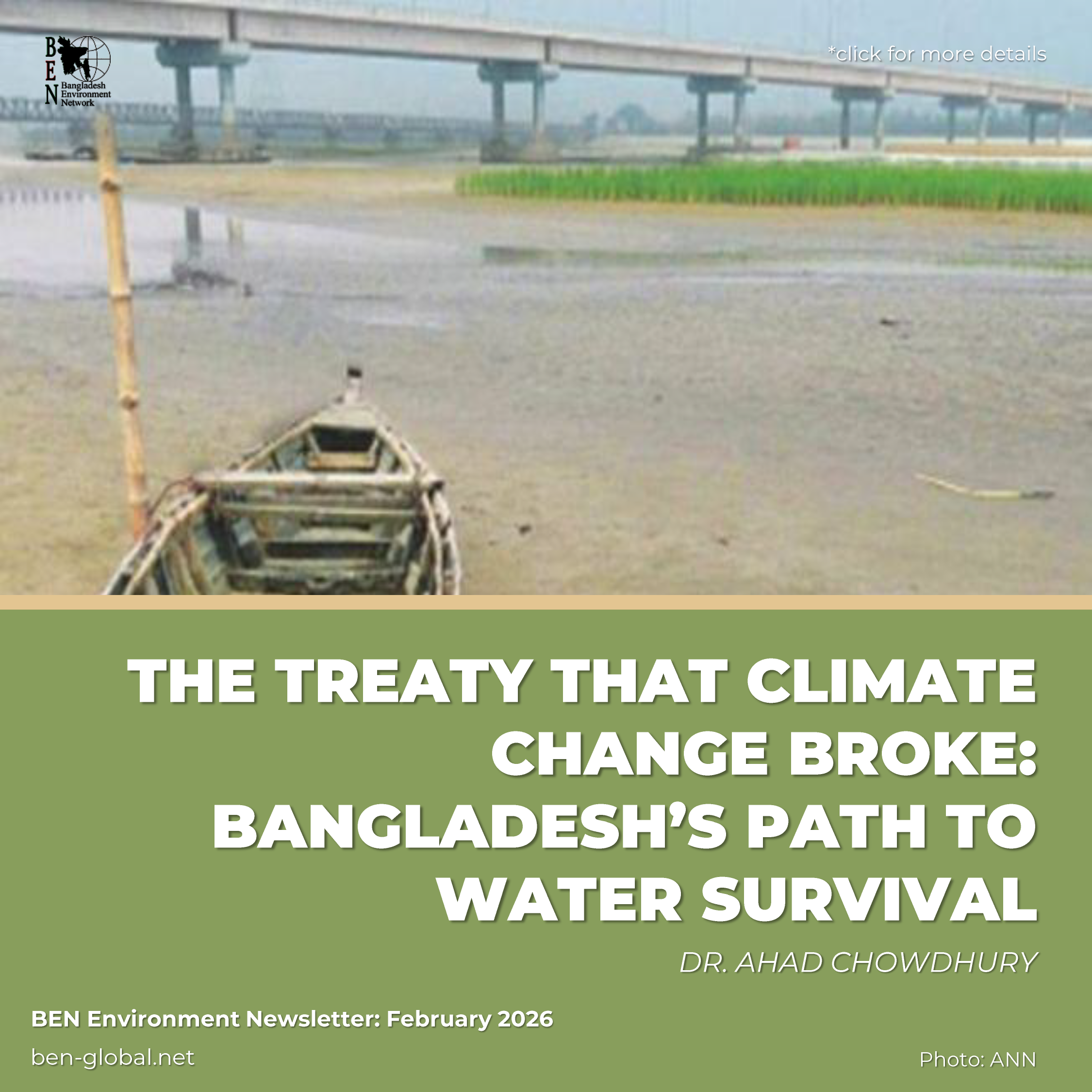
The 1996 Ganges Treaty is unfit for a 21st-century climate defined by atmospheric rivers and quadrupled monsoons. Lessons from the Mississippi Delta show that "sediment starvation" plus climate change leads to irreversible collapse. The 2027 renewal must mandate sediment bypass and integrated water management to prevent deltaic death.
|
|
|
| |
|
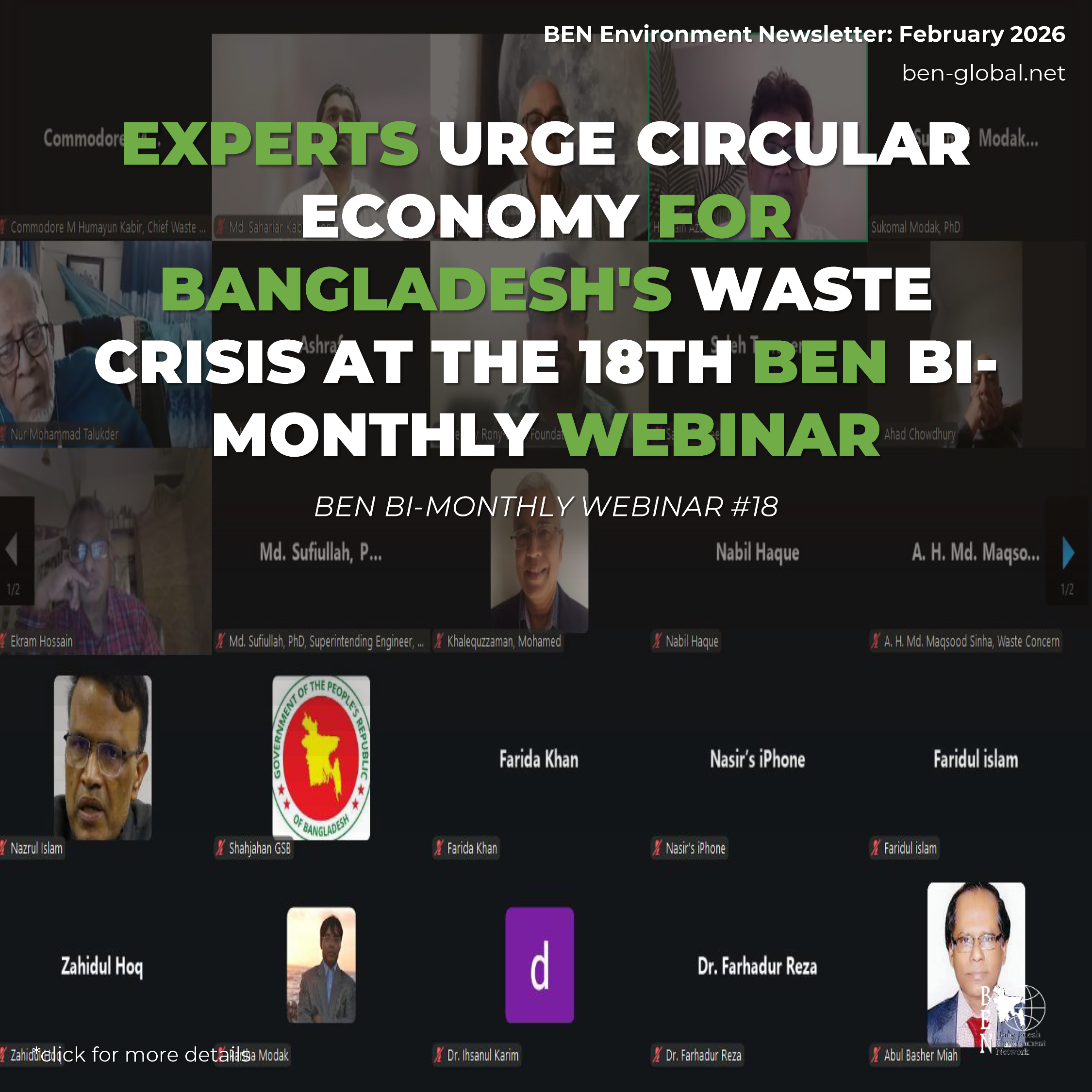
Bangladesh’s urban waste will reach 118,000 tons daily by 2040, yet collection remains under 55%. Experts demand a transition from failing landfills to a circular economy. Enforcing the Solid Waste Management Rules 2021, integrating informal recyclers, and incentivizing private waste-to-energy projects are essential to prevent catastrophic environmental pollution.
|
|
|
| |
|
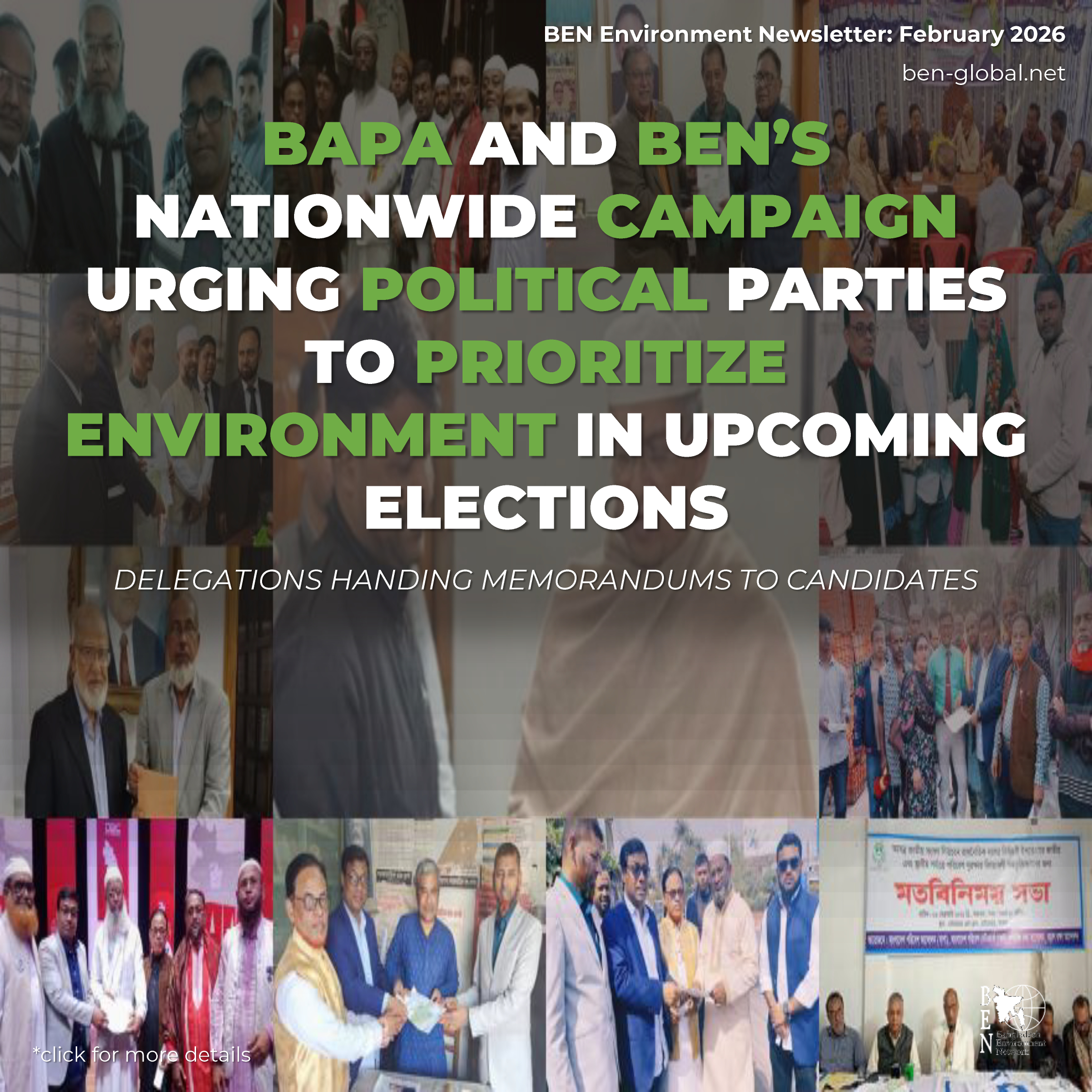
BAPA and BEN's launched campaign to make ecology a core election issue, by handing memorandums to candidates across all major parties and regions, they are pressing for explicit commitments to protect rivers and ecosystems. The goal is to secure long-term, actionable political pledges before 2026.
|
|
|
| |
|
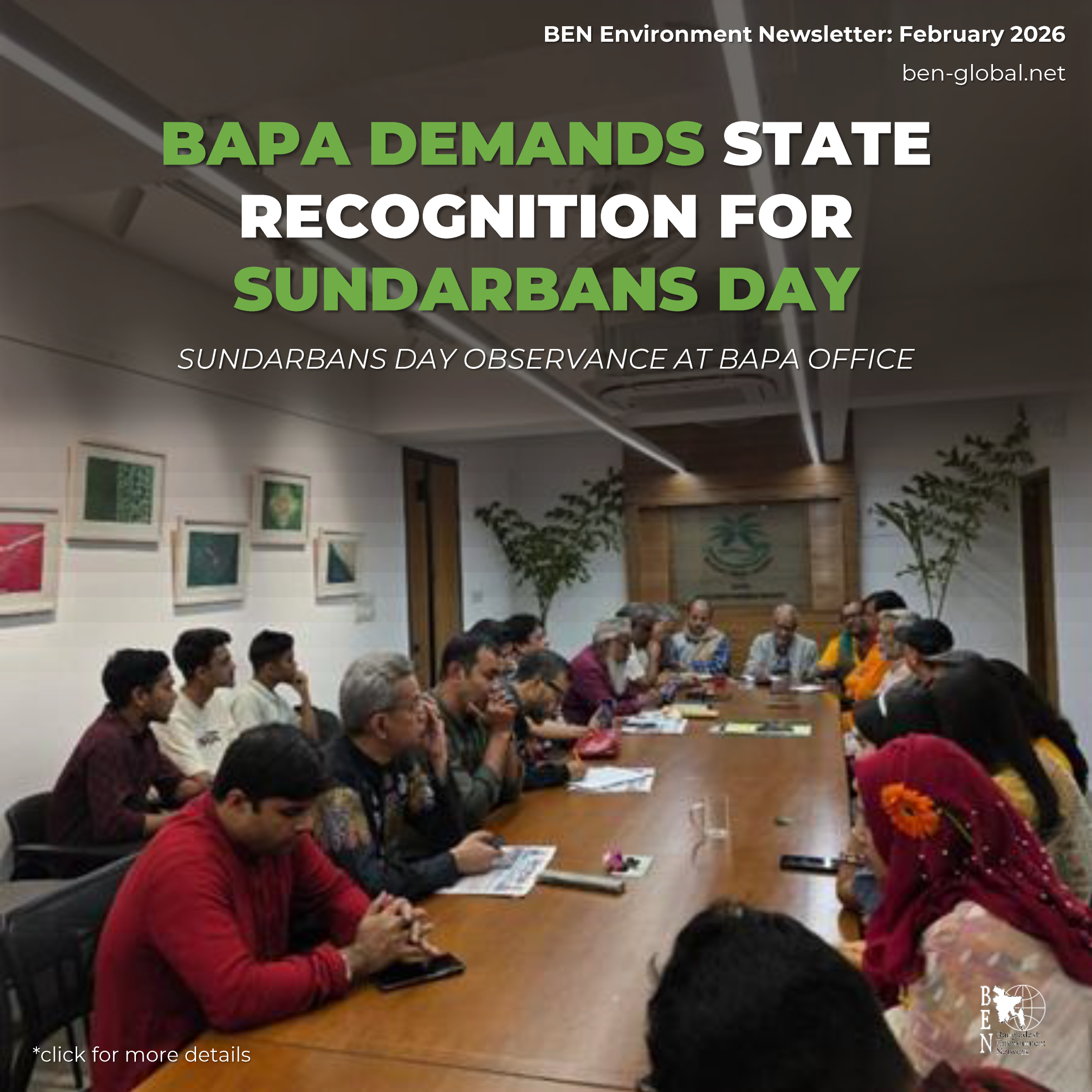
On "Sundarbans Day" 2026, BAPA urged Bangladesh’s new government to adopt an eight-point plan to save the world's largest mangrove. Key demands include establishing eco-friendly tourism, declaring "Plastic-Free Impact Zones," and ensuring upstream freshwater flow to combat salinity. Coordinated government action and sustainable livelihoods for forest-dependent communities are vital for its survival.
|
|
|
| |
|
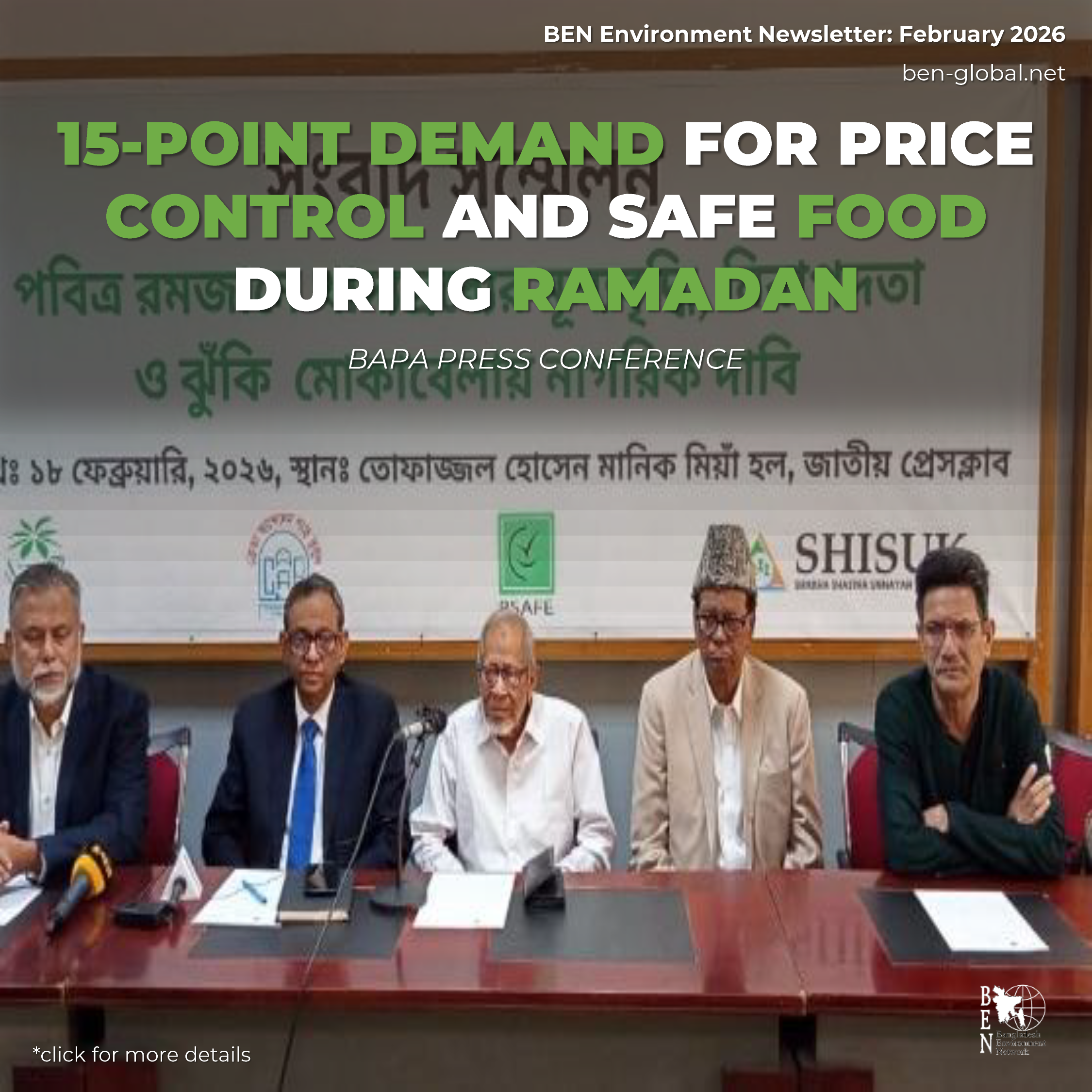
Ahead of Ramadan, citizen groups along with BAPA proposed 15 demands to dismantle food syndicates and ensure safety. Citing the Safe Food Act 2013, they urged the new government to punish adulterators, monitor prices strictly, and establish "Safe Farmer’s Markets." Effective coordination among 22 ministries is required to ensure public health.
|
|
|
| |
|
© 2026 Bangladesh Environment Network
|
|
|
| |
|