|
Year 23
|
No. 1
|
January, 2026
|
|
|
| |
|
This edition builds on the momentum of the National Conference on Environmental Reforms, translating expert deliberation into a definitive political ultimatum. With the national elections approaching on February, BAPA and BEN have issued a 12-point demand to all political parties, insisting that genuine environmental governance must replace political complicity. Inside, we scrutinize the controversial Teesta River Comprehensive Management and Recovery Plan, advocating for scientific rigor over industrial reclamation, and amplify the call for Baral River restoration. These local struggles are framed by the urgent reality of "Global Water Bankruptcy". We also welcome the newly formed BAPA Executive Committee (2026-2027). As the nation prepares to vote, we affirm that genuine national progress depends on an unwavering commitment to protecting Bangladesh’s ecological integrity.
For suggestions, feedback and/or queries please contact:
BEN Newsletter.
If you are interested to contribute to the future BEN newsletters with articles or ideas, please sign up
here or
mail us.
|
|
| |
|
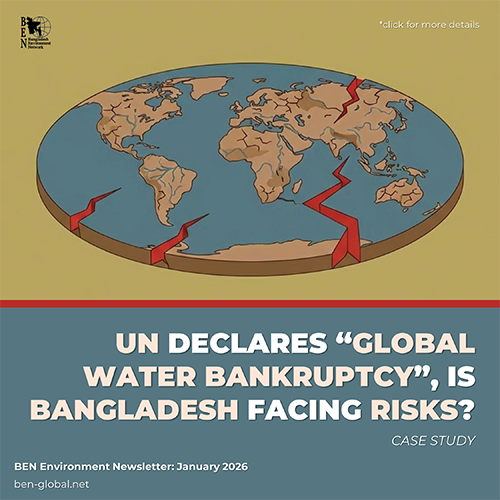
The UNU-INWEH report declares a “Global Water Bankruptcy,” marking irreversible depletion of water resources. Bangladesh exemplifies this crisis through groundwater depletion, transboundary river deprivation, and salinity intrusion, threatening agriculture, food security, and urban water access amid accelerating climate impacts and weak regional water cooperation.
|
|
|
| |
|
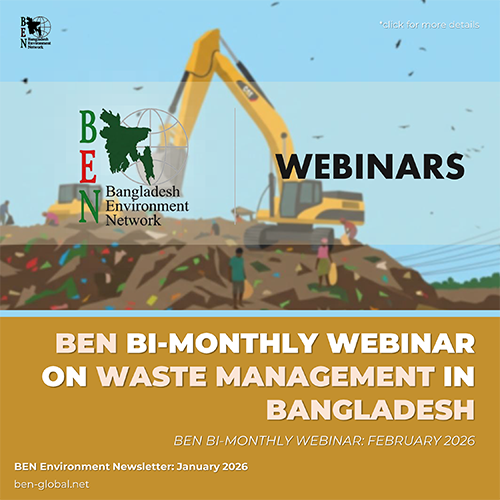
On Saturday, February 14, 2026, BEN will host its 18th webinar on waste management challenges and reforms. Featuring environmental engineers, city officials, and NGOs, the session explores technical and policy solutions. Join via Zoom or YouTube from 9:00 PM Dhaka time.
|
|
|
| |
|
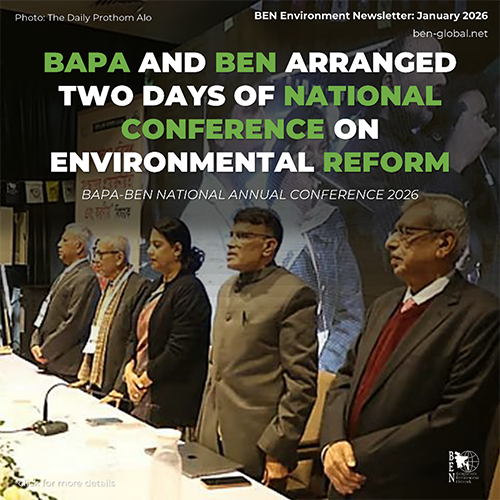
The BAPA-BEN National Conference on Environmental Reforms united experts and policymakers to craft a people-led environmental reform blueprint. Speakers emphasized enforcement, institutional capacity, and integration into political manifestos, aligning environmental sustainability with governance, law, economy, and civic responsibility ahead of national elections.
|
|
|
| |
|
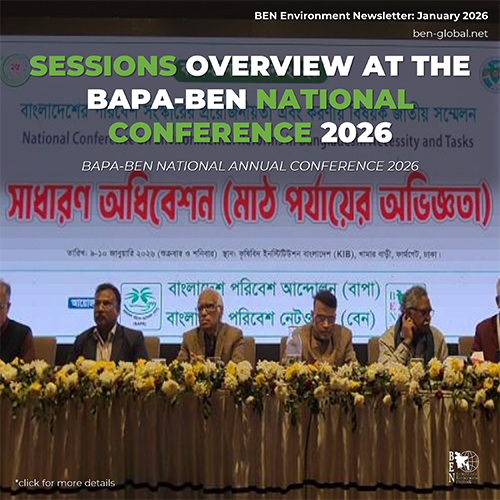
The two-day BAPA-BEN National Conference combined grassroots activism with expert analysis to address Bangladesh’s deep environmental governance crisis. Discussions spanned water, pollution, energy, and urban planning, concluding with resolutions for political reform, renewable transition, and creation of an Environmental Reform Commission.
|
|
|
| |
|
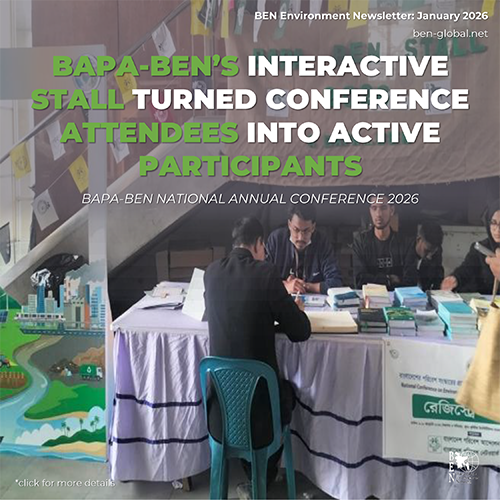
During the January 2026 National Conference, BAPA-BEN’s interactive stall engaged visitors through the BEN Sorting Challenge waste-sorting game, a reform-themed photo booth, and a handwritten Reform Register. These activities combined gamification, social media interaction, and participatory feedback to promote environmental awareness and collective action.
|
|
|
| |
|
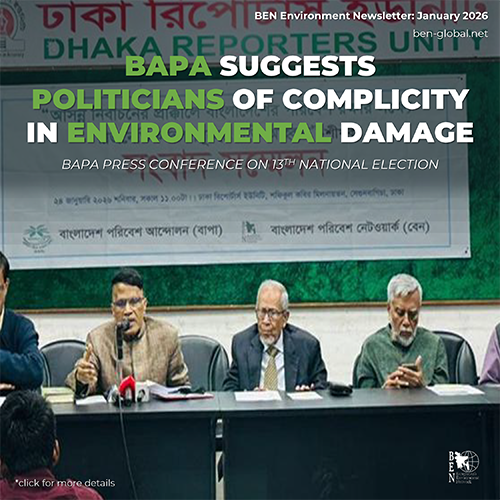
At a January 24, 2026 press conference, BAPA-BEN urged all political parties to adopt binding environmental commitments ahead of elections. Leaders condemned corruption, weak enforcement, and political patronage behind ecological damage, presenting a 12-point reform agenda focused on pollution control, river protection, renewable energy, and institutional accountability.
|
|
|
| |
|
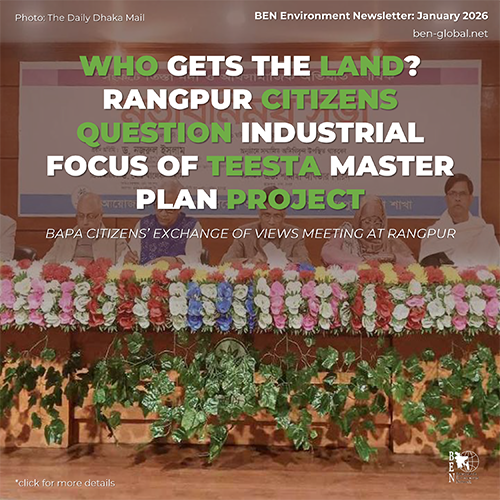
In January 2026, BAPA held citizen meetings in Rangpur and Charghat on the Teesta and Baral rivers, critically examining the Teesta Master Plan. Drs. Nazrul Islam and Khalequzzaman warned against ecologically risky, loan-driven megaprojects, urging transparent, science-based alternatives and stronger transboundary water diplomacy.
|
|
|
| |
|
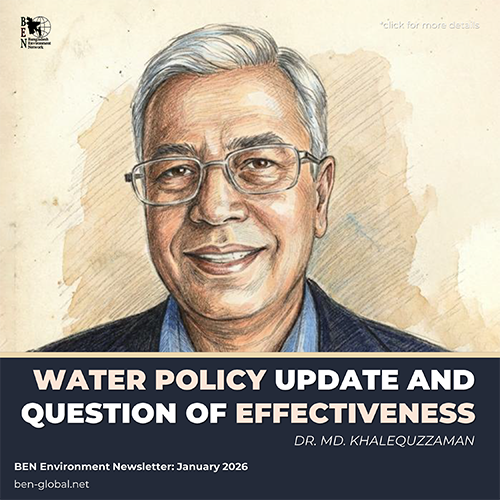
The interim government’s move to update Bangladesh’s 1999 Water Policy is welcomed, but Dr. Khalequzzaman notes past failures in implementation, transboundary treaties, and public participation. He urges stronger focus on climate impacts, pollution, water as a human right, water diplomacy, data transparency, and enforcing polluter-pays principles.
|
|
|
| |
|
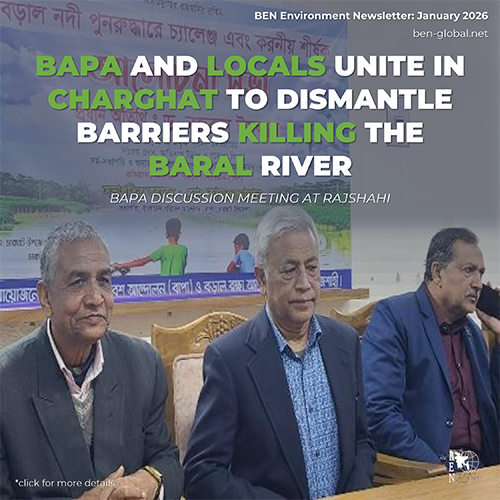
On January 15, 2026, BAPA held a Baral River restoration meeting in Charghat, Rajshahi, emphasizing political will, legal action, and community monitoring. Dr. Nazrul Islam urged sluice gate removal for river revival, aligning with government plans and the 2019 High Court ruling on river rights.
|
|
|
| |
|
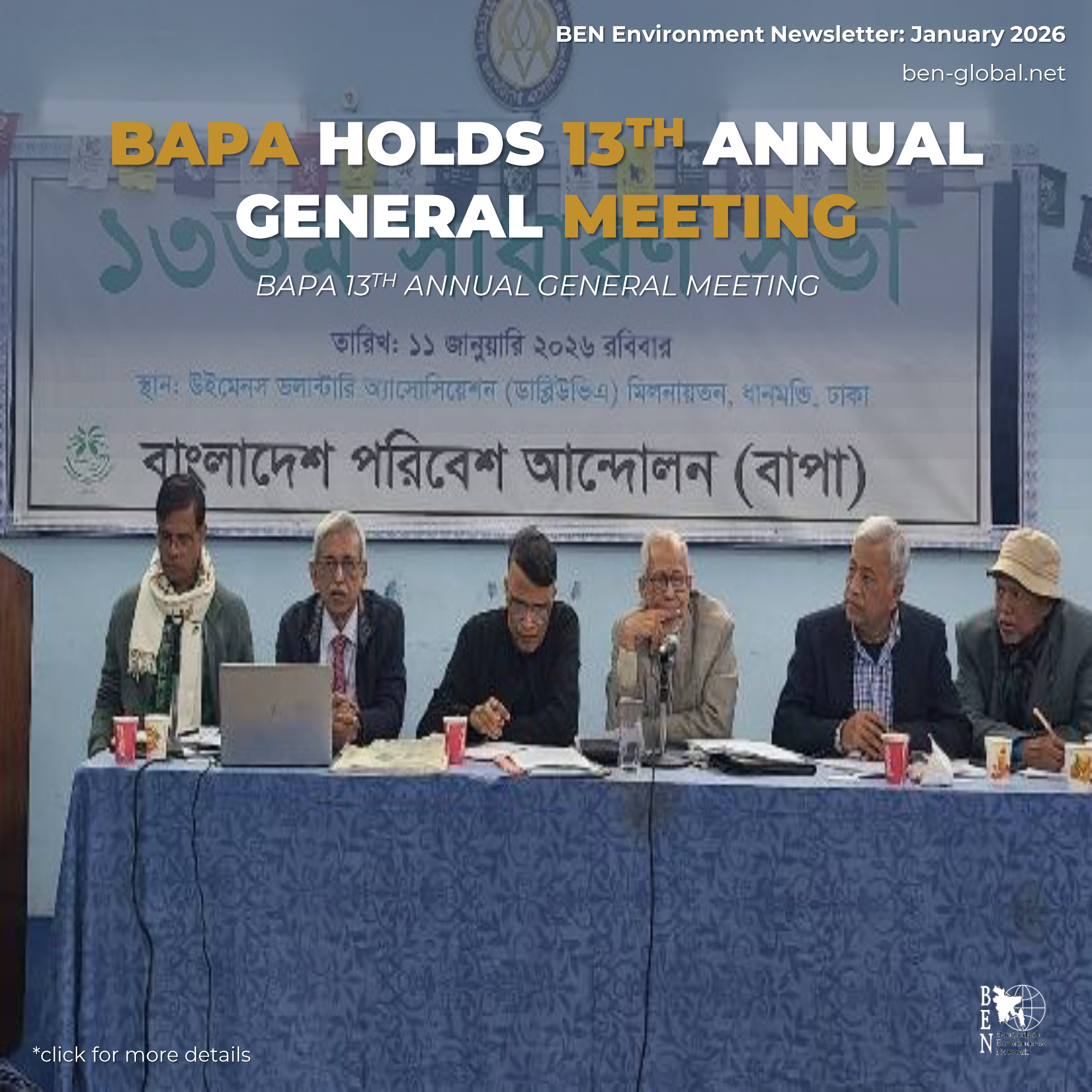
On January 11, 2026, BAPA held its 13th General Meeting in Dhaka, led by President Noor Mohammad Talukder. Members focused on regional environmental activism, constitutional amendments, and the 9th National Committee for future advocacy.
|
|
|
| |
|
On January 18, 2026, BAPA formed its 46-member Central Executive Committee (2026–2027) led by President Professor Nur Mohammad Talukder and General Secretary Md. Alamgir Kabir. The renewed leadership blends academic expertise with grassroots activism, emphasizing inclusive, science-based environmental governance and nationwide organizational coordination.
|
|
|
| |
|
© 2026 Bangladesh Environment Network
|
|
|
| |
|