


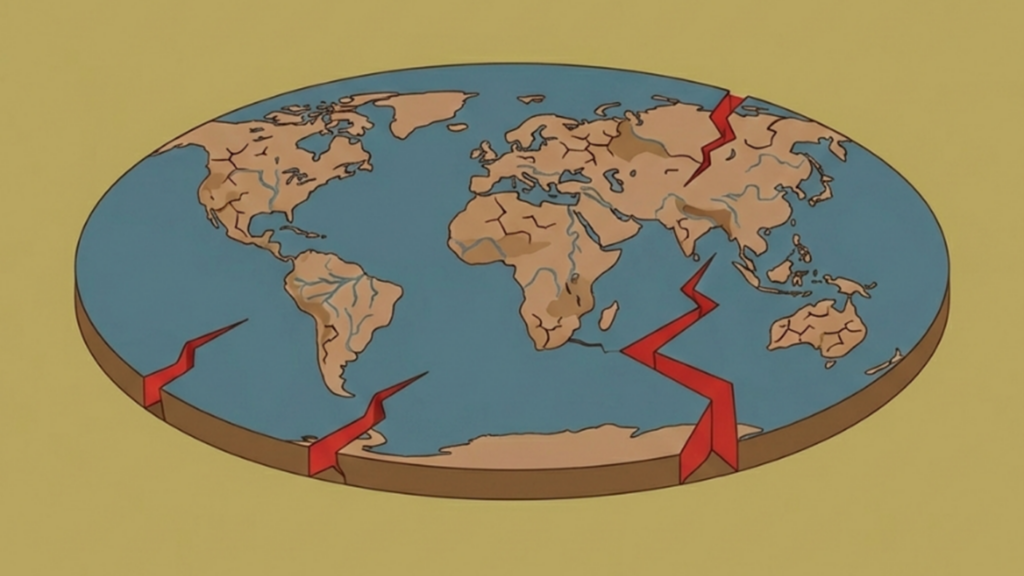
The United Nations University Institute for Water, Environment and Health (UNU-INWEH) declared on January 20, 2026, that the world has entered an era of “Global Water Bankruptcy”. This signifies a shift beyond recoverable water stress into a permanent post-crisis state marked by irreversible losses of water-related natural capital. For Bangladesh, this is particularly urgent, as the country faces simultaneous crises: some of the world’s highest groundwater depletion rates, transboundary river deprivation from upstream Indian diversions, and climate-driven sea-level rise threatening coastal freshwater. Bangladesh exemplifies water bankruptcy, experiencing convergent failures in groundwater, surface water, and transboundary systems that collectively threaten agriculture, urban water security, and the livelihoods of its 170 million people.
The UNU-INWEH report distinguishes “water bankruptcy” from reversible “stress” or mitigable “crisis”. It defines bankruptcy as a persistent condition where long-term withdrawals exceed renewable inflows, causing irreversible loss of water-related natural capital. The report provides stark global statistics: 50% of large lakes have shrunk since 1990; 70% of major aquifers are in long-term decline; roughly 410 million hectares of wetlands, an area the size of the EU, have been lost in 50 years; over 30% of global glacier mass has vanished since 1970; and nearly 4 billion people face severe water scarcity for at least one month each year (UNU-IWEH, 2026).
Bangladesh embodies this global water bankruptcy with particular intensity. It ranks sixth globally in annual groundwater extraction, withdrawing about 32 cubic kilometers yearly, 90% for irrigation. Approximately 98% of the population relies on groundwater for drinking, and 77% of irrigation depends on it. Consequently, the Dhaka area’s water table is falling by 2-3 meters annually. Projections indicate that by 2030, daily extraction in greater Dhaka could rise from 5.9 to 10 million cubic meters, with the water table possibly reaching 132 meters deep, making groundwater physically and economically inaccessible for ordinary citizens (Hasnat, 2022).
This groundwater bankruptcy has cascading consequences. Dhaka’s upper aquifer may run dry during dry seasons by 2030, threatening industry and causing widespread land subsidence and severe drinking water shortages. Across Bangladesh’s drought-prone northwest, aquifer over-extraction for irrigation, combined with dry-season rainfall deficits, causes chronic water table decline. The UNU-INWEH report identifies South Asia as a critical water bankruptcy hotspot, noting that groundwater-dependent agriculture and urbanization drive irreversible land subsidence. These dynamics are particularly severe in Bangladesh, where agriculture relies on groundwater and urban populations grow despite declining water availability.
Bangladesh also faces acute surface water bankruptcy intensified by transboundary upstream diversion. The Teesta River, its fourth-largest system, suffers unprecedented dry-season scarcity due to India’s Gazaldoba barrage. While a 1983 interim agreement nominally allocates 36% of its flow to Bangladesh, actual shares consistently fall short. Efforts to finalize a 2011 draft agreement for equal sharing have stalled due to Indian political opposition, systematically depriving Bangladesh of equitable access. The Teesta crisis exemplifies the UNU-INWEH analysis: water bankruptcy is not just domestic over-extraction but includes transnational hydropolitics, where upstream control leaves downstream nations like Bangladesh perpetually water-bankrupt regardless of their own management.
The Ganges-Brahmaputra-Meghna basin, supporting over 630 million people, also demonstrates water bankruptcy. Despite substantial flows, the basin is water-stressed, with non-cooperation on shared governance costing an estimated $14.2 billion annually (Swain & Karim, 2022). Climate change compounds the crisis: glaciers feeding these rivers are shrinking, reducing the reliable late-season flows essential for dry-season agriculture. These glaciers historically functioned as natural savings accounts, releasing meltwater to sustain agriculture for up to 2 billion people. As these systems pass “peak water” and enter long-term decline, irrigated agriculture faces shrinking and unreliable flows, rendering historical water infrastructure and allocation institutions obsolete.
Bangladesh’s agricultural sector, the foundation of its food security and rural livelihoods, faces an existential crisis from water bankruptcy. Agriculture accounts for about 70% of global freshwater withdrawals, a proportion even higher in Bangladesh. In the Teesta basin alone, annual flooding and dry-season scarcity are estimated to cost about 100,000 crore Taka and reduce paddy production by nearly 1.5 million tons (Climate Watch, 2025). Globally, over half of agricultural land is moderately or severely degraded, impairing soil moisture and accelerating desertification. Salinization has degraded approximately 82 million hectares of rainfed and 24 million hectares of irrigated cropland worldwide, with Bangladesh’s coastal regions experiencing particularly severe salinity intrusion that renders vast areas unfit for conventional agriculture.
References
- UNU-IWEH. (2026). World Enters “Era of Global Water Bankruptcy” UN Scientists Formally Define New Post-Crisis Reality for Billions. Retrieved from https://unu.edu/inweh/news/world-enters-era-of-global-water-bankruptcy/
- Hasnat, M. (2022, August 8). Water-stressed Bangladesh looks to recharge its fast-depleting aquifers. Mongabay. Retrieved from https://news.mongabay.com/2022/08/water-stressed-bangladesh-looks-to-recharge-its-fast-depleting-aquifers/
- Climate Watch. (2025). Teesta river fades, leaving northern Bangladesh in crisis. Retrieved from https://theclimatewatch.com/teesta-river-fades-leaving-northern-bangladesh-in-crisis/
- Swain, A., & Karim, S. (2022). GBM basin countries could save at least USD 14.2 billion annually through cooperation. Retrieved from https://asia.oxfam.org/latest/publications/gbm-basin-countries-could-save-least-usd-142-billion-annually-through/

