Bangladesh Environment Network ben-global.net
BEN Logo

ENVIRONMENT NEWSLETTER

December, 2025
Year 22, No. 1-12

Editorial

For suggestions, feedback and/or queries please contact: BEN Newsletter . If you are interested to contribute to the future BEN newsletters with articles or ideas, please sign up here or mail us.
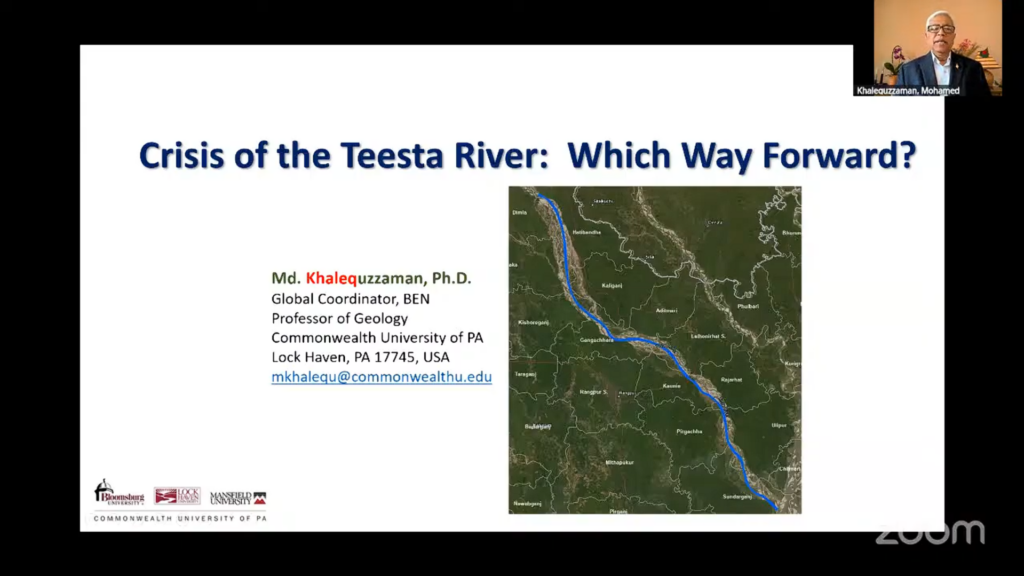
Webinar Screenshot 1
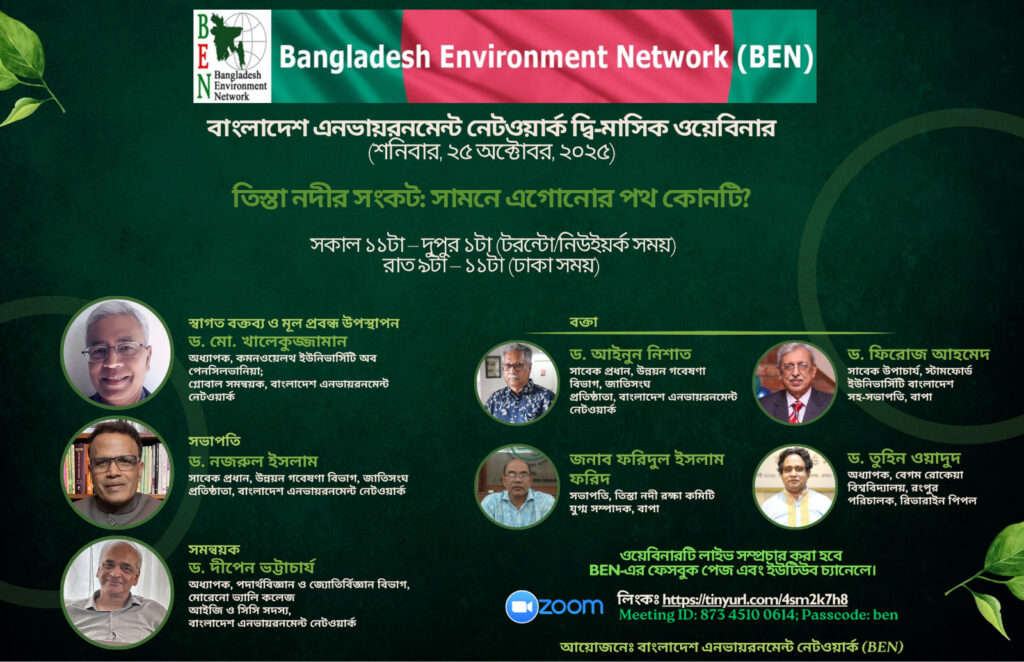
Webinar Flyer
Webinar Screenshot 2

Webinar Screenshots and Flyer

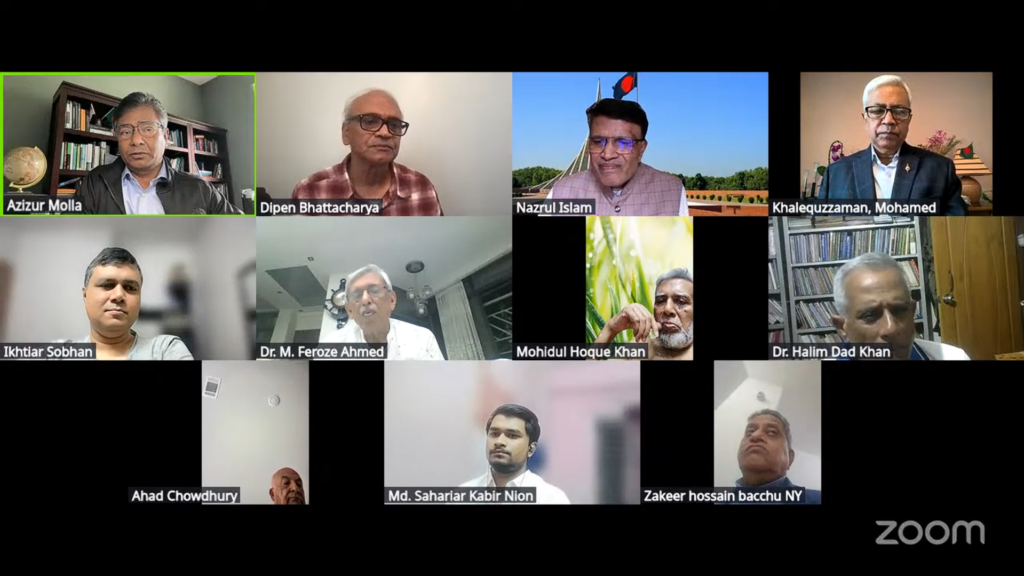
Experts Call for Re-evaluation of Teesta River Comprehensive Management and Recovery Plan at BEN Webinar #17

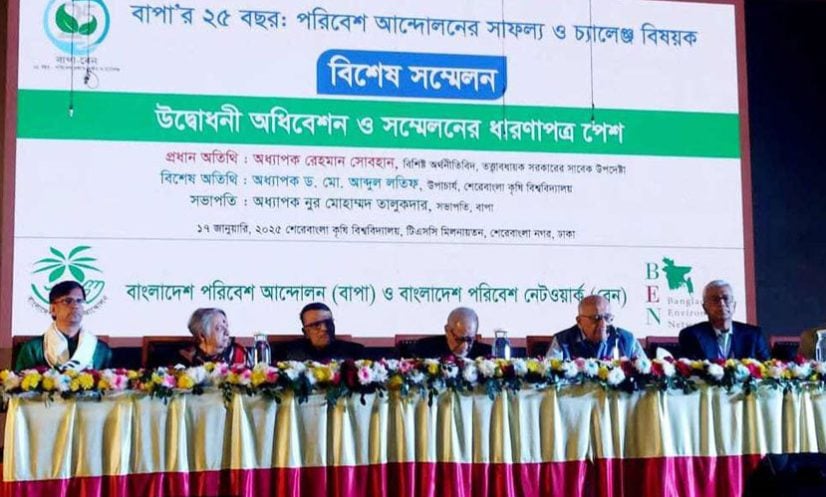
BAPA 25th Anniversary

Photo credit: sarabangla.net

BAPA’s 25th Anniversary Summit Demands Specialized Environmental Commission

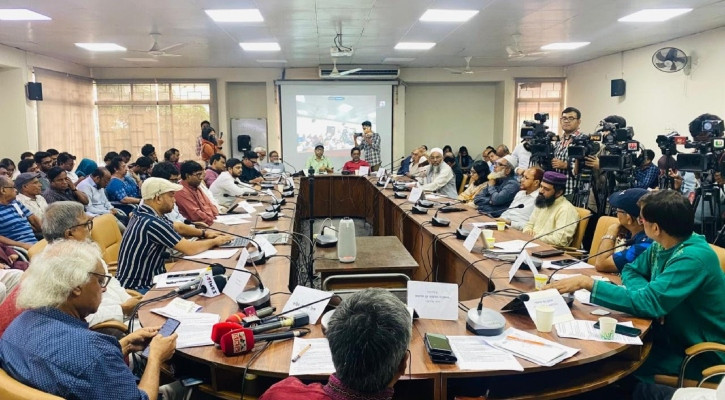
Teesta Discussion Meeting

Photo: banglanews24.com

BAPA and BEN Arranged a Discussion Meeting Titled “Teesta River in Crisis: What is the Path to Solution?”

Conference Flyer English
Conference Flyer Bengali

Conference Flyers

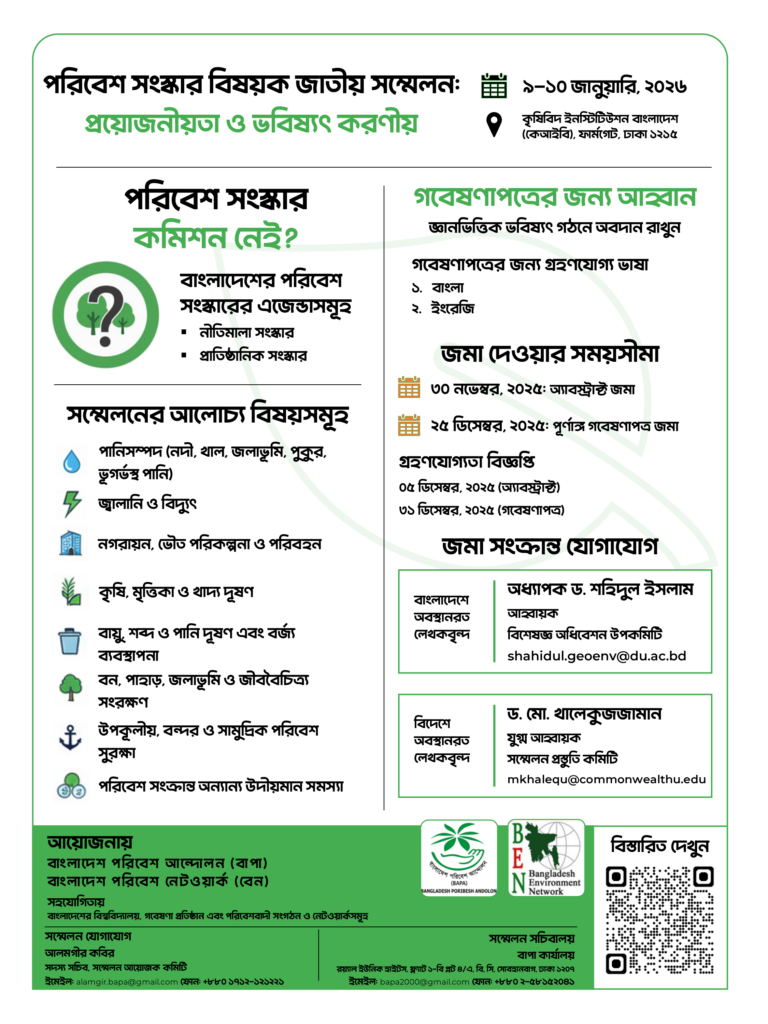
BAPA and BEN are Organizing National Conference of Environmental Reforms: Necessity and the Way Forward 2026

Dr. Feroze Ahmed

Photo: Wikipedia

BAPA Vice President Dr. Feroze Ahmed Receives Jatio Poribesh Padak

In a major recognition of his lifelong commitment to environmental sustainability, Professor Dr. M. Feroze Ahmed has been honored with the National Environment Award 2024 (Jatio Poribesh Padak). The Government of the People’s Republic of Bangladesh conferred this prestigious award upon him in the category of Environmental Research and Innovation in Technology.

Dr. Ahmed, who serves as one of the Vice President of the Bangladesh Poribesh Andolon (BAPA) was selected for this honor by the National Committee under the Ministry of Environment, Forest and Climate Change. The award is considered the highest state recognition for contributions to environmental protection and sustainable development in the country.

This accolade reflects decades of dedication to the water and sanitation sector in Bangladesh. Dr. Ahmed’s career has been defined not just by finding technical solutions, but by a relentless drive to document and disseminate knowledge. From the beginning of his academic journey, he has focused on exploring environmental problems and sharing those findings with the wider community to influence national policy. His philosophy has always been that scientific work is incomplete without effective communication. By prioritizing the publication of research, Dr. Ahmed has helped build institutional memory and inspire future generations of engineers. His seminal contributions, including the authoritative text Water Supply and Sanitation, continue to serve as fundamental resources for practitioners and students alike.

The award acknowledges Dr. Ahmed’s role as a visionary academic whose work has shaped the landscape of water management and environmental reforms in Bangladesh. He stands among a select group of 2024 honorees approved by the interim government, including the Bangladesh Agricultural Research Institute (BARI) in the research category, and several other individuals and organizations recognized for conservation and awareness.

For the environmental community this recognition underscores the vital importance of rigorous research in solving Bangladesh’s climate and environmental challenges.

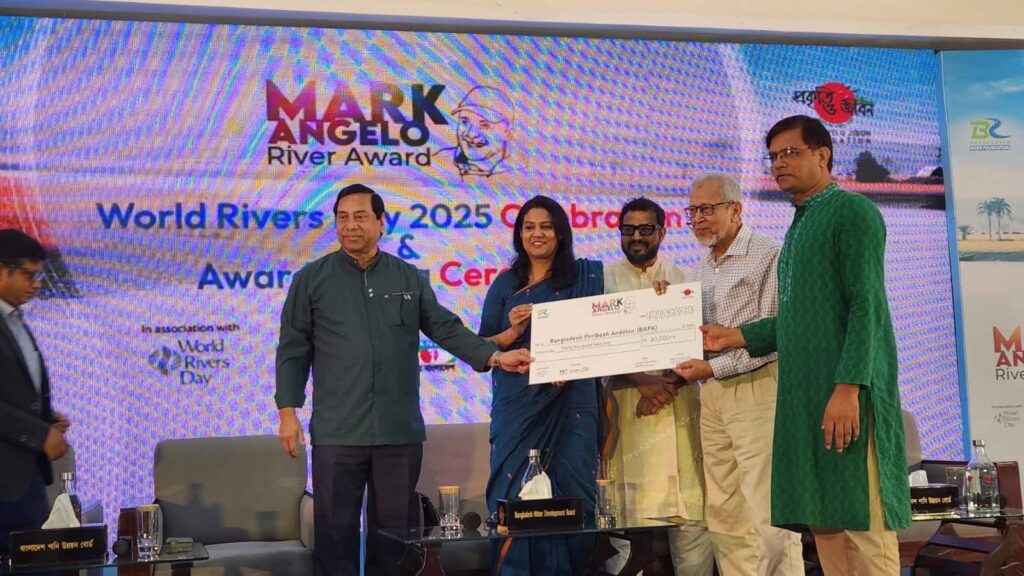
BAPA Award

Photo: Collected

BAPA Secures the Prestigious Mark Angelo River Award

The Bangladesh Poribesh Andolon (BAPA) was recently honored with the Mark Angelo River Award in the organization category. This accolade was presented during the World Rivers Day 2025 Celebration & Award Giving Ceremony in Dhaka, an event jointly organized by the Water Development Board, Bangladesh River Foundation, and the Nature and Life Foundation.

Addressing the ceremony, Environment, Forest and Climate Change Adviser Syeda Rizwana Hasan stressed that protecting rivers requires united efforts with a single, common purpose, achievable only through political will and public solidarity. She highlighted the deep cultural and historical interlinkage of rivers with the nation’s heritage, stating that their protection is essential for survival.

The Adviser confirmed that the Ministry of Water Resources, with support from various bodies, has prepared a new list of rivers. She noted that the country presently has 1,415 rivers. The Joint River Commission will conduct further research on rivers in the Sundarbans and hilly regions, while missing rivers will be verified and included in the list.

Syeda Rizwana Hasan also mentioned that the government is moving forward with comprehensive plans for major rivers like the Teesta and the Ganges. She also briefly touched upon tourism in Saint Martin’s Island, noting that it has been regulated—not completely banned—to protect the nature, biodiversity, and environment of the island.

The ceremony was chaired by Nature and Life Foundation Chairman Mukit Majumder Babu. The event also saw the participation of special guests, including Dhaka North City Corporation Administrator Mohammad Azaz and Water Development Board Director General Md Enayet Ullah.

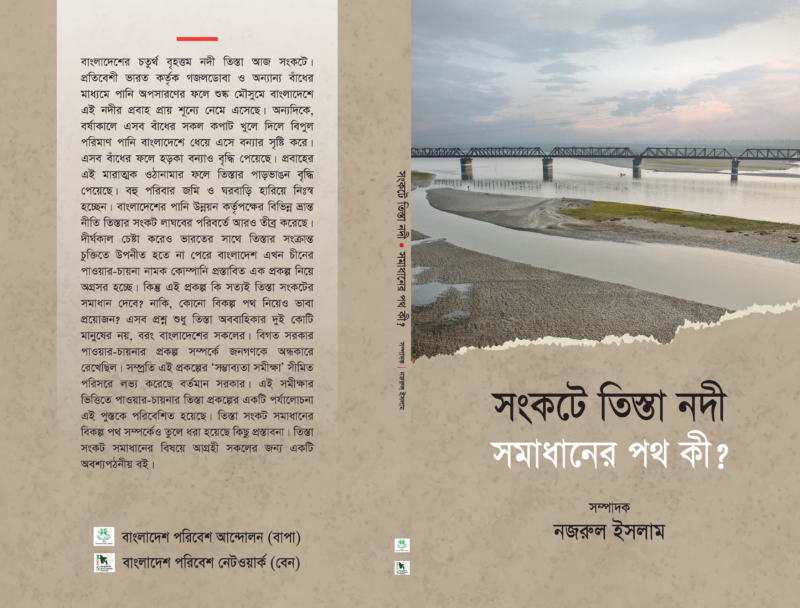
Teesta Book Cover

Book Cover

BAPA BEN Reveals New Book on the Teesta Crisis

The complex hydro-political crisis engulfing the Teesta River has received a comprehensive analytical treatment in the newly released volume, “Teesta River in Crisis: What is the Path to Solution?” (Songkote Teesta Nodi: Somadhaner Poth Ki?). Edited by Dr. Nazrul Islam in association with Dr. M. Khalequzzaman and Faridul Islam Farid, the publication emerges as a critical intervention against the backdrop of the controversial “Teesta River Comprehensive Management and Restoration Project.” Published by the Bangladesh Poribesh Andolon (BAPA) and the Bangladesh Environment Network (BEN), the anthology challenges the prevailing “commercial approach” to river management, advocating instead for a paradigm shift toward transparency and nature-based solutions.

Tracing the trajectory of Bangladesh’s river protection movements—from the seminal “Save Buriganga Movement” of 1999 to the historic 2019 High Court verdict recognizing rivers as living entities—the book contextualizes the current Teesta standoff within a broader struggle for ecological justice. It articulates the philosophical evolution spearheaded by BAPA and BEN: a decisive rejection of the “Cordon Approach,” characterized by restrictive embankments, in favor of an “Open Approach” that respects the country’s unique deltaic landscape. This theoretical foundation serves as the lens through which the contributors critique the Power China project, a 1,200 crore Taka engineering endeavor that had previously been shrouded in bureaucratic secrecy under the former administration.

The volume systematically dissects what the editors term the “Triple Problem” of the Teesta: acute dry-season water scarcity, devastating monsoon floods, and the severe distortion of the river channel through erosion, widening, and sedimentation. The authors argue that these hydrological pathologies are inextricably linked to “Triple Causes,” identifying them as the unilateral diversion of flow by India, the implementation of flawed domestic policies, and the accelerating impacts of climate change. The collection warns that the proposed infrastructure-heavy interventions, now under consideration by the interim government following the limited release of a feasibility study, may fail to address these root causes, potentially rendering the massive financial investment a futile exercise in fighting geological forces.

Beyond a technical review of the Preliminary Development Project Proposal (PDPP), the book compiles rigorous research articles exploring the requisite framework for a functional water-sharing treaty, the applicability of Chinese river management experiences to the Bengal Delta, and the historical narratives of the local riverbank communities. By bringing these diverse perspectives into the public domain, the editors aim to disrupt the opacity that has historically plagued the project. The publication serves as both a critique and a roadmap, urging policymakers to subject the Power China proposal to rigorous, independent scrutiny before committing to a path that risks irreversible ecological consequences and economic waste.

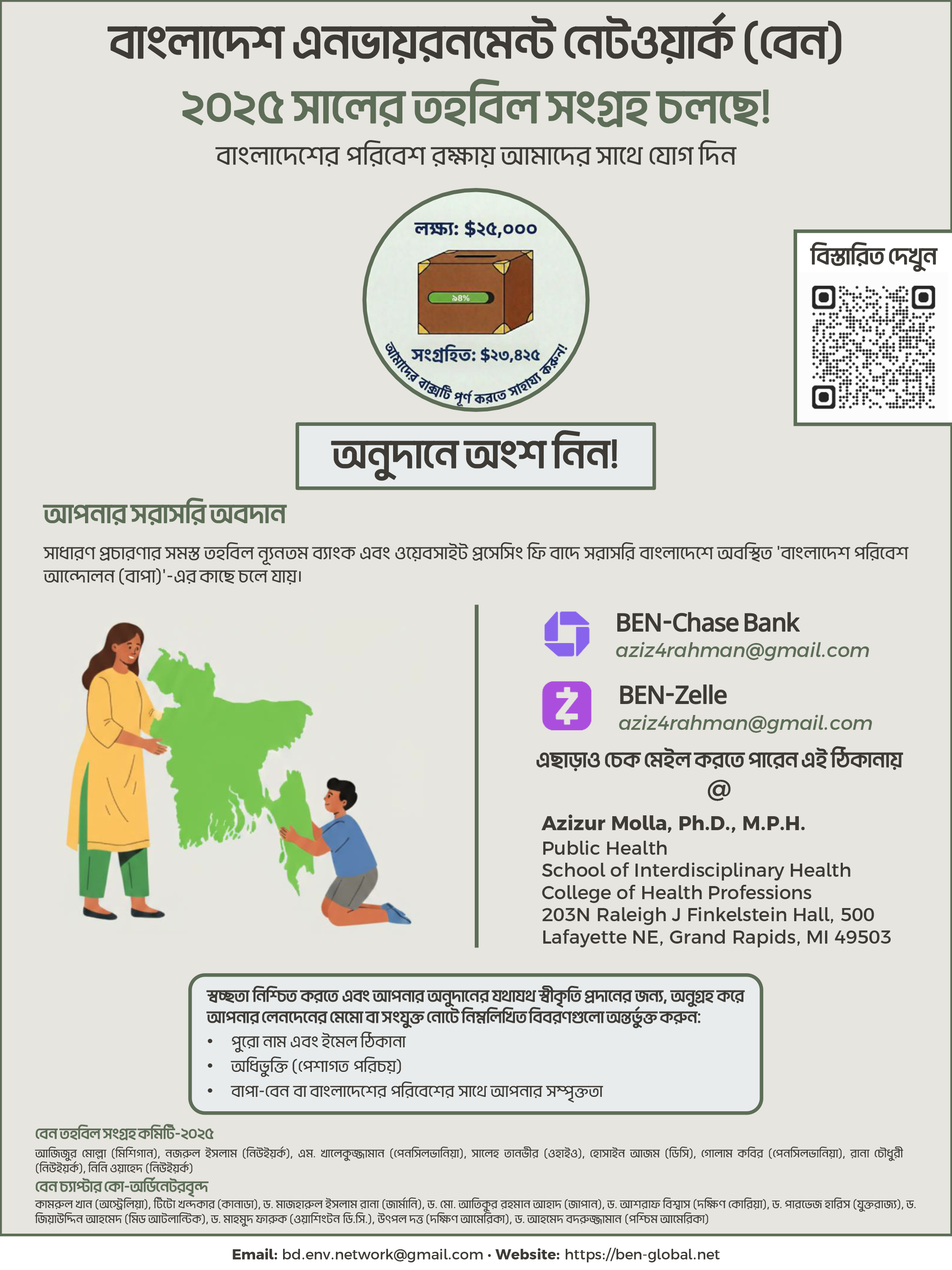
Fundraising Flyer English
Fundraising Flyer Bengali

Fundraising Flyers

BEN Launches 2025 Fundraising Campaign to Strengthen Environmental Advocacy

The revitalization of the Baral River, recently transformed from a moribund stream into a thriving waterbody following the removal of the Charghat sluice gates, stands as a definitive testament to the efficacy of the “Open Approach” to river management. Against this backdrop of tangible progress, the Bangladesh Environment Network (BEN) has formally launched its 2025 Fundraising Campaign, aiming to capitalize on two decades of struggle that are finally yielding significant ecological returns.

The campaign announcement comes on the heels of international recognition for the movement’s ground-level impact. Organizers noted that the persistent partnership between BEN and the Bangladesh Poribesh Andolon (BAPA) has not only resuscitated the Baral but also earned BAPA the prestigious Mark Angelo Award on World River Day. However, the committee cautioned that despite these victories, the trajectory of environmental degradation in Bangladesh remains steep. In the name of development, reckless deforestation, wetland encroachments, and the toxic dumping of industrial waste continue unabated, driven by powerful vested interests and bureaucratic inertia.

Addressing the current political landscape, the campaign leadership acknowledged a cautious optimism following recent political upheavals in Bangladesh. With an environmentalist now at the helm of the Ministry of Environment and Water Resources, there is hope for a shift in governance. Yet, history suggests a persistent gap between policy declaration and implementation. Consequently, BEN leadership argued that the responsibility of protecting the environment cannot be left solely to the government; a robust, well-funded civic movement is essential to bridge this gap, oppose land grabbers, and ensure scientific facts supersede false narratives.

To sustain these critical efforts, BEN has outlined a strategic budget for the upcoming year with a fundraising target of $25,000 USD. The funds are earmarked for specific operational needs: 15 lakh BDT for BAPA’s regular contributions, 4 lakh BDT for enhanced grassroots mobilization, and substantial allocations for the annual BAPA-BEN conference and disaster contingency funds. Thanks to interest from existing capital funds, the net requirement has been kept efficient, yet the need for broad participation remains urgent.

The fundraising drive has already seen a robust response, with contributions currently totaling $23,425. To bridge the remaining gap, the committee is calling for widespread support from the Non-Resident Bangladeshi (NRB) community. Professor Azizur Molla, spearheading the initiative, emphasized that BEN maintains a transparent 501(c)(3) status, ensuring that donations go directly toward empowering BAPA’s activities in Bangladesh.

Supporters are encouraged to participate immediately to maintain the momentum of the past 25 years. Contributions can be made via check payable to “Bangladesh Environment Network” sent to Prof. Azizur Molla at the College of Health Professions in Grand Rapids, MI, or via Zelle or Chase Bank to aziz4rahman@gmail.com (noting the donor’s name and email in the memo). The committee reiterated that whether through financial support or joining the fundraising team, active participation is vital to ensure that the betterment of Bangladesh’s environment in the coming years.

© 2025 Bangladesh Environment Network