


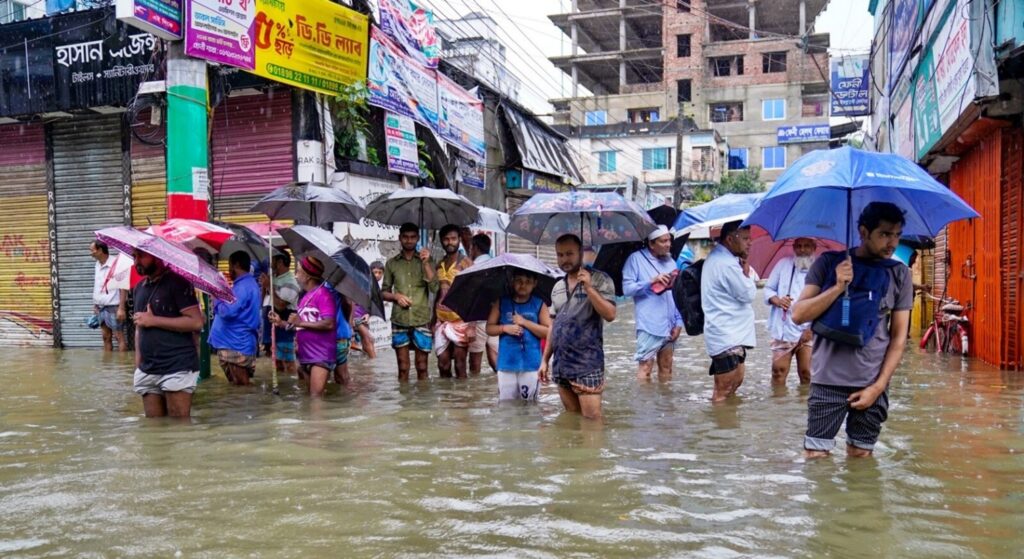
With less than five years remaining until the 2030 deadline for the Sustainable Development Goals (SDGs), the global community faces a critical juncture in achieving universal access to safe water, sanitation, and hygiene (WASH) under SDG 6. The World Health Organization and UNICEF, through the 2025 UN-Water Global Analysis and Assessment of Sanitation and Drinking-Water (GLAAS) report, highlight a systemic failure in delivery capacity despite the existence of comprehensive national plans. Analyzing data from 105 countries representing 62% of the global population, the report reveals stark unmet needs. More than two billion people lack safely managed drinking water, 3.4 billion lack safely managed sanitation, and 1.7 billion are without basic hygiene services. The health consequences of these persistent deficits are severe, contributing to at least 1.4 million preventable deaths in 2019 and fueling over 560,000 cholera cases across 60 countries in 2024 alone (WHO, 2026).
The underlying causes of this stagnation are rooted in systemic inefficiencies, critical workforce shortages, and substantial financial shortfalls. The GLAAS 2025 findings indicate that while national targets are widespread, implementation is severely constrained. Only 13% of surveyed countries possess the necessary financial and human resources to execute their WASH plans effectively. Furthermore, structural fragmentation exacerbates the crisis, with 64% of countries reporting overlapping institutional roles that lead to uncoordinated efforts. Compounding these governance issues is a glaring financial deficit; data from participating nations reveals a 46% funding gap between available resources and the capital required to meet national targets. These financial constraints are worsened by operational inefficiencies, as non-revenue water losses average 39% globally, systematically draining resources that could otherwise be utilized to expand service coverage (WHO, 2026).
Against this backdrop of global systemic challenges, Bangladesh presents a highly illustrative case study of both significant progress and persistent vulnerability. Despite being one of the world’s most densely populated nations and highly susceptible to climate-induced natural disasters, Bangladesh has substantially improved its WASH infrastructure. Currently, 48% of the population utilizes safely managed drinking water supplies, split between 48.8% in rural regions and 44.7% in urban centers. Progress in sanitation is even more pronounced, with 84.6% of the population accessing safely managed services, alongside a high prevalence of handwashing stations equipped with soap, reaching 87% in urban and 71.4% in rural areas. This trajectory is largely attributed to sustained government commitment and community-led initiatives, such as the Community-Led Total Sanitation (CLTS) program, which helped increase the proportion of the population with improved sanitation access from 34% in 1990 to 68% in 2017 (Hossain, 2023).
However, national averages in Bangladesh obscure profound disparities, particularly within rapidly expanding urban environments driven by climate migration. In major cities like Chattogram, Dhaka, and Khulna, as well as smaller urban centers, low-income informal settlements face acute WASH deprivations. Prior to targeted interventions, only 8% of households in specific vulnerable urban locations possessed access to safe drinking water, forcing primarily women and girls to spend upwards of 30 minutes per trip collecting water from distant or unsafe sources. Furthermore, shared sanitation facilities were highly inadequate, sometimes serving up to 50 individuals per latrine. Targeted infrastructural and governance projects have proven transformative in these localized contexts. Between 2018 and 2023, systematic interventions increased safe water access in targeted communities to 98.93%, reducing collection times to just seven minutes, and elevated the safe management of child feces from a perilous 8.6% to over 80%. Such initiatives also catalyzed a 52.5% increase in local WASH budgets through strategic advocacy, demonstrating the efficacy of integrating infrastructural development with local governance capacity building (WaterAid, 2023).
To secure universal access by 2030, both global and localized strategies must urgently prioritize climate resilience and robust regulatory frameworks. While 80% of countries globally incorporate climate risks into their WASH policies, only 20% allocate specific financing to support populations disproportionately affected by climate change (WHO, 2026). In Bangladesh this gap is existential as rising sea levels, salinity intrusion, and extreme weather continuously threaten existing infrastructure. Pioneering local solutions, such as the integration of rainwater harvesting systems in healthcare facilities in saline-prone areas like Paikgacha, point toward necessary adaptive models (WaterAid, 2023). Ultimately, closing the remaining access gaps, which currently leave 15.4% of Bangladeshis without safe water and sanitation requires aligning national execution with global recommendations, closing the 46% funding gap, eliminating institutional overlap, and mandating transparent, localized monitoring to ensure resilience against mounting environmental and demographic pressures (Hossain, 2023).
References
Hossain, I. (2023, March 18). How far are we achieving SDG 6 in Bangladesh? The Business Standard. Retrieved from https://www.tbsnews.net/thoughts/how-far-are-we-achieving-sdg-6-bangladesh-601578
WaterAid. (2023). Water, sanitation and hygiene for urban populations in Bangladesh. WaterAid. Retrieved from https://washmatters.wateraid.org/projects/water-sanitation-hygiene-urban-populations-bangladesh
World Health Organization (WHO). (2026, January 26). New UN-Water findings: stronger WASH systems needed for safe drinking-water, sanitation and hygiene for all. Retrieved from https://reliefweb.int/report/world/new-un-water-findings-stronger-wash-systems-needed-safe-drinking-water-sanitation-and-hygiene-all

